Artwork
Der stille Waldwinkel
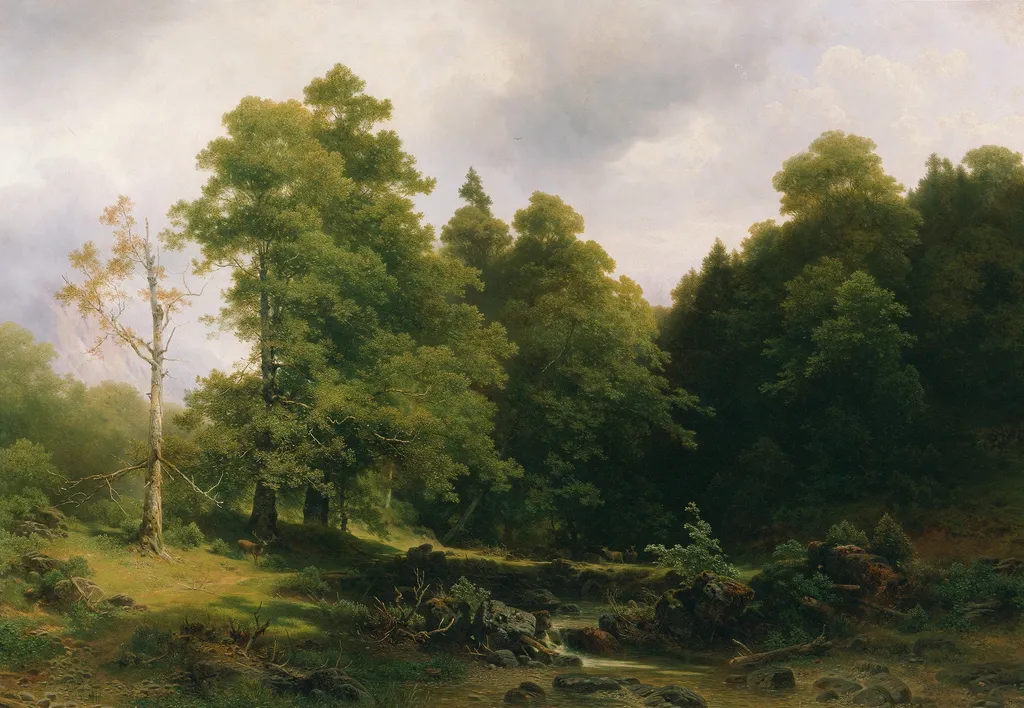
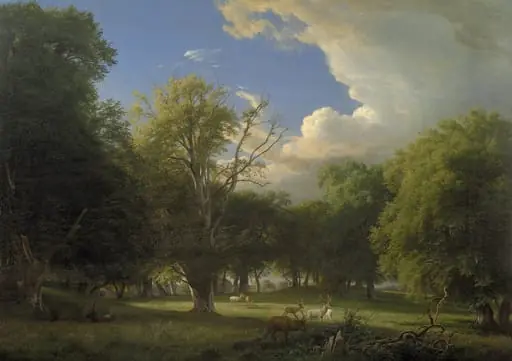
Der stille Waldwinkel is an oil painting by Joseph Holzer. It dates from 1860 and is held in the collection of the Kunsthistorisches Museum.
About this work
Overview
Der stille Waldwinkel is an oil painting from around 1860 by the Austrian artist Joseph Holzer. It depicts a secluded woodland area, rendered with careful attention to natural detail. The work is part of the collection at the Kunsthistorisches Museum in Vienna, where it remains a quiet example of 19th-century landscape painting rooted in close observation of the natural world.
Subject & Meaning
The absence of figures and the stillness of the scene evoke a sense of solitude and quiet endurance, reflecting a Romantic-era reverence for untouched nature.
The painting captures an unpopulated forest nook, free of human presence. A narrow stream winds over mossy stones and scattered branches, surrounded by thick undergrowth and towering trees. Some branches are bare, suggesting seasonal change. The absence of figures and the stillness of the scene evoke a sense of solitude and quiet endurance, reflecting a Romantic-era reverence for untouched nature.
Technique & Style
Holzer applied oil paint with deliberate, visible brushwork that lends texture to foliage, bark, and water. The palette is restrained, dominated by earthy greens, browns, and muted grays. Light filters diffusely through the canopy, creating soft contrasts rather than dramatic shadows. The technique avoids theatricality, favoring a subdued realism that emphasizes the quiet rhythms of the woodland environment.
History & Provenance
Created circa 1860, the painting entered the collection of the Kunsthistorisches Museum in Vienna, where it has remained since. While Holzer was not a widely known figure, his works were acquired by Austrian institutions during the mid-19th century as part of a broader effort to document regional artistic output. Der stille Waldwinkel reflects this institutional interest in landscape as a national subject.
Context
In mid-19th-century Austria, landscape painting gained traction as a genre separate from historical or religious themes. Artists like Holzer turned to local forests and rural scenes, influenced by both German Romanticism and the growing scientific interest in natural observation. This work aligns with a trend toward intimate, unidealized depictions of nature, distinct from grander Alpine vistas popular at the time.
Legacy
Der stille Waldwinkel stands as a modest but representative example of Austrian landscape painting from the period. It contributes to the understanding of how regional artists engaged with nature without resorting to idealization or dramatic effect. Though not widely reproduced or celebrated, it remains a quiet testament to the aesthetic value placed on solitude and natural detail in 19th-century Viennese art.
Own this work as a print
Artist & collection

 Forest Landscape in the High Mountains
 The Mountain Brook
 Waldlandschaft
 At the Edge of the Forest
 Forest in the Morning Light
 After the rain in autumn
 Der Wasserfall der Ilse auf dem Brocken im Harzgebirge
 View in the neighborhood of Oranienbaum
 The Catskills
 A View of the Glen of the Dargle
 Forest Scene in the Catskills
 Summer Afternoon with a Passing Shower. The Deer Park in Jægersborg North of Copenhagen