Artwork
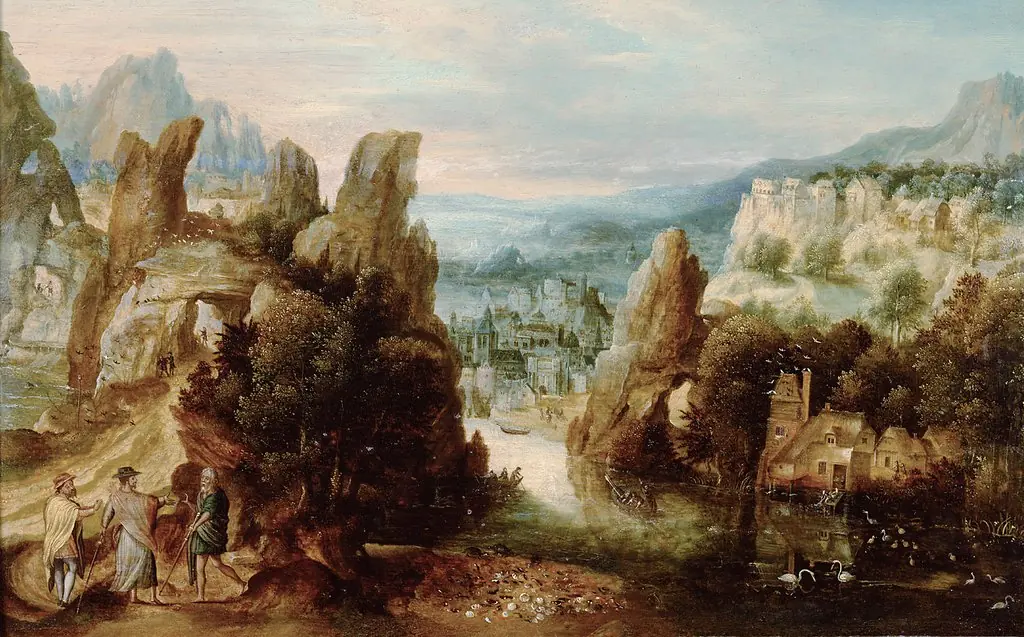
Hilly landscape with the story of the Good Samritan (Luke 10:25-37)
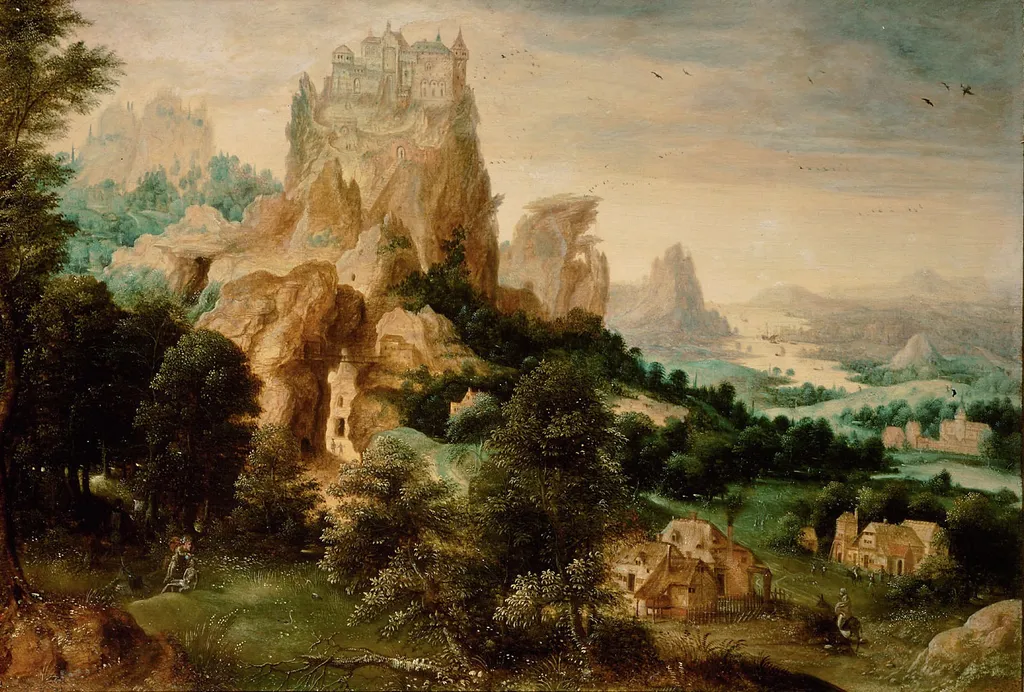
Hilly landscape with the story of the Good Samritan (Luke 10:25-37) is an oil painting by the Mannerist artist Herri met de Bles. It dates from 1540 and is held in the collection of the Kunsthistorisches Museum.
About this work
Overview
Within this expansive terrain, a small but pivotal moment from the Gospel of Luke unfolds: a traveler aids a wounded stranger.
Painted in 1540 by Herri met de Bles, this oil-on-panel work presents a vast, undulating landscape pierced by a winding path. Within this expansive terrain, a small but pivotal moment from the Gospel of Luke unfolds: a traveler aids a wounded stranger. The scene is not dominant but integrated into the natural world, reflecting a Northern Renaissance tendency to embed sacred narratives within immersive, atmospheric environments.
Subject & Meaning
The painting illustrates the Parable of the Good Samaritan, in which a stranger shows compassion to a man robbed and left for dead. The figures are rendered modestly, placed along a remote road rather than in a centralized narrative focus. This placement underscores the theme of unexpected mercy occurring in the margins of society, away from religious or urban centers, reinforcing the parable’s challenge to conventional notions of neighborliness.
Technique & Style
De Bles employs atmospheric perspective to create depth, with cooler tones and blurred contours receding into distant mountains. Chiaroscuro subtly models the figures and terrain, guiding attention to the central act of aid without theatricality. The brushwork is precise yet unobtrusive, favoring naturalistic detail over dramatic emphasis. This approach aligns with the tradition of Flemish landscape painters who prioritized environmental realism over narrative spectacle.
History & Provenance
The painting entered the collection of the Kunsthistorisches Museum in Vienna, where it remains today. Its attribution to Herri met de Bles is consistent with stylistic parallels to his known works and those of his contemporaries, such as Patinir. While its early ownership is undocumented, its preservation in a major imperial collection suggests it was valued by collectors interested in the fusion of landscape and moral storytelling during the 16th century.
Context
In mid-16th-century Flanders, landscape painting evolved beyond mere backdrop to become a vehicle for spiritual and ethical reflection. Artists like de Bles responded to humanist interests in nature and morality, embedding biblical tales within topographies that mirrored the complexity of human experience. This work reflects a broader trend where the natural world was seen as a mirror for divine order and human conduct.
Legacy
De Bles’s integration of religious narrative into expansive landscapes influenced later generations of Northern painters who sought to convey moral themes through environment rather than figural drama. Though less celebrated than his peers, his approach contributed to the development of landscape as an independent genre, one capable of carrying theological weight without overt symbolism or centralized composition.
Artist & collection
Artist
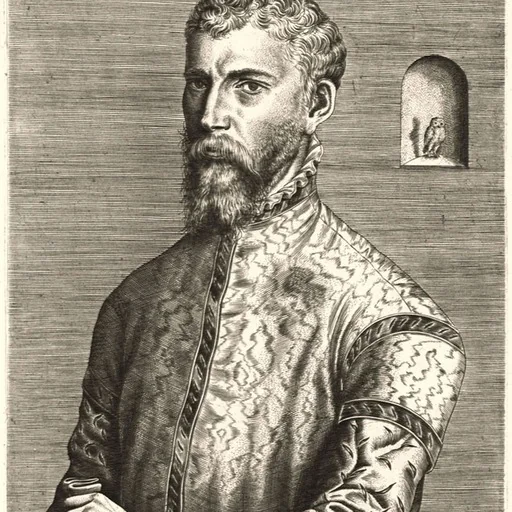
Herri met de Bles, also known as Henri Bles, Herri de Dinant, Herry de Patinir,(c.

 Landscape with Procne and Philomela
 Gebirgslandschaft mit Reisenden
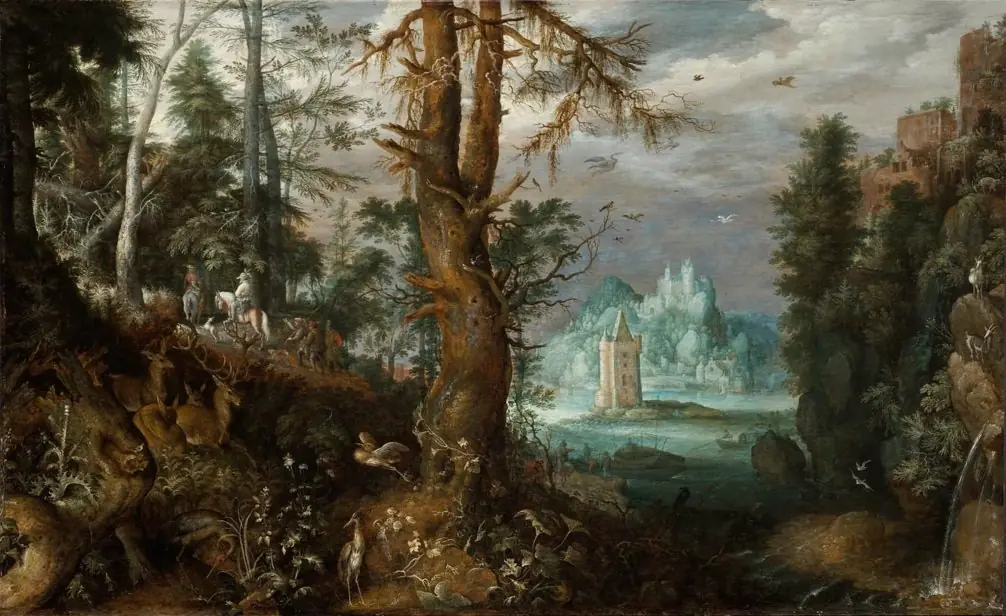 Forest Scene with Hunters
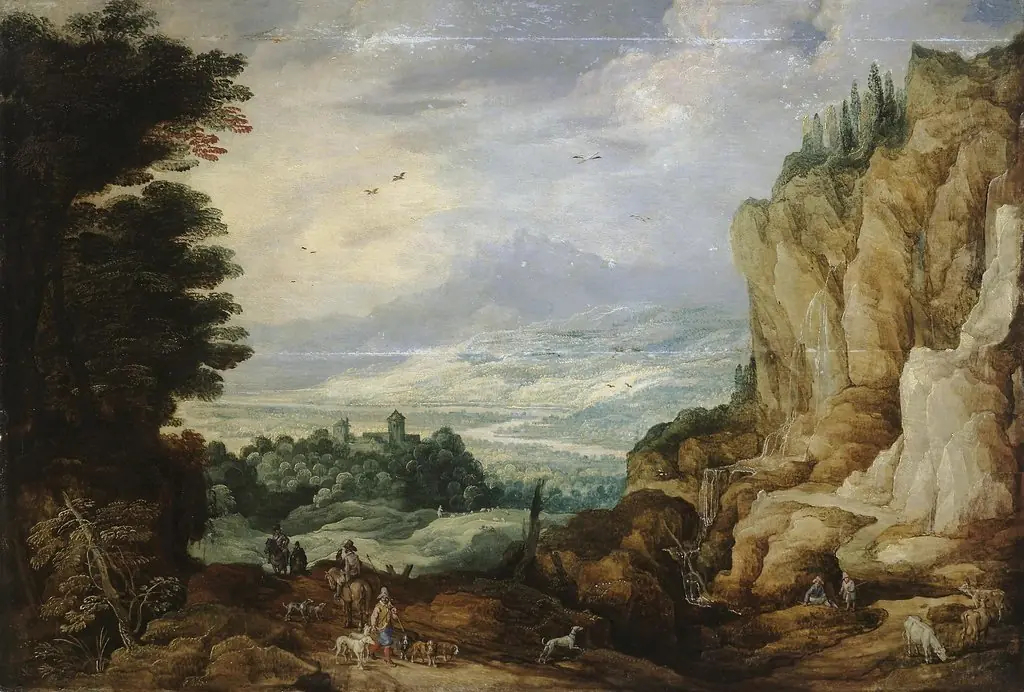 Rock Landscape with a Waterfall
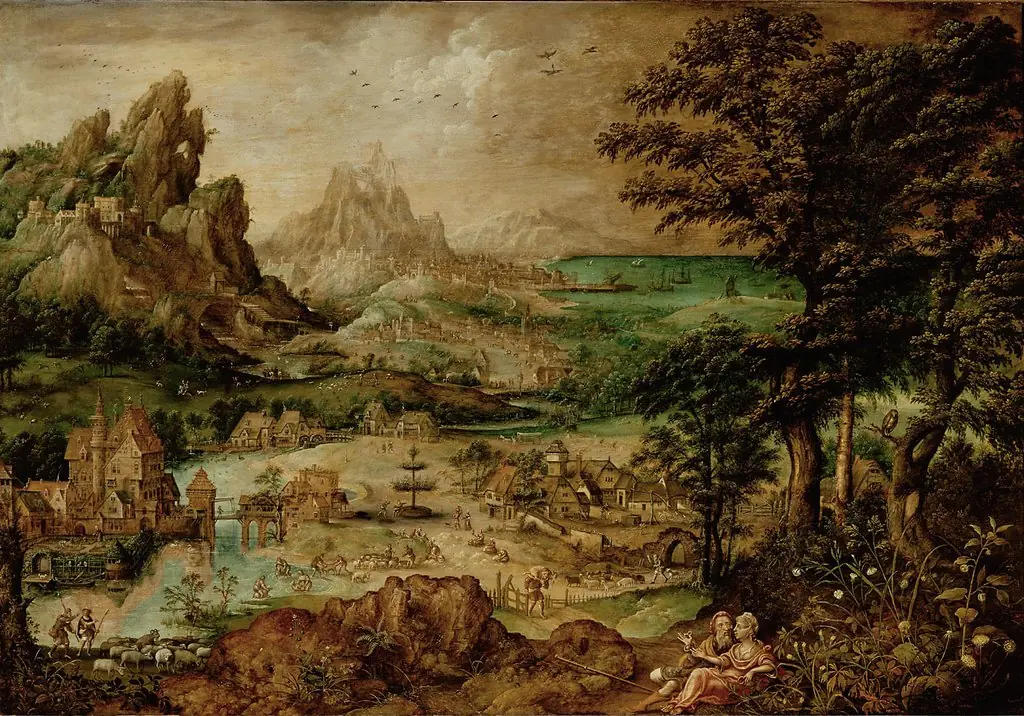 Landscape with Judah and Thamar
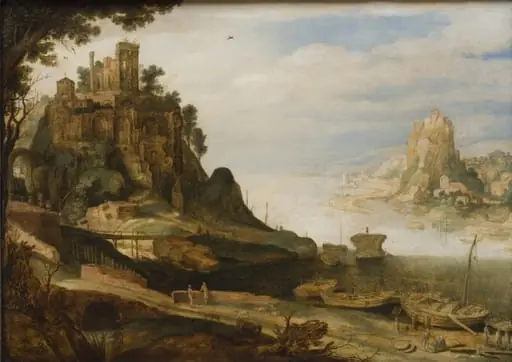 Coast Landscape with the so-called Temple of Sibyl at Tivoli
 Mountain Landscape
 Landscape with the Penitent Saint Jerome
 Landscape with Tobias and the Archangel Raphael
 Burg und Stadt Frauenstein