Artwork
Henri Degas and His Niece Lucie Degas (The Artist's Uncle and Cousin)
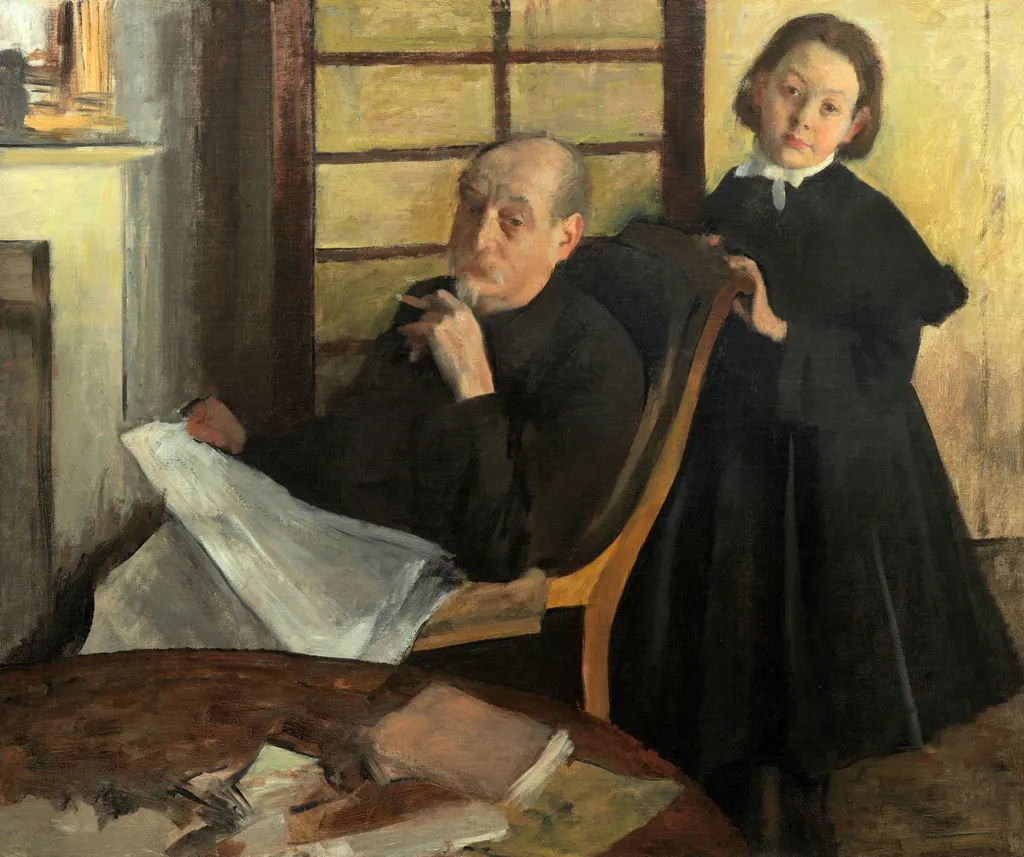
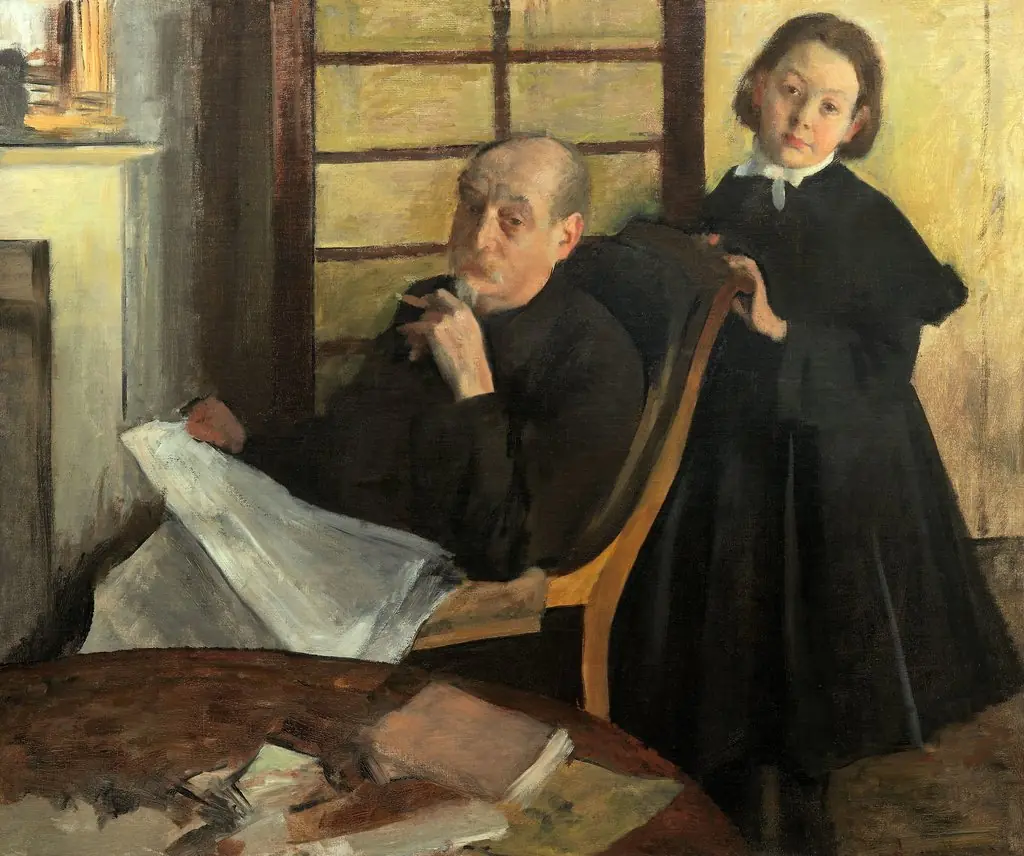
Henri Degas and His Niece Lucie Degas (The Artist's Uncle and Cousin) is an oil painting by the Impressionist artist Edgar Degas. It dates from 1876 and is held in the collection of the Art Institute of Chicago. Painted in 1875 during a visit to Naples, this oil on canvas portrait by Henri Degas depicts his uncle Henri and orphaned cousin Lucie.
About this work
Overview
Painted in 1875 during a visit to Naples, this oil on canvas portrait by Henri Degas depicts his uncle Henri and orphaned cousin Lucie.
Painted in 1875 during a visit to Naples, this oil on canvas portrait by Henri Degas depicts his uncle Henri and orphaned cousin Lucie. Unlike his usual practice, Degas undertook this commission out of familial obligation rather than artistic interest. The work captures a quiet, transitional moment in their lives following the death of Lucie’s father and Degas’s own father, reflecting a family reconfiguring itself under grief.
Subject & Meaning
The portrait portrays an uncle and his young niece bound by loss and duty rather than familiarity. Lucie, recently placed in Henri’s care, gazes with youthful curiosity, while Henri, still in mourning, sits rigidly, his expression reserved. Their shared black attire and matching head tilts suggest a fragile unity, yet the spatial division in the composition underscores emotional distance, revealing the tension between obligation and intimacy in newly formed kinship.
Technique & Style
Degas applied paint thinly in places, leaving areas of canvas exposed and details unresolved, suggesting the work remained unfinished. The background is minimized, drawing focus to the figures’ upper bodies and faces. Subtle spatial divisions—a doorframe and chair back—fragment the composition, reinforcing psychological separation. His restrained brushwork and avoidance of decorative elements reflect a preference for psychological realism over idealized portraiture.
History & Provenance
Degas painted this during a four-month stay in Naples, where he maintained close ties with his maternal relatives. Lucie’s parents had died, and she was placed under Henri’s guardianship. The timing coincides with Degas’s own grief over his father’s death, lending personal weight to the scene. The painting remained in the family until it entered a public collection, preserving its intimate origins.
Context
In mid-19th century Italy, extended families often assumed responsibility for orphaned children, especially among the middle class. Degas, though based in Paris, maintained strong connections to his Neapolitan kin. This portrait reflects a broader cultural norm of familial duty, rendered not as a ceremonial event but as a private, unvarnished moment of adjustment amid mourning and rearranged domestic life.
Legacy
Though unfinished, the painting stands as a rare example of Degas engaging directly with familial grief through portraiture. Its emotional restraint and compositional ambiguity distinguish it from conventional 19th-century family portraits. It reveals his interest in psychological nuance over sentimentality, influencing later artists who sought to depict domestic life with unembellished honesty.
Own this work as a print
Artist & collection
Artist
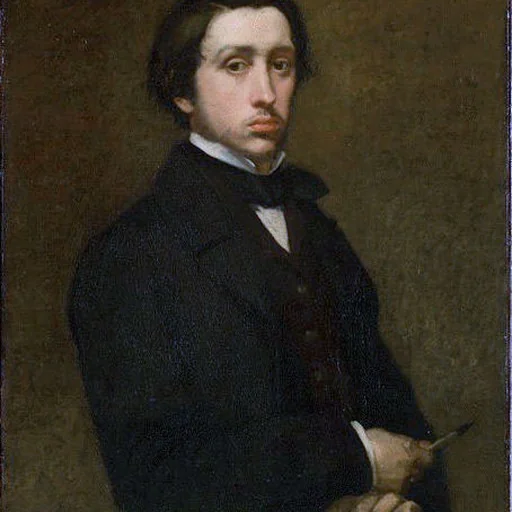
Born Hilaire-Germain-Edgar De Gas on 19 July 1834 in Paris, Edgar Degas came from an affluent banking family with aristocratic roots and spent his childhood among the cultivated circles of the French capital.

 The Poet Jan Van Beers and his Wife, The Artist's Parents
 Lærerinde og elev
 Christmas Morning
 Moder skal læse. Kunstnerens hustru og barn
 Moder skal læse. Kunstnerens hustru og barn
 Frierens besøg
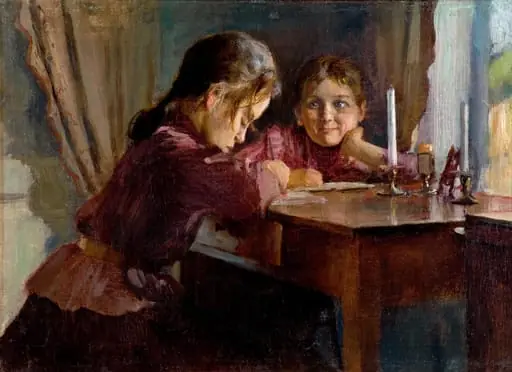 Sisarukset, Nelma ja Ilma
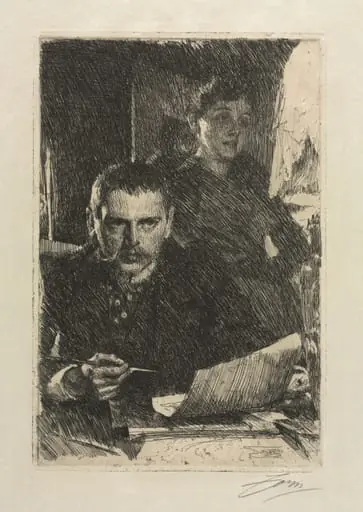 The Artist and His Wife
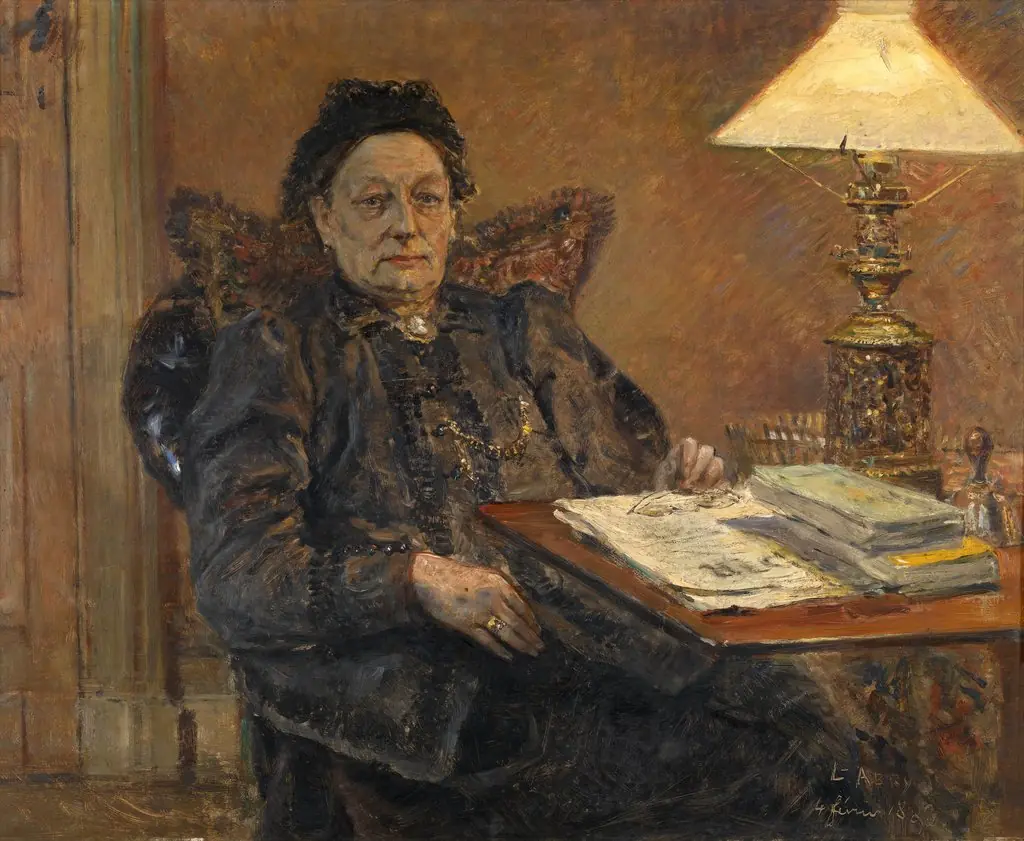 Madame Charles Dumercy
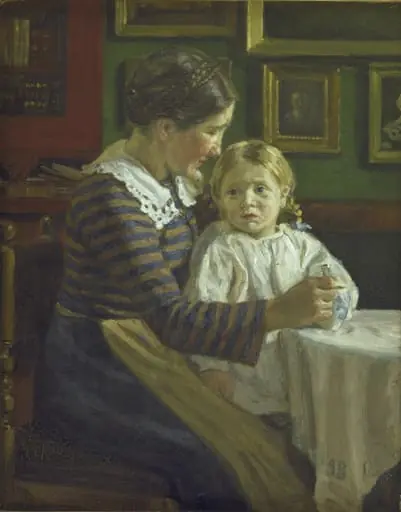 Marie får mad
 Sisäkuva Rudolfina Wasastjernan kodista, Pohjoisranta 6
 Henri Degas and His Niece Lucie Degas (The Artist's Uncle and Cousin)