Artwork
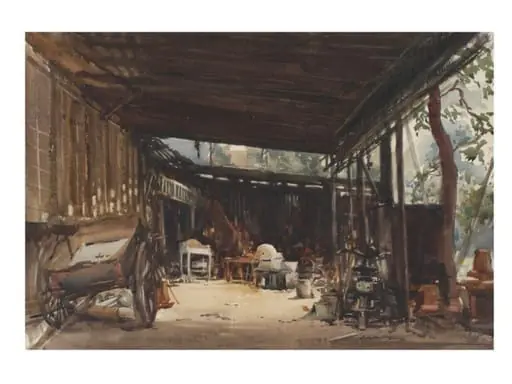
Interior of Charles West's Workshop
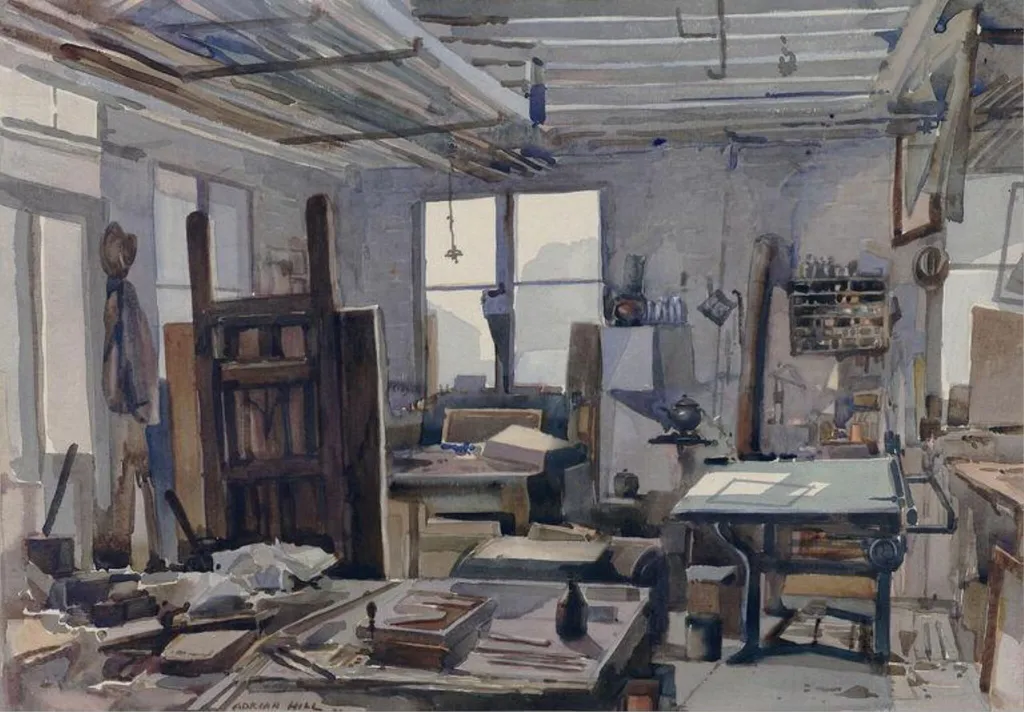
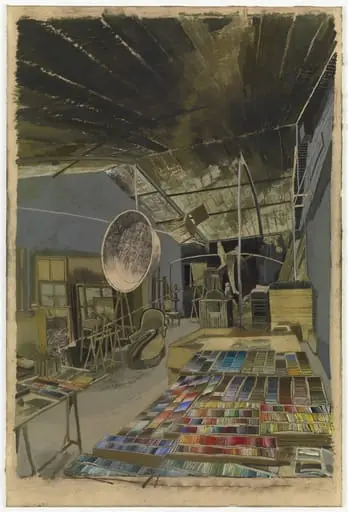
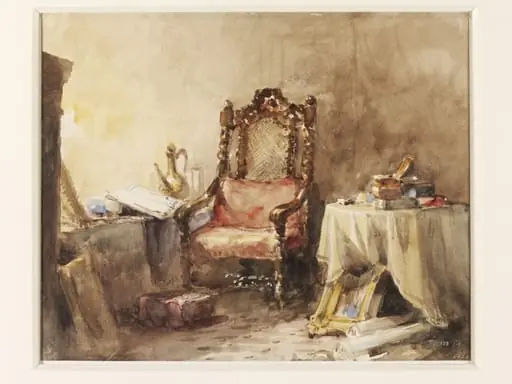
Interior of Charles West's Workshop is a watercolor work on paper by Adrian Hill. It dates from 1932 and is held in the collection of the Victoria and Albert Museum.
About this work
A workbench sits in the middle, piled with tools and half-finished wooden pieces.
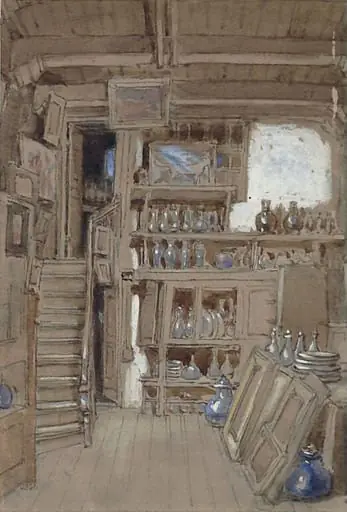
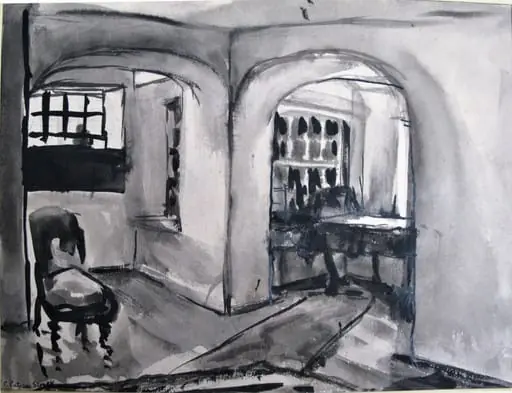
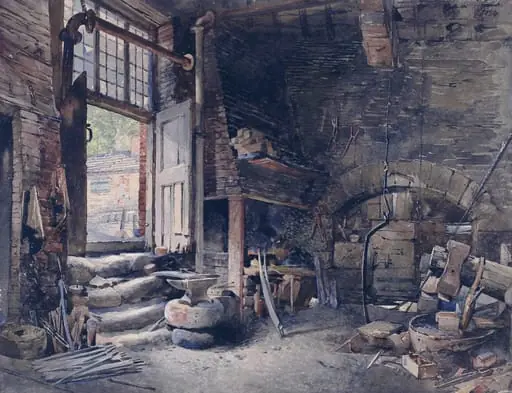
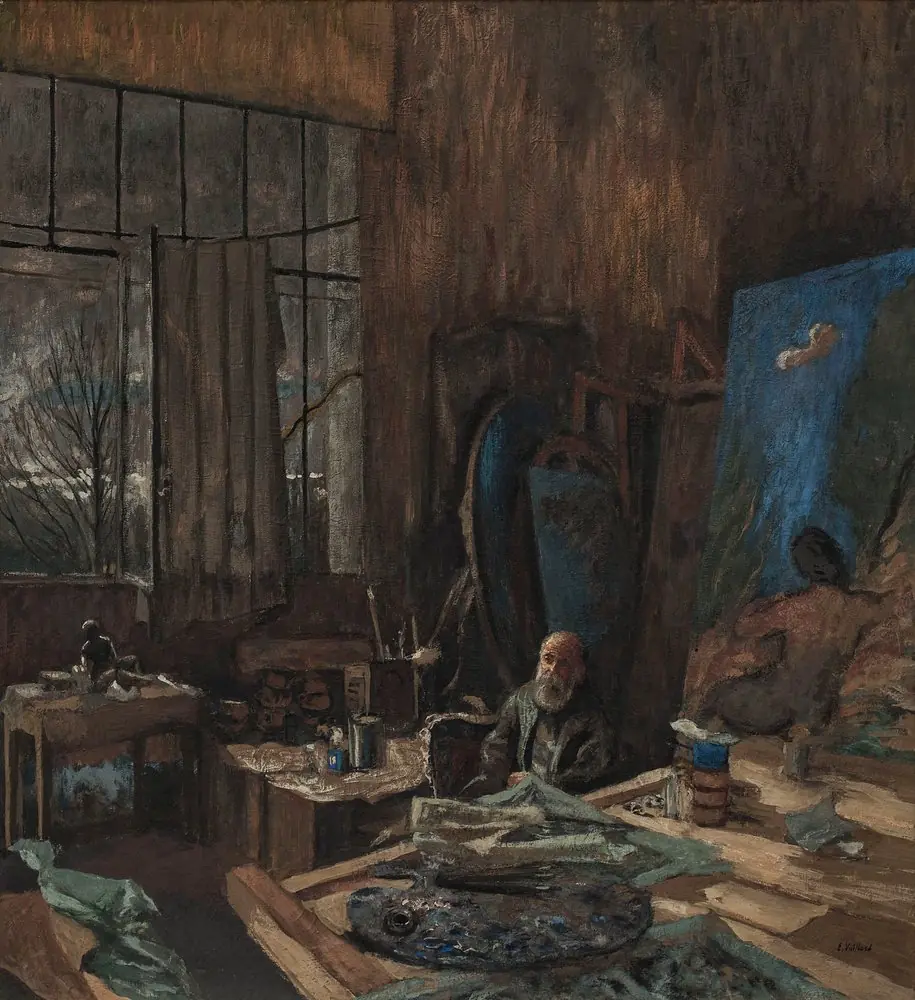
This room looks like a woodworker’s messy workshop. Sawdust covers the floor. A workbench sits in the middle, piled with tools and half-finished wooden pieces. A window lets in light, showing dust floating in the air. Shelves hold more tools, and a door stands open in the back.
The artist painted this in 1932, showing a real craftsman’s space. The loose brushstrokes make it feel quick and real, not polished.
Look up Victoria and Albert Museum to see more of their collection.
Overview
Adrian Hill's 1932 watercolour, Interior of Charles West's Workshop, captures a candid snapshot of a woodworker's space. The piece is characterized by loose brushstrokes, conveying a sense of immediacy.
Subject & Meaning
The subject is Charles West's cluttered workshop, with sawdust-covered floors, a central workbench laden with tools and unfinished woodwork, shelves stacked with tools, and a door ajar at the back. Natural light streams through a window, illuminating floating dust particles. The scene portrays the everyday reality of a craftsman's environment.
Technique & Style
Executed in watercolour, the work features expressive, quick brushstrokes that prioritize capturing the scene's authenticity over polished finish. This approach imbues the piece with a sense of spontaneity and observational realism.
History & Provenance
Created in 1932, the watercolour bears Hill's signature, date, and an inscription. Current provenance details are not specified here, though similar works can be found in collections like the Victoria and Albert Museum.
Context
Painted during a period when documentary and observational art gained prominence, Hill's work reflects an interest in depicting everyday, working-class life and environments with sincerity.
Legacy
While specific legacy details of this piece are not provided, it contributes to the broader legacy of 20th-century observational watercolourism, offering a glimpse into early 20th-century craftsmanship and workspace realities.
Artist & collection
Artist
Adrian Keith Graham Hill was a British artist, writer, art therapist, educator, and broadcaster.