Artwork
Hudson
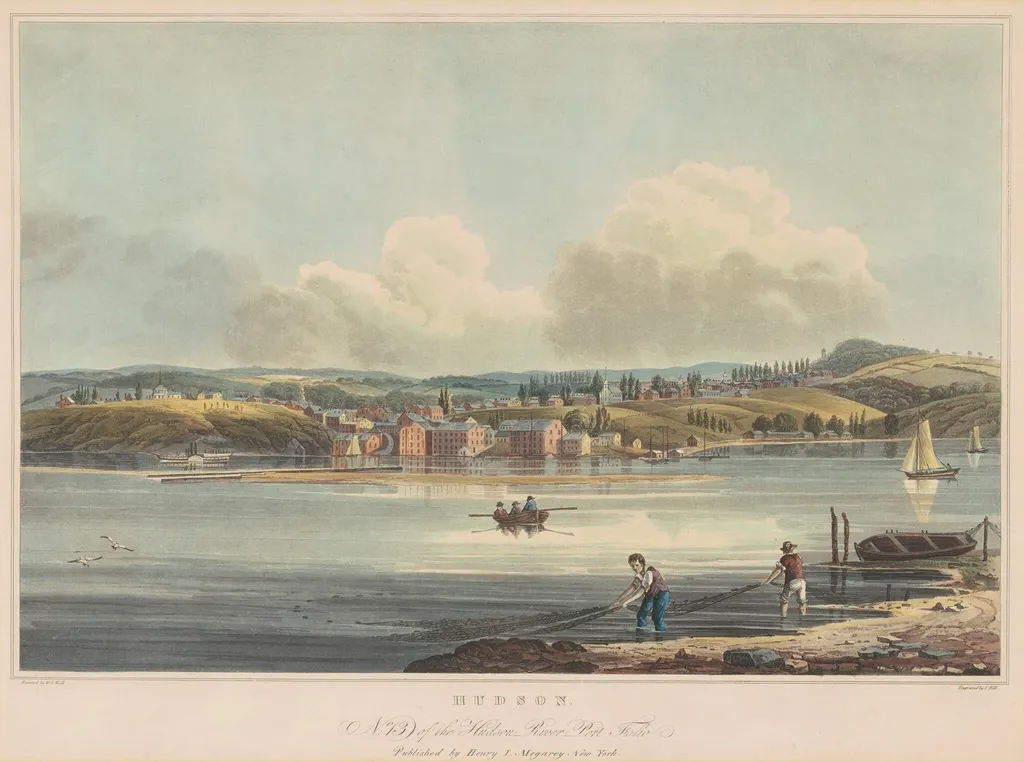
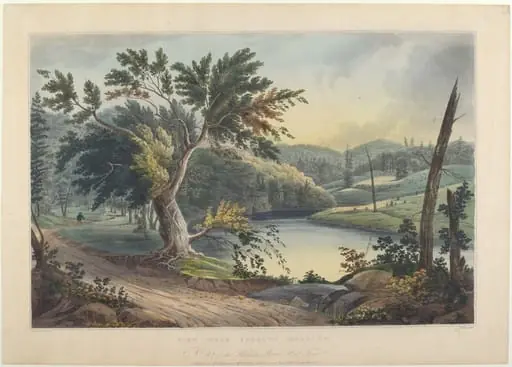
Hudson is an ink print by the Romanticist artist John Hill. It dates from 1825 and is held in the collection of the National Gallery of Art.
About this work
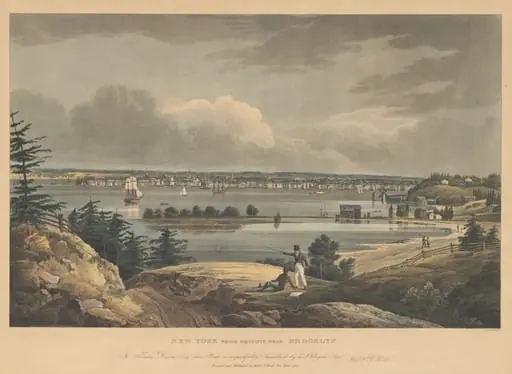
John Hill’s 1825 engraving shows a wide view of the Hudson River. The sky fills half the page with soft gray clouds. Below, the water looks flat and dark, like glass.
This hand-colored print uses tiny lines to shade the hills. The colors are light but careful—no bright blues or greens here. It feels quiet, like a snapshot from long ago.
Want to see more like this? Try John Hill’s other prints.
Overview
The composition divides the page evenly between sky and water, with subtle tonal variations guiding the viewer’s eye across the landscape.
Created in 1825 by John Hill, Hudson is a hand-colored engraving and aquatint on wove paper. It presents a broad, horizontal vista of the Hudson River, emphasizing stillness and atmospheric depth. The composition divides the page evenly between sky and water, with subtle tonal variations guiding the viewer’s eye across the landscape. The print’s quiet demeanor reflects a deliberate restraint in both imagery and color.
Subject & Meaning
The scene depicts a tranquil stretch of the Hudson River, framed by distant, softly modeled hills and a cloud-filled sky. There are no figures or signs of human activity, suggesting a contemplative view of nature rather than a record of settlement or industry. The absence of dramatic elements reinforces a sense of solitude, aligning with early 19th-century ideals of serene, unspoiled American scenery.
Technique & Style
Hill employed fine linear engraving and aquatint to render subtle gradations of tone in the hills and water. Hand-coloring was applied with restraint, using muted washes of gray, brown, and pale green that avoid saturation. The flat, mirror-like surface of the river contrasts with the textured hills, creating a quiet rhythm between stillness and detail. The technique prioritizes atmospheric effect over sharp definition.
History & Provenance
The print was produced in 1825 during a period when topographical prints were popular for documenting American landscapes. John Hill, known for his work in both scientific and artistic illustration, likely created this as part of a series of regional views. Its survival in private and institutional collections suggests it was appreciated for its accuracy and calm aesthetic rather than its novelty.
Context
Produced during the early years of American landscape consciousness, Hudson aligns with the emerging interest in the nation’s natural scenery, preceding the more dramatic visions of the Hudson River School. Unlike later romanticized depictions, Hill’s work avoids idealization, offering instead a measured, observational approach that reflects the precision of early American print culture.
Legacy
Though not widely exhibited today, Hudson remains a representative example of early 19th-century American printmaking that valued quiet observation over theatricality. It contributes to the understanding of how landscape was documented before the rise of painting as the dominant medium. Hill’s restrained style influenced later printmakers who sought to capture the American environment with nuance rather than grandeur.
Artist & collection


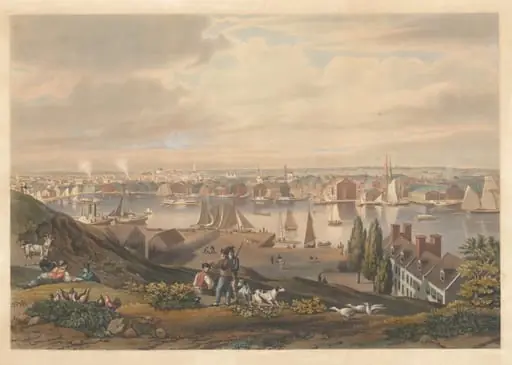 Baltimore from Federal Hill
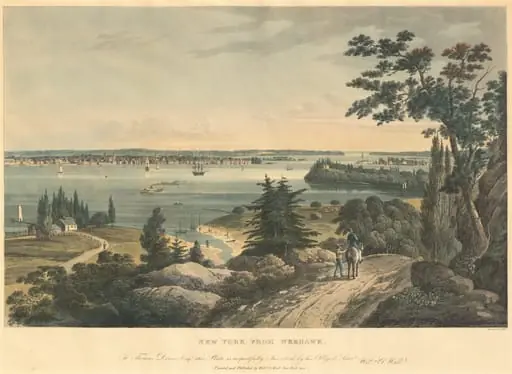 New York from Weehawk
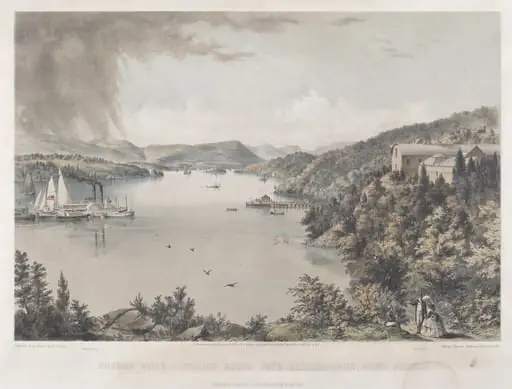 Hudson River Portfolio: Looking South from Battery Knox, West Point
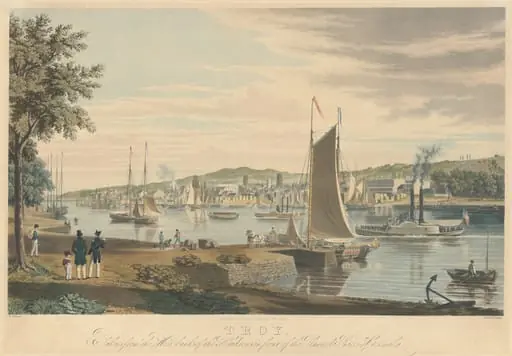 Troy: Taken from the West Bank of the Hudson in front of the United States Arsenal
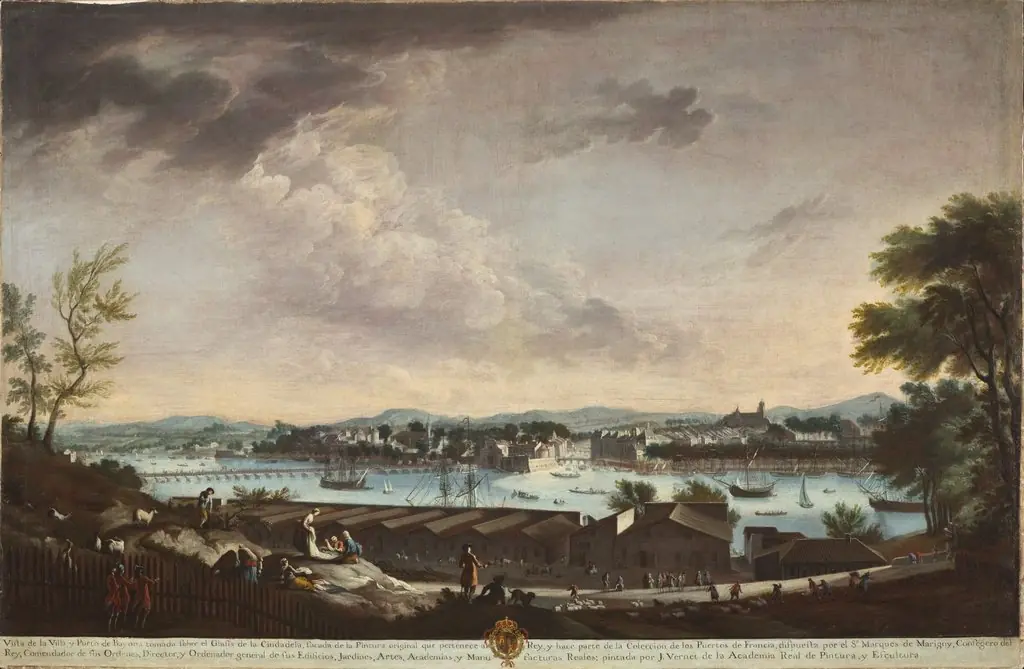 View of the Town and Port of Bayonne (La villa y puerto de Bayona)
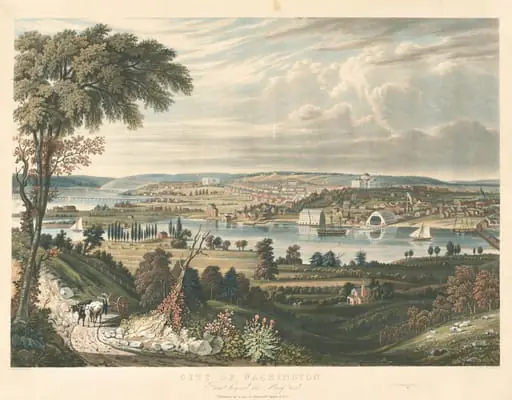 City of Washington: From beyond the Navy Yards
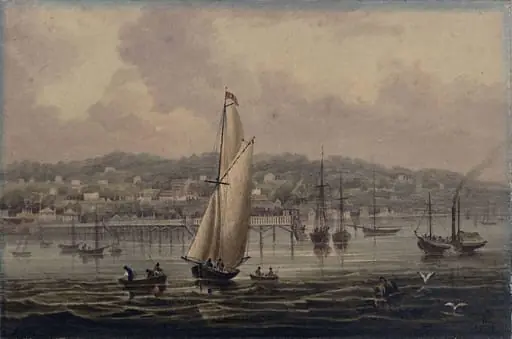 Ryde, Isle of Wight
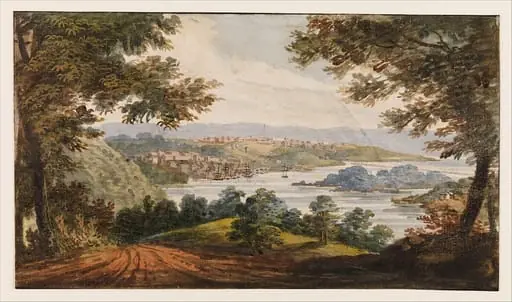 Washington and Georgetown from the Alexandria Road
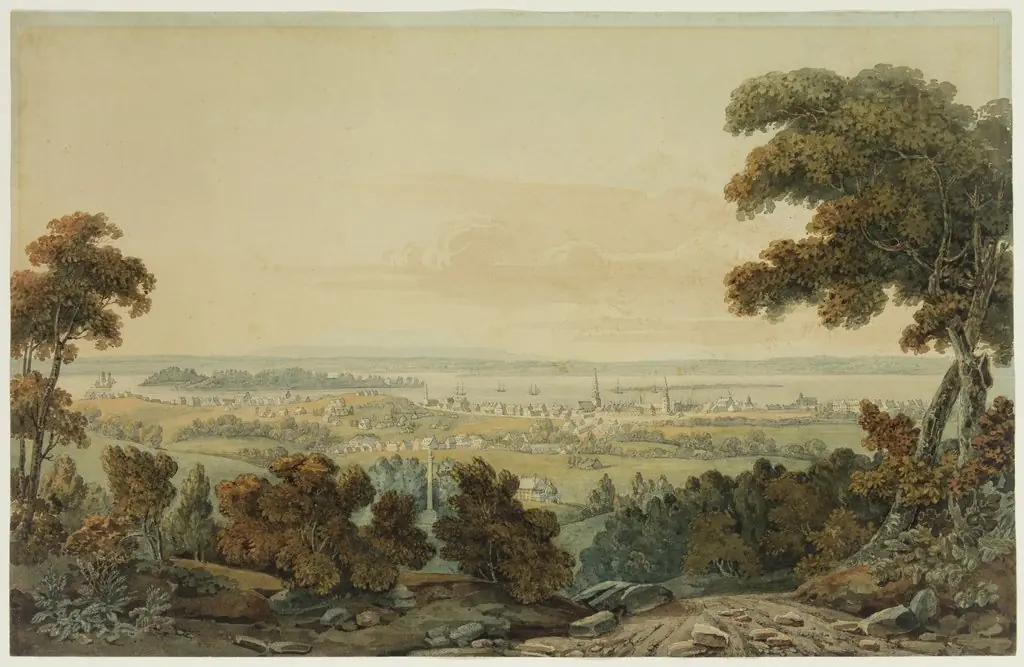 Montreal from the Mountain and View of the St. Lawrence River
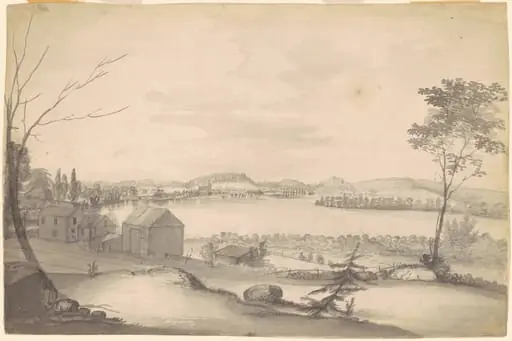 Study for "View of Springfield on the Connecticut River"
![Hudson River Landing [recto], by Alexander Robertson](https://artifactworldgallery.com/img/alexander-robertson--hudson-river-landing-recto--a7371e92bfced214-w320.webp) Hudson River Landing [recto]
Hudson River Landing [recto]