Artwork
Troy: Taken from the West Bank of the Hudson in front of the United States Arsenal
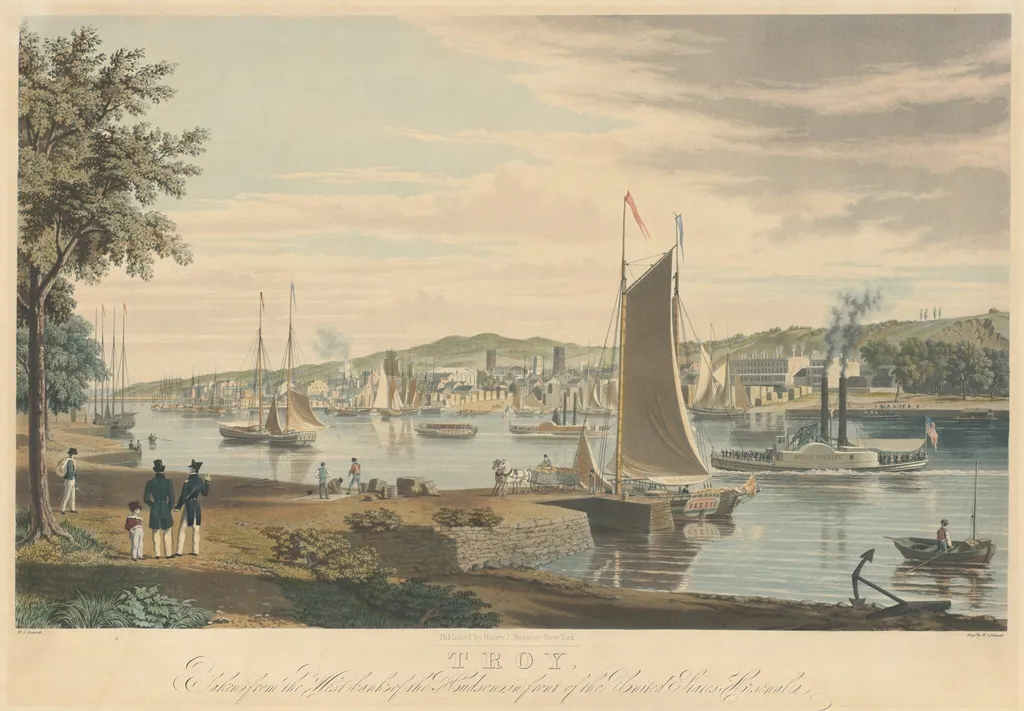
Troy: Taken from the West Bank of the Hudson in front of the United States Arsenal is an ink print by the Romanticist artist William James Bennett. It dates from 1838 and is held in the collection of the National Gallery of Art.
About this work
Overview
William James Bennett’s 1838 hand‑colored aquatint, titled *Troy: Taken from the West Bank of the Hudson in front of the United States Arsenal*, depicts a tranquil river scene on the Hudson opposite Troy, New York. The composition balances the water’s surface, dotted with several vessels—including a prominent steamboat flying an American flag—and the distant skyline of the city’s buildings and hills.
Subject & Meaning
The print captures a moment of everyday commerce and leisure along the Hudson, emphasizing the river’s role as a transportation artery in early‑19th‑century America. The presence of the steamboat suggests technological progress, while pedestrians along the bank convey a sense of civic pride and calm within the expanding urban landscape.
Technique & Style
Executed as an aquatint on wove paper, the image is enhanced with selective hand‑coloring and limited engraving. Bennett’s use of warm browns and cool greens creates depth, while the cloudy sky with occasional blue patches adds atmospheric nuance. The work reflects Romantic‑era interests in landscape, light, and the sublime qualities of nature.
History & Provenance
Created in 1838, the print was produced during a period when American artists increasingly documented regional scenery for both domestic and European audiences. It remains part of several public collections that focus on early American printmaking, illustrating Bennett’s contribution to the visual record of Hudson River towns.
Artist & collection

Artist
William James Bennett (1787−1844), was a British-born painter and engraver, active in the United States from 1816.

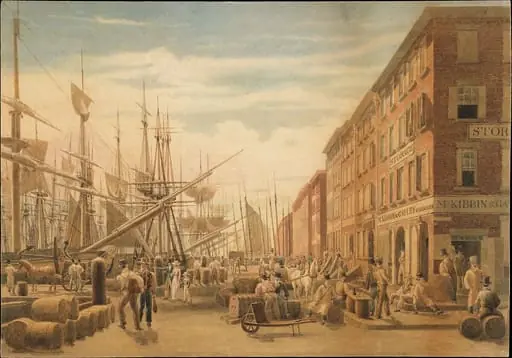 View of South Street, from Maiden Lane, New York City
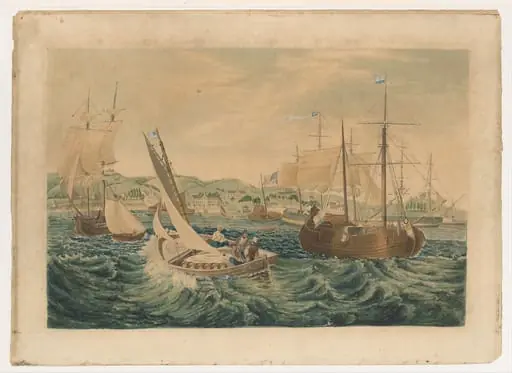 Quarantine, Staten Island
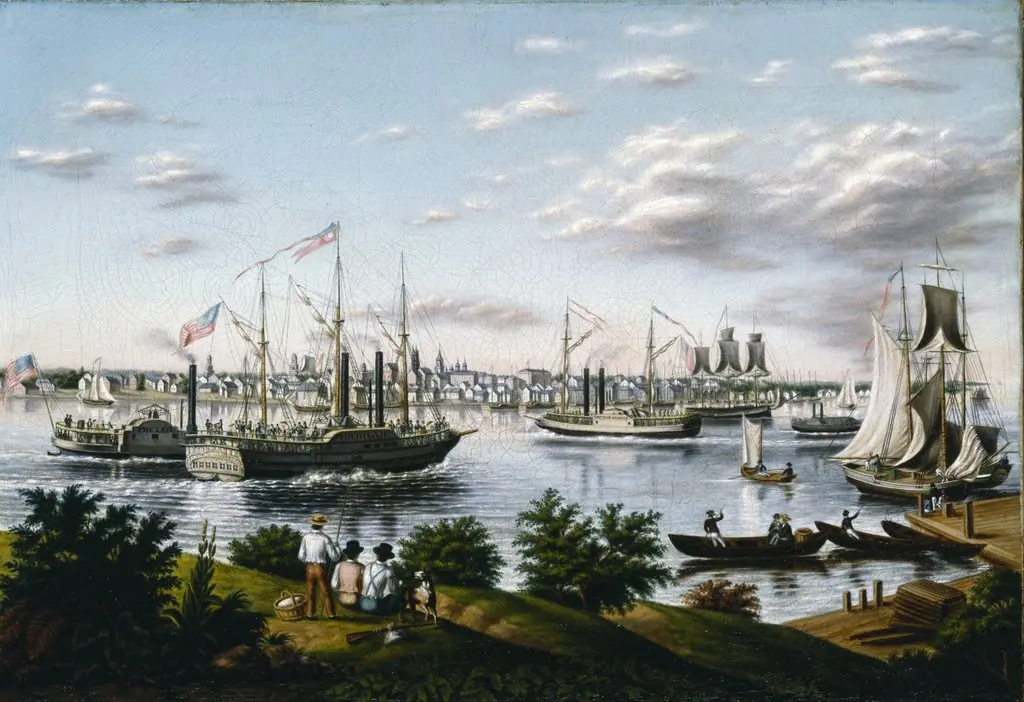 View of Detroit in 1836
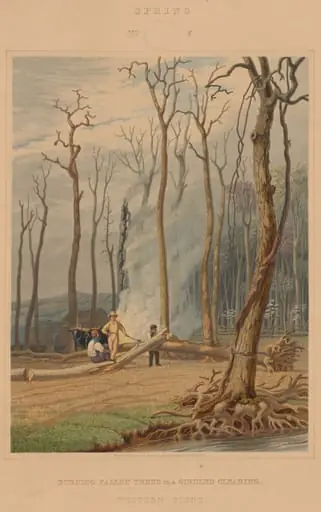 Spring--Burning Fallen Trees in a Girdled Clearing. Western Scene
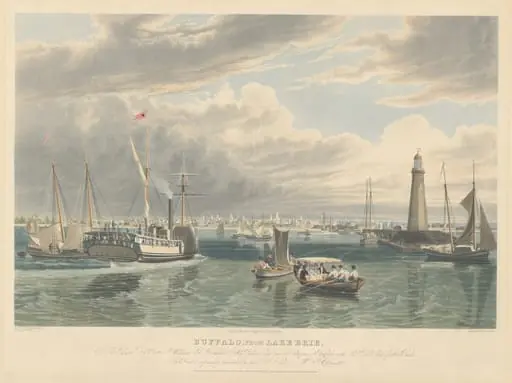 Buffalo, from Lake Erie
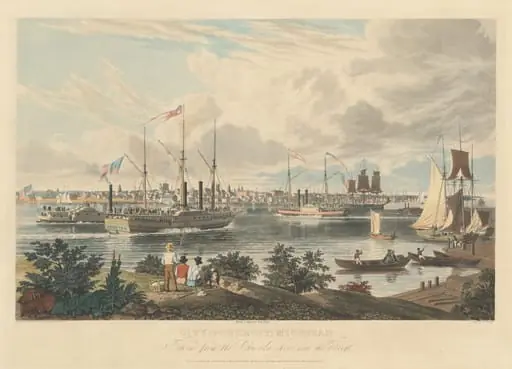 City of Detroit, Michigan: Taken from the Canada Shore near the Ferry
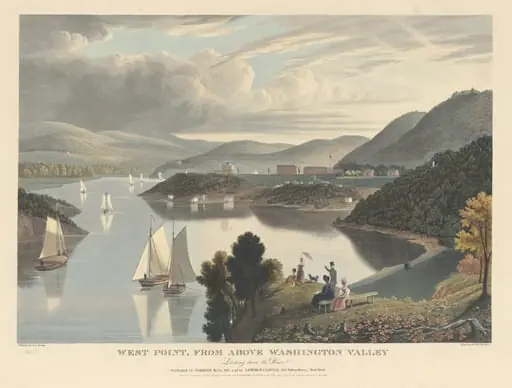 West Point, from above Washington Valley: Looking down the River
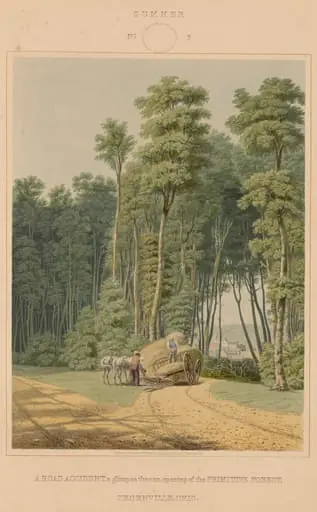 Summer--A Road Accident. A glimpse thro' an opening of the Primitive Forest. Thornville, Ohio
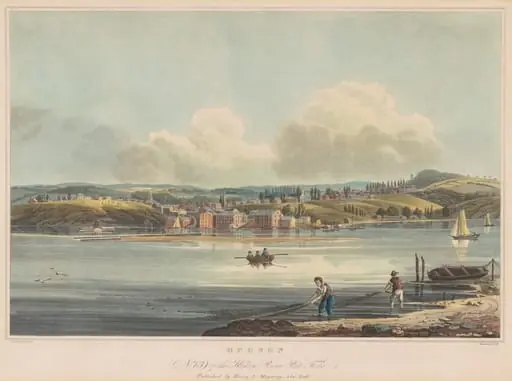 Hudson
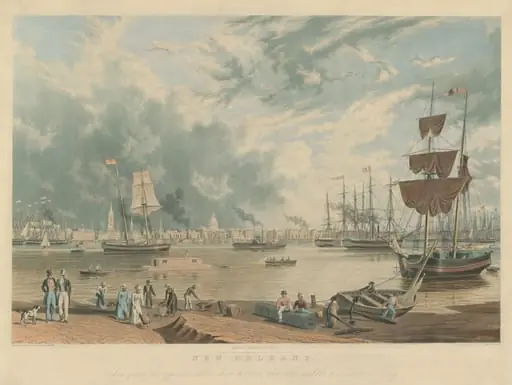 New Orleans: Taken from the Opposite Side, a Short Distance above the Middle or Picayyune Ferry
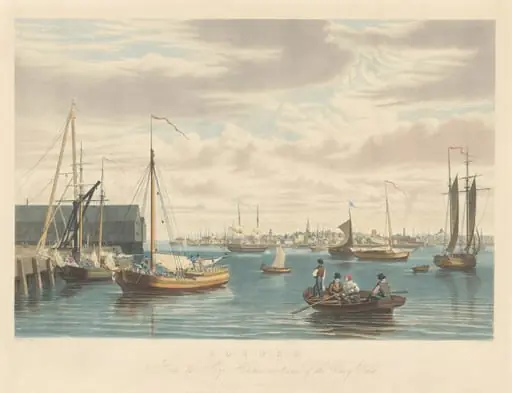 Boston: From the Ship House West End of the Navy Yard
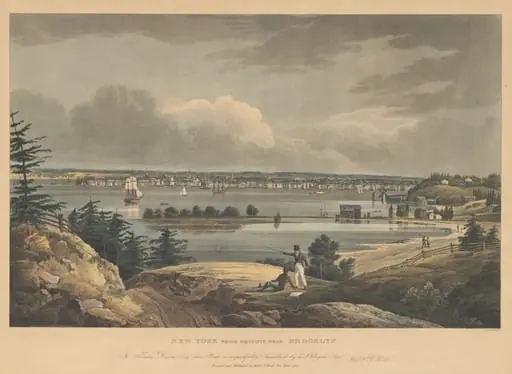 New York from Heights near Brooklyn
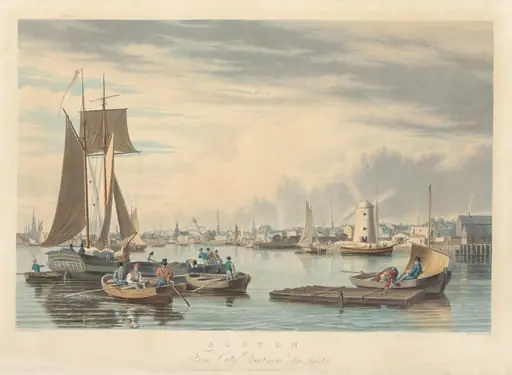 Boston: From City Point near Sea Street
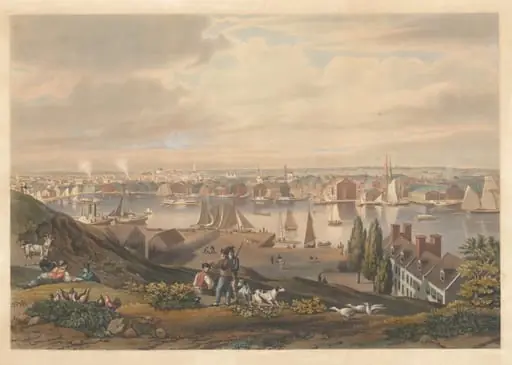 Baltimore from Federal Hill
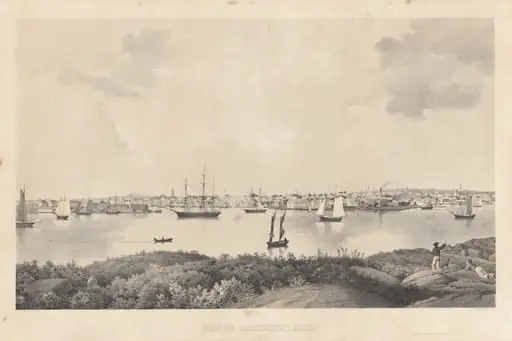 View of Gloucester, Mass.
 Ryde, Isle of Wight
 View of the Town and Port of Bayonne (La villa y puerto de Bayona)
 Untitled
 Egypt and Nubia, Volume III: Alexandria