Artwork
Oyster Cove
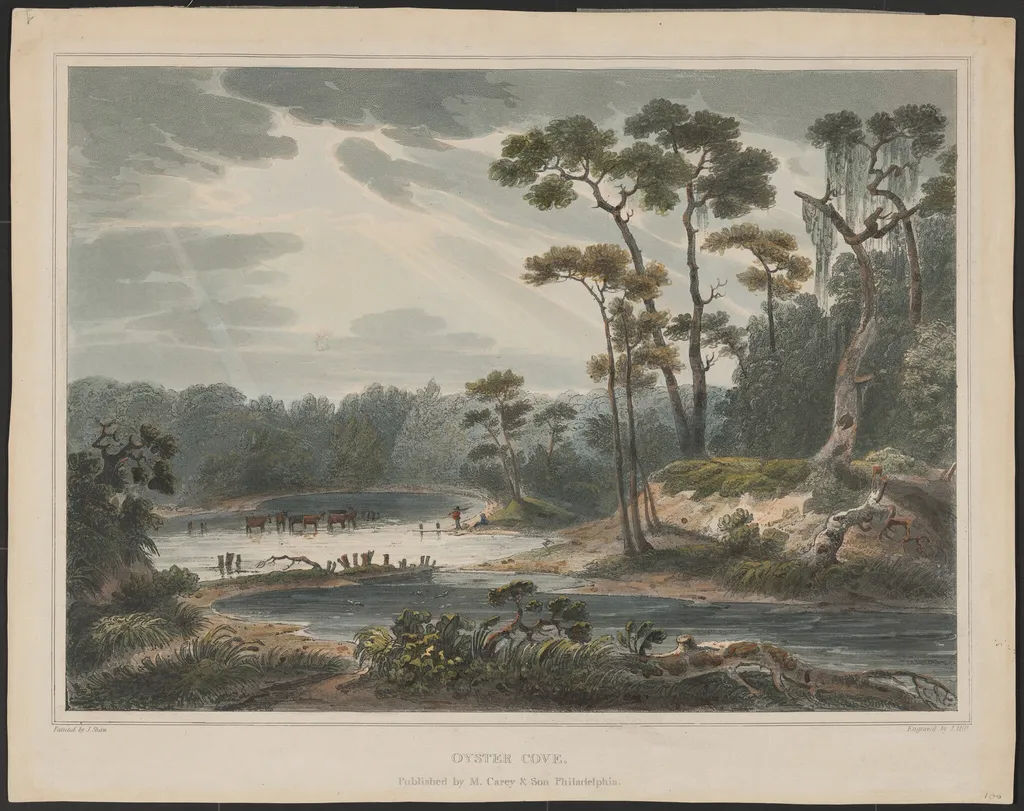
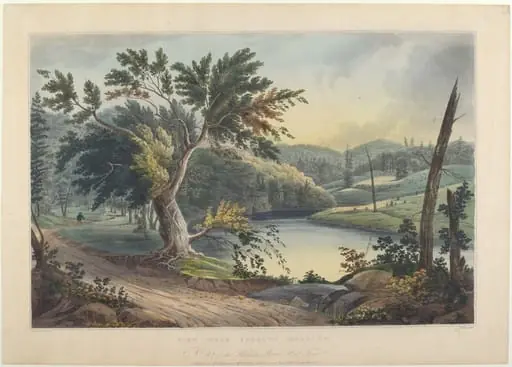
Oyster Cove is a watercolor print by the Romanticist artist John Hill. It dates from 1820 and is held in the collection of the National Gallery of Art.
About this work
Overview
John Hill’s 1820 print *Oyster Cove* is an etching combined with aquatint and watercolor touches on wove paper. The work is part of the National Gallery of Art’s collection in Washington, D.C., and is catalogued as a print rather than a painting.
Subject & Meaning
The image depicts a tranquil inlet framed by tall trees, with a placid water surface and a modest gathering of figures on the bank. A few horses graze nearby, and the sky is rendered in soft, lightly clouded tones, conveying a calm, everyday scene that suggests a place where locals harvested shellfish.
Technique & Style
Hill employed traditional etching lines for the structural elements, enhanced by aquatint to achieve broad tonal washes. Watercolor additions provide subtle color modulation, preserving the naturalistic palette while allowing delicate atmospheric effects typical of early 19th‑century printmaking.
History & Provenance
Created in 1820, the print entered the National Gallery of Art’s holdings through acquisition (specific acquisition details are not recorded in the provided data). Its presence in a major public institution reflects its recognition as a representative work of its period.
Context
The title *Oyster Cove* points to an actual coastal locale known for shellfish gathering, situating the scene within a recognizable landscape. The composition aligns with Romantic-era interests in nature’s serene aspects, using a modest, everyday setting to evoke contemplative feeling.
Artist & collection


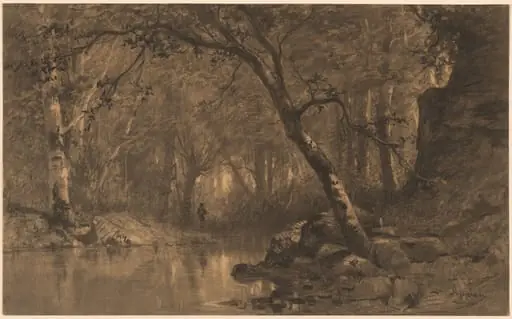 A Woodland River with a Fisherman
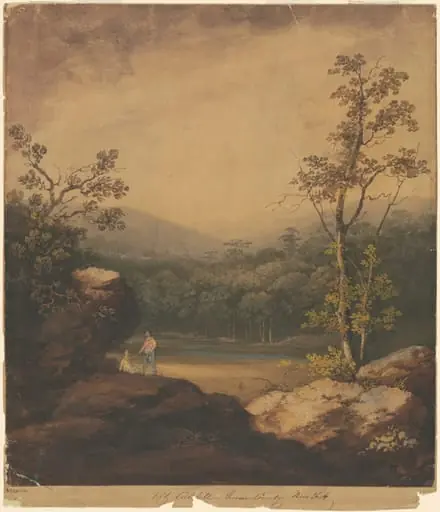 At Catskill, Greene County, New York
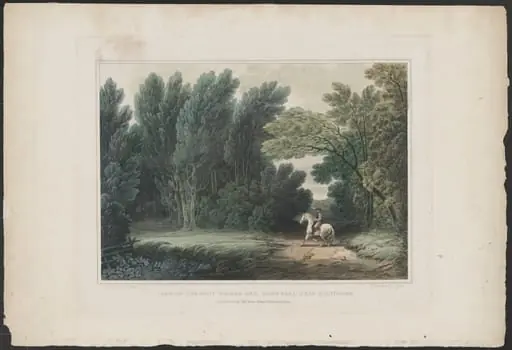 View of the Spot Where General Ross Fell, Near Baltimore
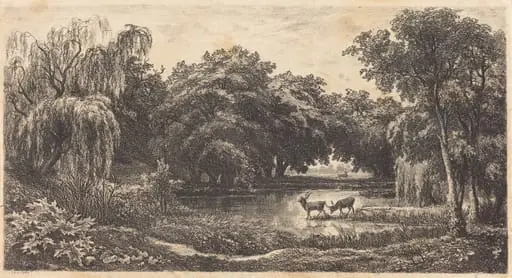 Pool with Deer (La Mare aux cerfs)
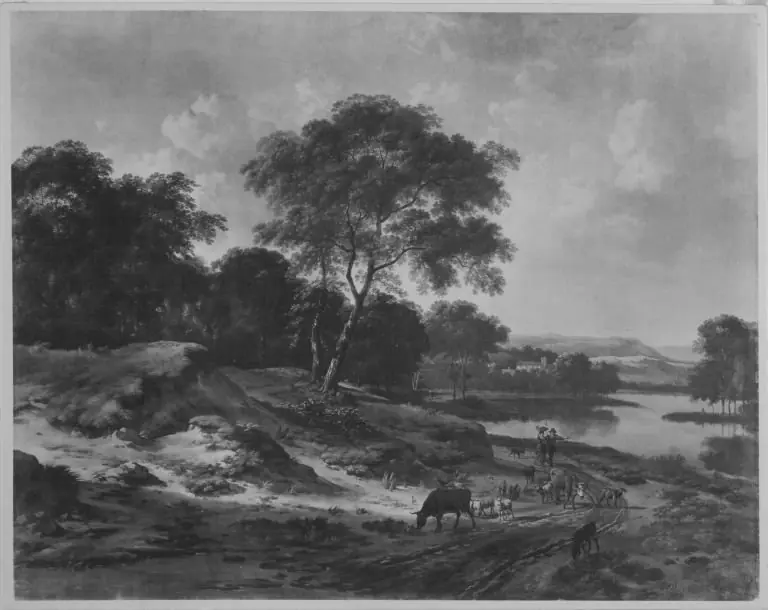 Landschaft mit Hirten
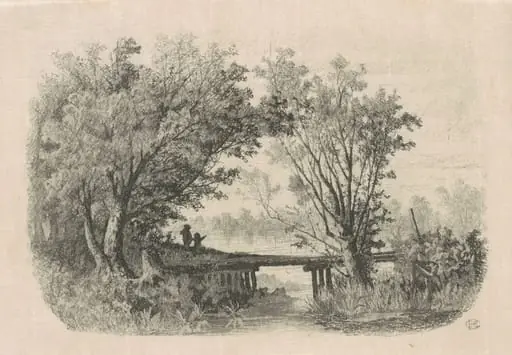 Willows
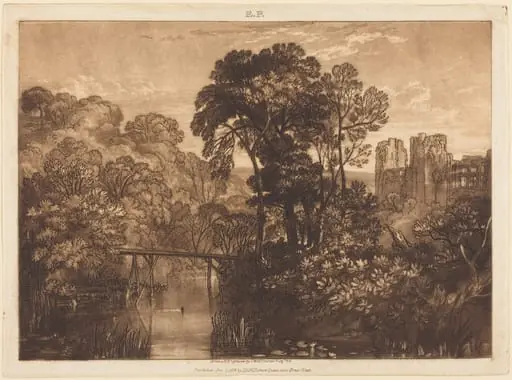 Berry Pomeroy Castle
 Canards Sauvages
 Wynnstay Park, Derbyshire
 Landscape with Four Trees
 Encampment on the River Belus