Artwork
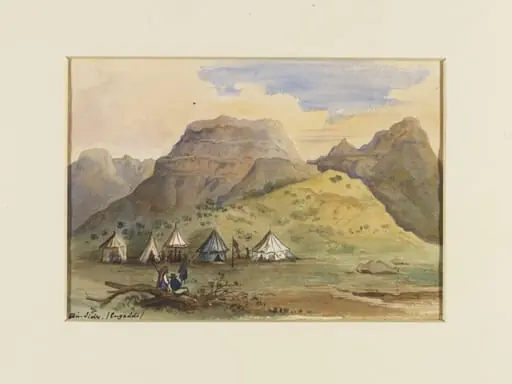
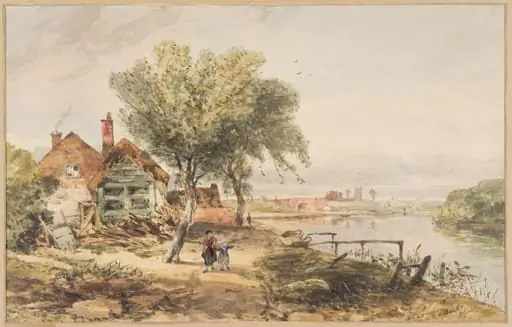
Encampment on the River Belus
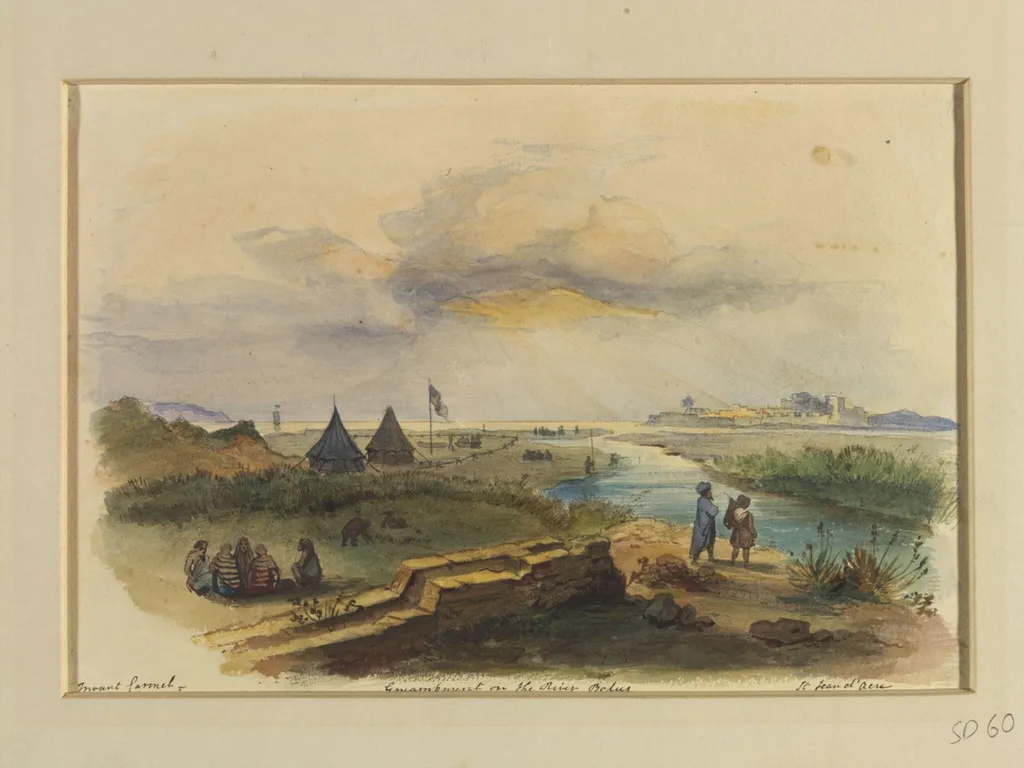
Encampment on the River Belus is a watercolor work on paper by the Romanticist artist R. Aulick. It dates from 1848 and is held in the collection of the Victoria and Albert Museum. Created in 1848 by R.
About this work
Overview
It was produced as a preparatory illustration for William Francis Lynch’s 1849 expedition account, intended to visually support the narrative of a U.
Created in 1848 by R. Aulick, this watercolour depicts a tranquil riverside encampment along the Belus River. It was produced as a preparatory illustration for William Francis Lynch’s 1849 expedition account, intended to visually support the narrative of a U.S. survey mission in the Levant. The work was later acquired in 1963 from Siddons Gallery by a private collector, documented in Rodney Searight’s records.
Subject & Meaning
The scene captures a modest encampment with figures resting along a low wall and two individuals near the water’s edge. Thatched tents line the bank, a single flag marking the encampment’s presence. The inclusion of distant buildings and a lighthouse suggests a real, inhabited landscape rather than an idealized setting. The composition emphasizes quiet daily life, reflecting the expedition’s focus on documenting local conditions rather than dramatic events.
Technique & Style
Aulick employed loose, fluid brushwork and muted, soft washes to convey atmosphere rather than detail. The sky is rendered with delicate cloud streaks, and the river reflects pale tones without sharp definition. The tents and figures are suggested with minimal strokes, prioritizing mood over precision. This approach aligns with 19th-century topographical watercolour practices, where clarity of place took precedence over artistic flourish.
History & Provenance
The watercolour was commissioned as an illustration for Lynch’s 1849 publication, linking it directly to a U.S. government-sponsored scientific mission. It remained in circulation as a printed plate before entering private hands. In March 1963, it was purchased from R. Appleby at Siddons Gallery for £1, a transaction noted in Rodney Searight’s archival records, indicating its modest market value at the time.
Context
The Belus River, likely the modern-day Nahr el-Bireh in Lebanon, was a site of interest during 19th-century Western expeditions seeking to map and document biblical and classical landscapes. Aulick’s image reflects the era’s trend of combining scientific documentation with visual record-keeping. Such illustrations were essential for publications aiming to validate expedition findings through tangible, observable detail.
Legacy
Though not widely exhibited, the work remains a representative example of mid-19th-century topographical watercolour used in scientific publishing. Its survival in private collections and archival records underscores its role as a functional artifact rather than a celebrated artwork. It contributes to understanding how visual media supported exploration narratives in an era before photography became commonplace.
Artist & collection
Artist
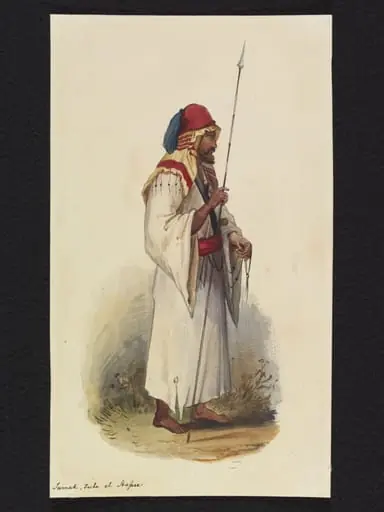
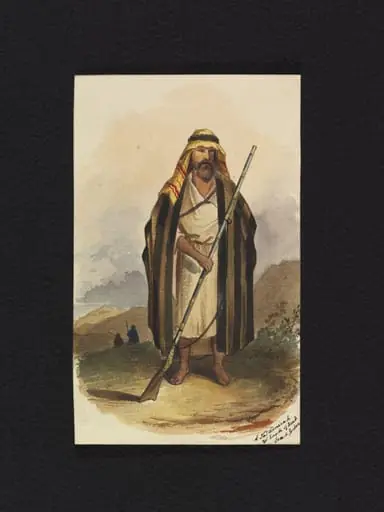
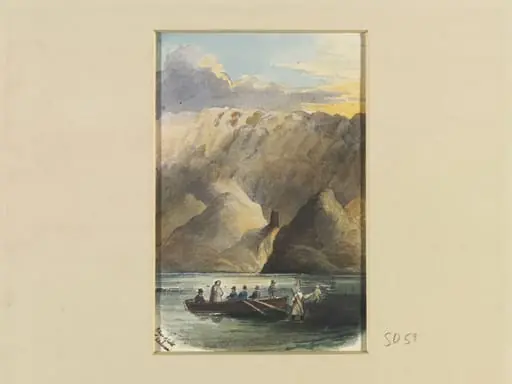
British artist R. Aulick traveled the Dead Sea’s western shore in the late 1840s and sketched the landscape in watercolour. The five works in this bundle show Bedouin camps by the Belus River, an encampment at…

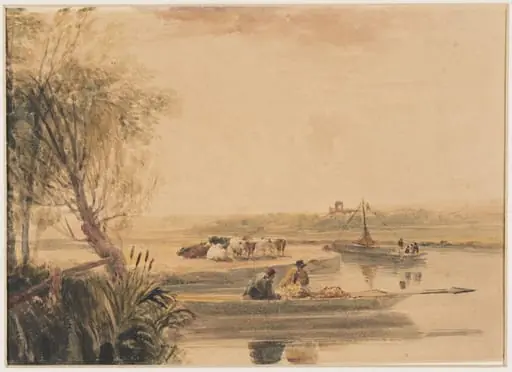 Landscape with Cattle
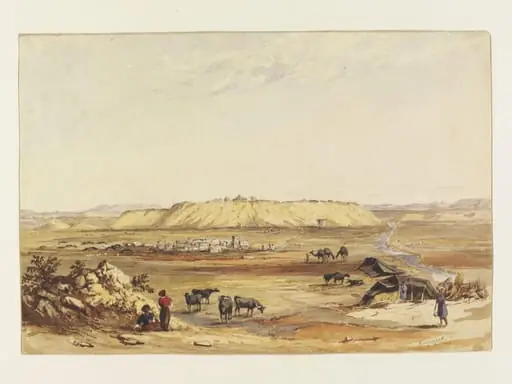 Kouyunjick
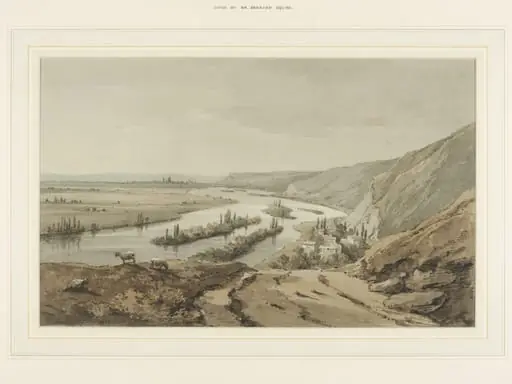 Distant view of Rouen
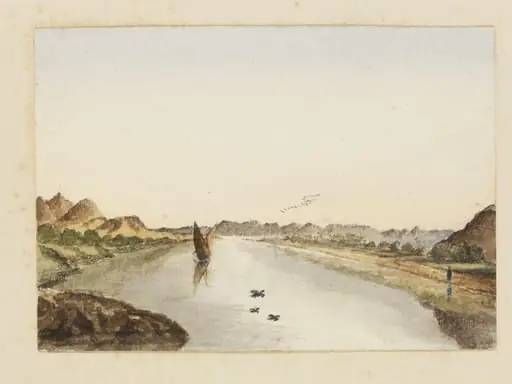 View of the Nile
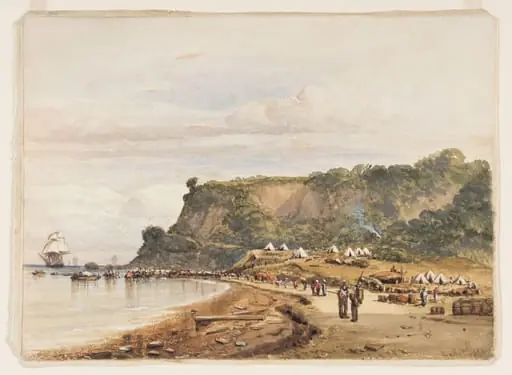 Landing of British and French Troops at Varna on the Black Sea from H.M.S Bellerophon, 17 July 1854, in the Crimean War
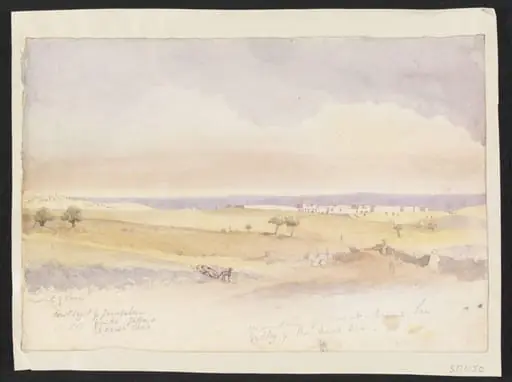 First sight of Jerusalem from the Jaffa & El Arish road
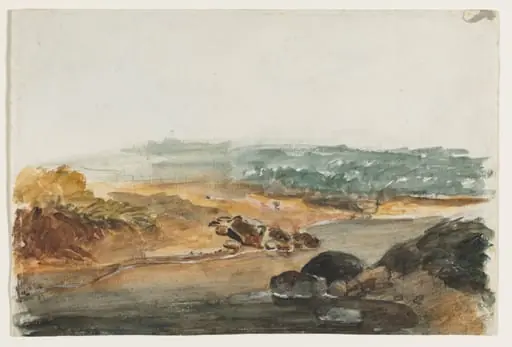 Landscape (recto)
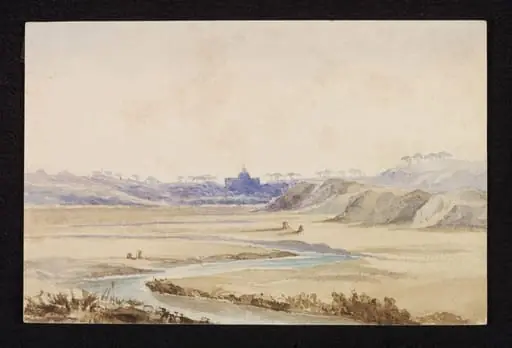 Landscape with a building, probably a tomb, in the distance
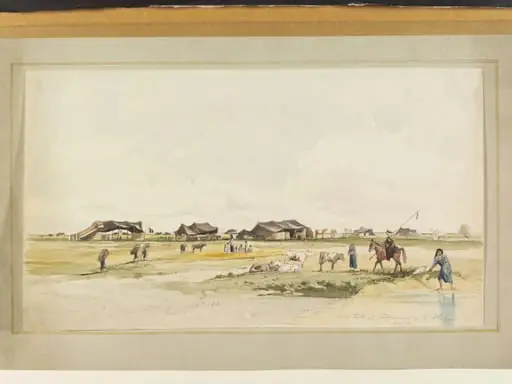 Arab tents at Ledgemeeat on the Khabour
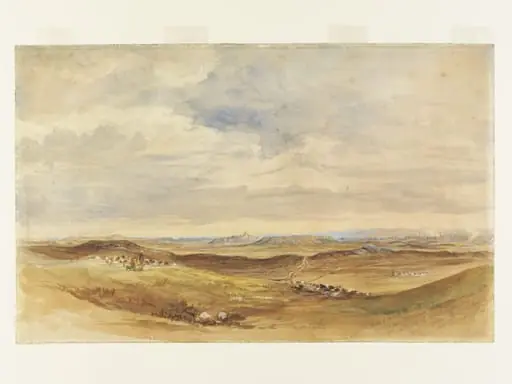 Nineveh from the North-East
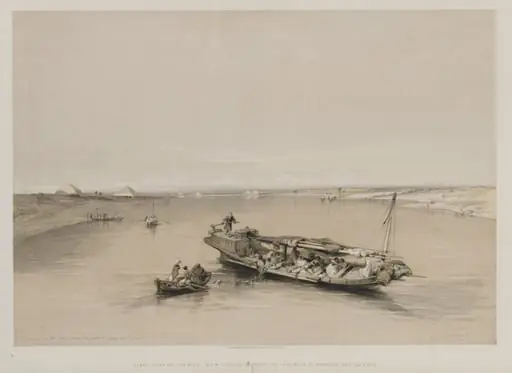 Egypt and Nubia, Volume I: View on the Nile Looking Towards the Pyramids of Dashour and Saccara
 View on the Thames near Sonning