Artwork
Untitled
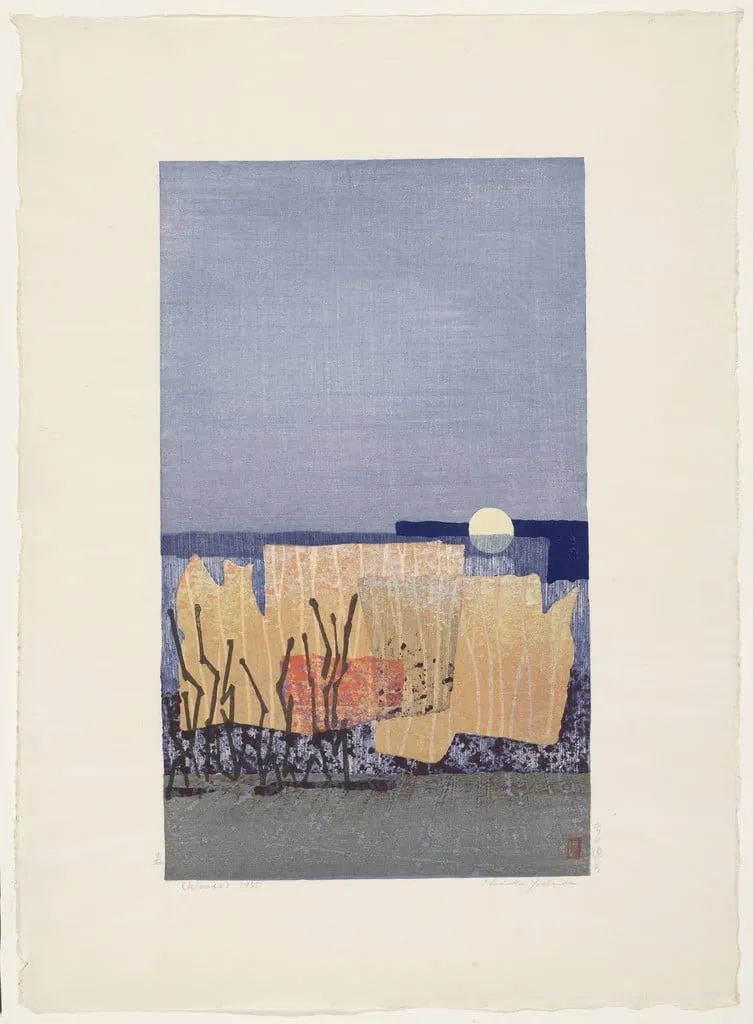
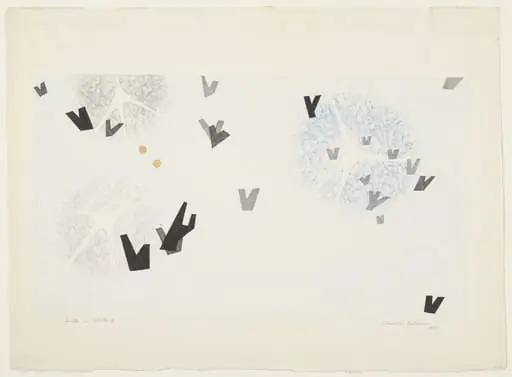
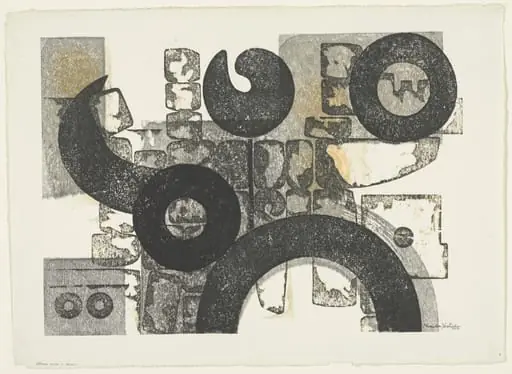
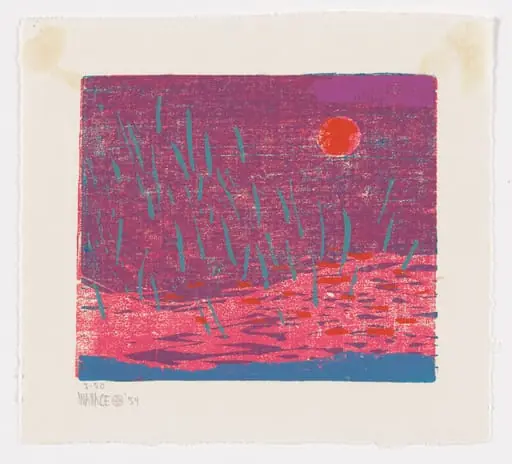
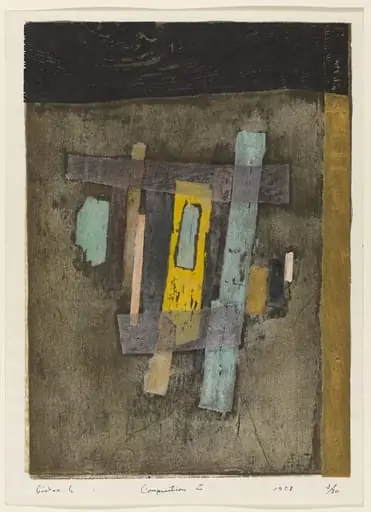
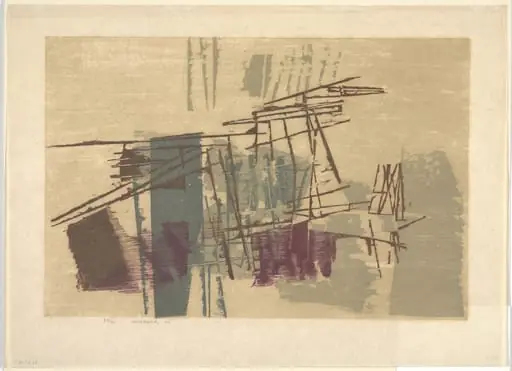
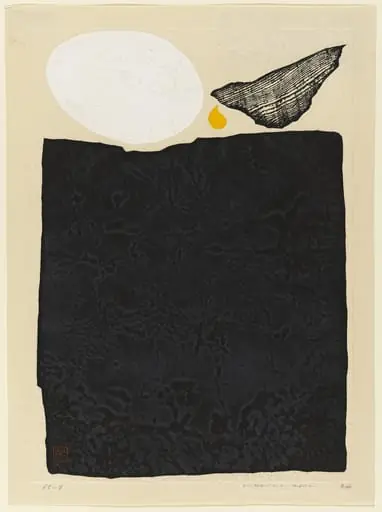
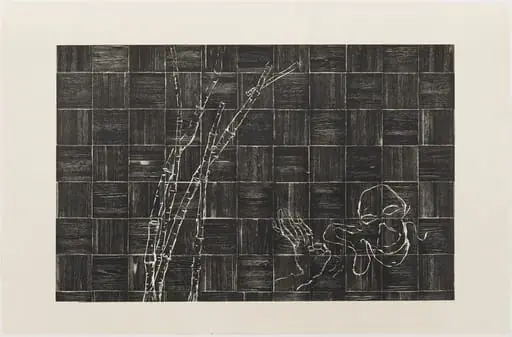
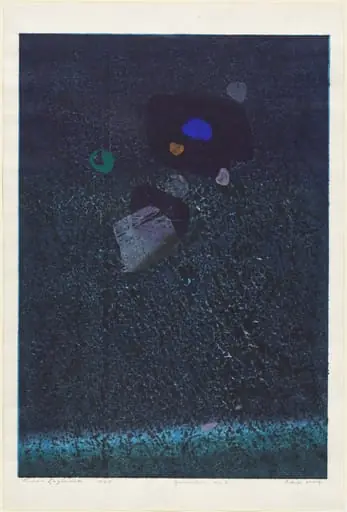
Untitled is an ink print by Hodaka Yoshida. It dates from 1955 and is held in the collection of the Museum of Modern Art.
About this work
Overview
It presents a minimalist coastal scene at twilight, rendered through hand-carved blocks and printed in limited tones.
Created in 1955, this woodcut by Hodaka Yoshida is part of The Museum of Modern Art’s collection. It presents a minimalist coastal scene at twilight, rendered through hand-carved blocks and printed in limited tones. The composition avoids detail, relying instead on bold, unmodulated shapes to suggest form and atmosphere. The technique emphasizes the physicality of the carving process, with visible grain and uneven edges.
Subject & Meaning
The scene depicts a quiet beach at dusk, with a low moon hovering above still water. Sparse trees and a single red-roofed structure anchor the horizon, suggesting human presence without narrative. The absence of figures and the muted palette evoke stillness and solitude. The work invites contemplation rather than storytelling, focusing on mood through elemental forms and restrained composition.
Technique & Style
Yoshida employed traditional woodcut methods, carving directly into the block to create thick, irregular lines that define shapes without shading. Colors are reduced to a narrow range—gray-blue, dark sand, pale moonlight, and a single red accent—applied flatly with no gradation. The print retains the tactile quality of hand-carving, with rough textures and slight ink variations that highlight the process over polish.
History & Provenance
Made in 1955, the work entered The Museum of Modern Art’s collection as part of its postwar print acquisitions. It reflects Yoshida’s engagement with modernist abstraction while drawing from Japanese print traditions. No earlier ownership records are widely documented, but its inclusion in MoMA’s holdings situates it within mid-century international printmaking dialogues.
Context
In postwar Japan, artists like Yoshida reinterpreted traditional printmaking through modernist lenses. This woodcut aligns with a broader movement toward abstraction and emotional restraint, moving away from detailed realism. While rooted in ukiyo-e techniques, the work’s simplicity and emotional tone resonate with contemporary Western minimalism, reflecting a cross-cultural aesthetic shift in the 1950s.
Legacy
The print exemplifies Yoshida’s contribution to the sōsaku-hanga movement, which emphasized the artist’s direct involvement in carving and printing. Its enduring presence in MoMA’s collection underscores its role in redefining printmaking as a medium for personal expression. Later artists have cited its economy of form as influential in the evolution of abstract print practices.
Artist & collection
Artist
Hodaka Yoshida was a Japanese modernist artist who worked first in oils, and then from 1950 in the woodblock print medium. From the beginning of his career, he broadened the range of styles and techniques used by Yoshida family artists.