Artwork
Adirondacks
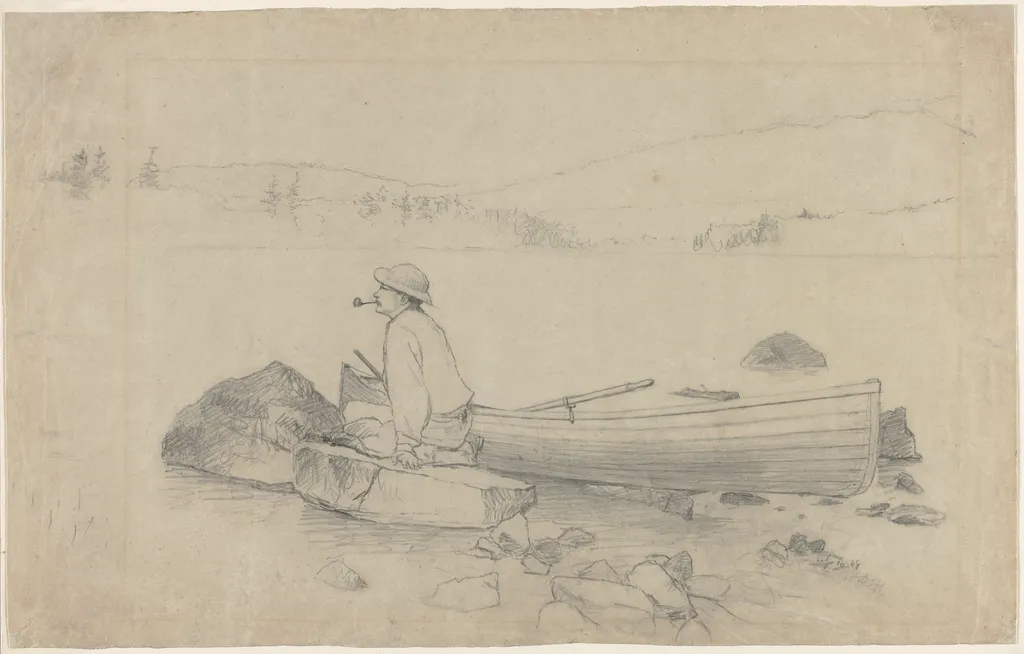
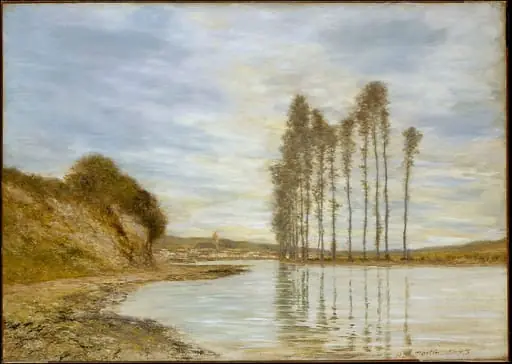
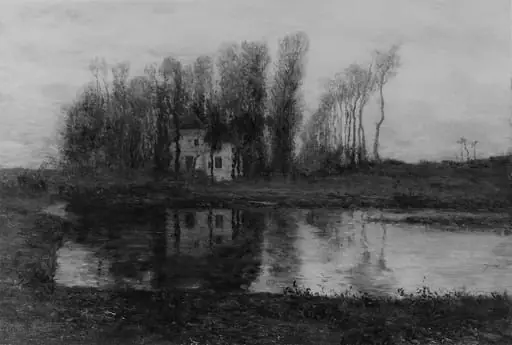
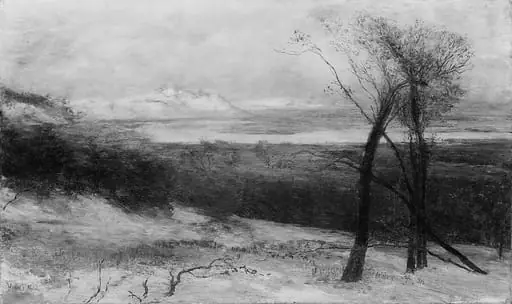
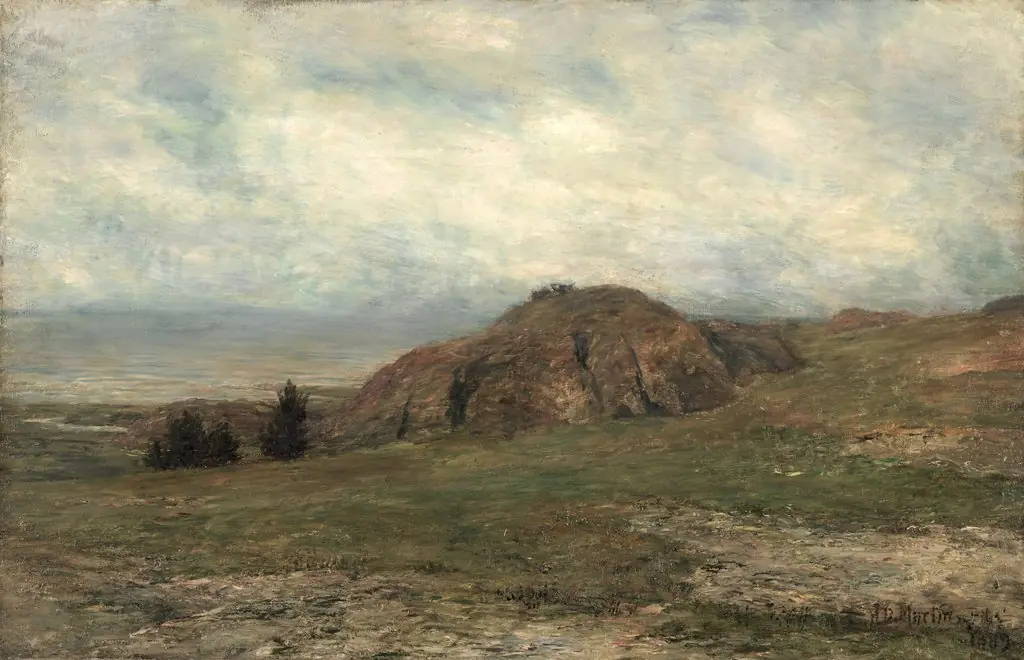
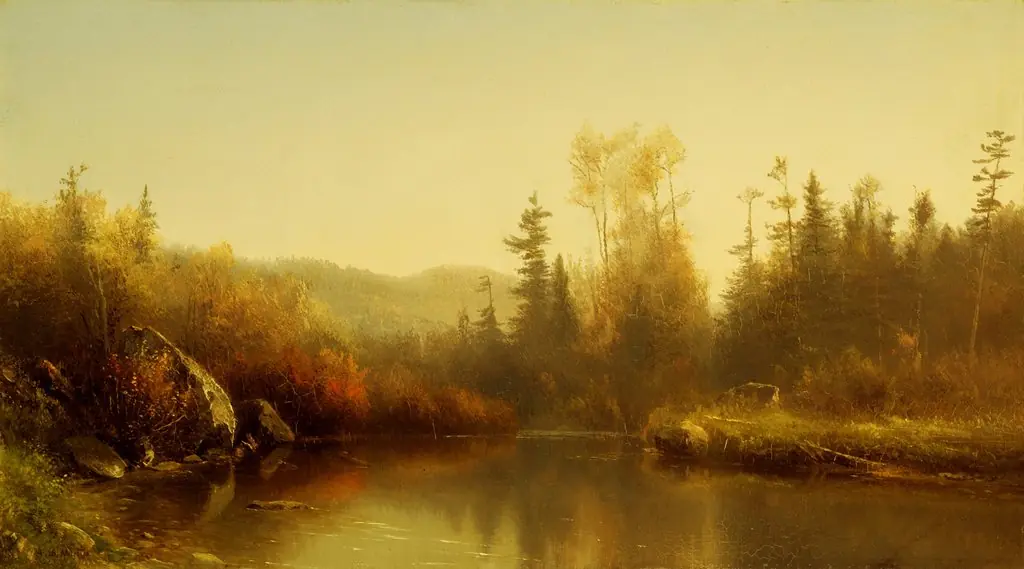
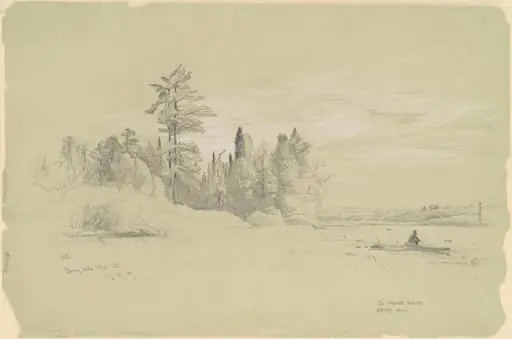
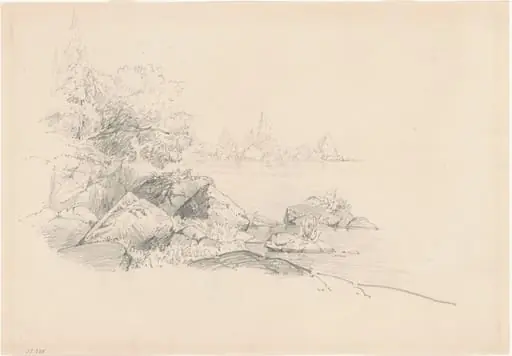
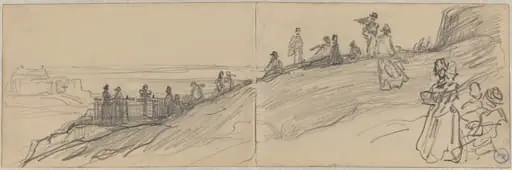
Adirondacks is a drawing by the Impressionist artist Homer Dodge Martin. It dates from 1868 and is held in the collection of the Cleveland Museum of Art.
About this work
Overview
It captures a quiet moment in the Adirondack wilderness, reflecting Martin’s sustained interest in the American natural environment during the mid-19th century.
Created in 1868, *Adirondacks* is a pencil drawing by American artist Homer Dodge Martin. It captures a quiet moment in the Adirondack wilderness, reflecting Martin’s sustained interest in the American natural environment during the mid-19th century. Unlike finished oil paintings, this work is a spontaneous study, emphasizing immediacy over detail. Its minimalism and open composition align with Martin’s practice of observing nature directly in the field.
Subject & Meaning
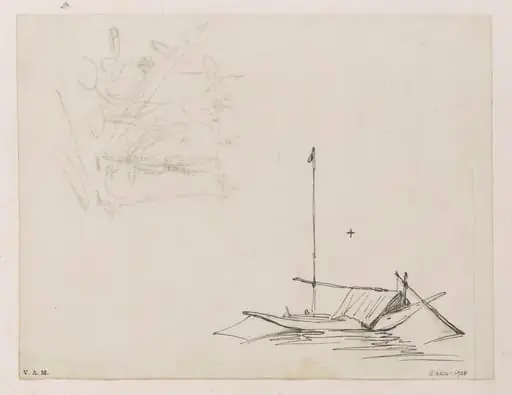
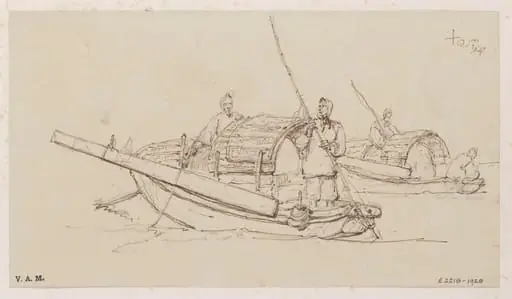
The drawing depicts a solitary figure seated in a wooden canoe, resting near shallow water and scattered rocks. He wears a hat and loose shirt, holding a pipe, suggesting a pause in travel or contemplation. The figure is not the focus but an element within the landscape, reinforcing a theme of human presence as quiet and transient against the enduring natural world. The scene evokes solitude and harmony with the wilderness.
Technique & Style
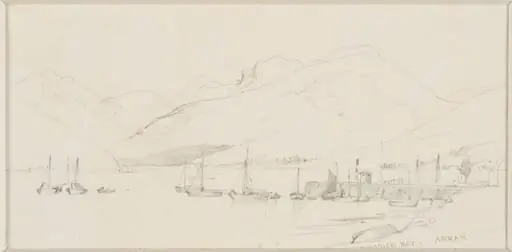
Martin employed loose, economical pencil lines to suggest form without heavy definition. Most of the paper remains blank, enhancing the sense of space and air. The background hills and trees are rendered with faint, sketchy strokes, while the canoe and figure are simplified into basic shapes. This restrained approach conveys a sense of spontaneity, as if the scene was recorded in real time during a walk or boat trip.
History & Provenance
The drawing is part of Martin’s broader body of field studies made during his travels in upstate New York. While the exact provenance prior to institutional acquisition is not fully documented, it entered a major American museum collection in the 20th century, consistent with the growing interest in 19th-century American landscape sketches. It remains a representative example of Martin’s preparatory work.
Context
In the 1860s, American artists increasingly turned to domestic landscapes as subjects of artistic and national identity. Martin’s work emerged alongside the Hudson River School tradition but leaned toward intimate, unidealized observations rather than grand panoramas. *Adirondacks* reflects this shift—valuing quiet moments and personal experience over dramatic spectacle.
Legacy
Martin’s sketches, including *Adirondacks*, influenced later American artists who valued direct observation and understated composition. Though less celebrated than his finished paintings, these drawings reveal his method and sensitivity to natural light and form. They remain important for understanding how 19th-century landscape artists translated fleeting impressions into enduring visual records.
Artist & collection
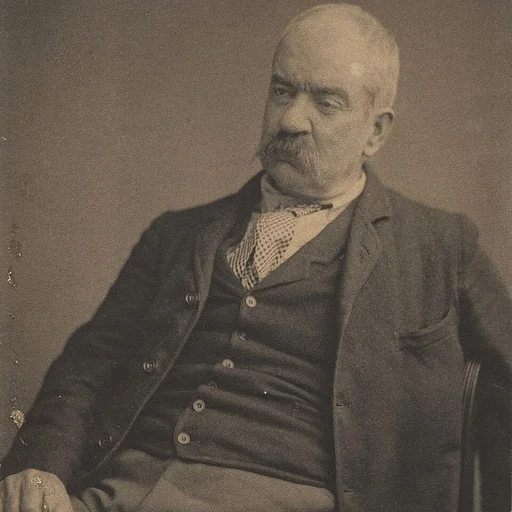
Artist
Homer Dodge Martin (October 28, 1836 – February 12, 1897) was an American artist, particularly known for his landscape paintings. Examples of Martin's work are in many important American museums.