Artwork
Looking Out
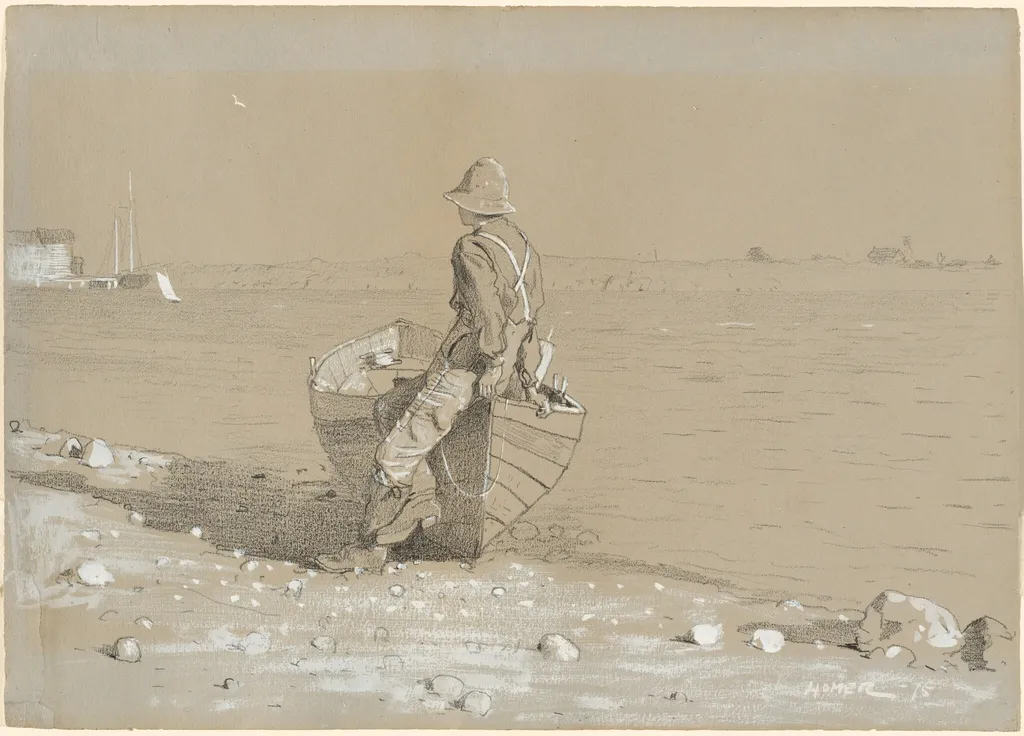
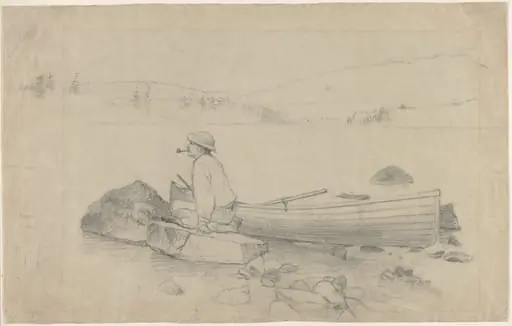
Looking Out is a graphite drawing by the Impressionist artist Winslow Homer. It dates from 1875 and is held in the collection of the National Gallery of Art.
About this work
Overview
Looking Out is a graphite and Chinese white drawing on gray wove paper executed by Winslow Homer in 1875. The work measures a modest size typical of the artist’s preparatory sketches and is held in the collection of the National Gallery of Art in Washington, D.C.
Subject & Meaning
The composition depicts a solitary soldier traversing a stony shoreline. He carries a basket and a rifle, dressed in a heavy coat and helmet, while the calm sea stretches behind him. A faint ship’s mast appears on the horizon, suggesting a broader maritime context for the figure’s solitary watch.
Technique & Style
Homer employs rapid, sketchy lines to convey the soldier’s stride and the uneven texture of the beach. Soft shading with graphite creates a muted tonal range, avoiding strong contrasts and lending the scene a quiet, atmospheric quality. The limited use of Chinese white highlights the figure against the subdued background.
History & Provenance
Created during Homer’s post‑Civil War period, the drawing reflects his interest in coastal subjects. It entered the National Gallery of Art’s holdings through acquisition in the mid‑20th century, where it remains accessible to scholars and visitors as an example of his early drawing practice.
Own this work as a print
Artist & collection
Artist
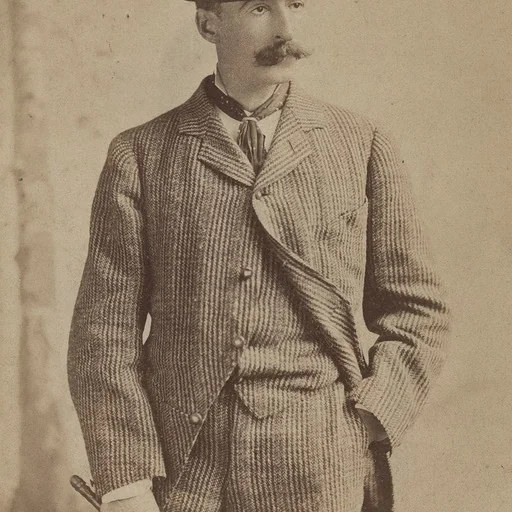
Winslow Homer (February 24, 1836 – September 29, 1910) was an American landscape painter and illustrator, best known for his marine subjects.