Artwork
Hudson River, Logging
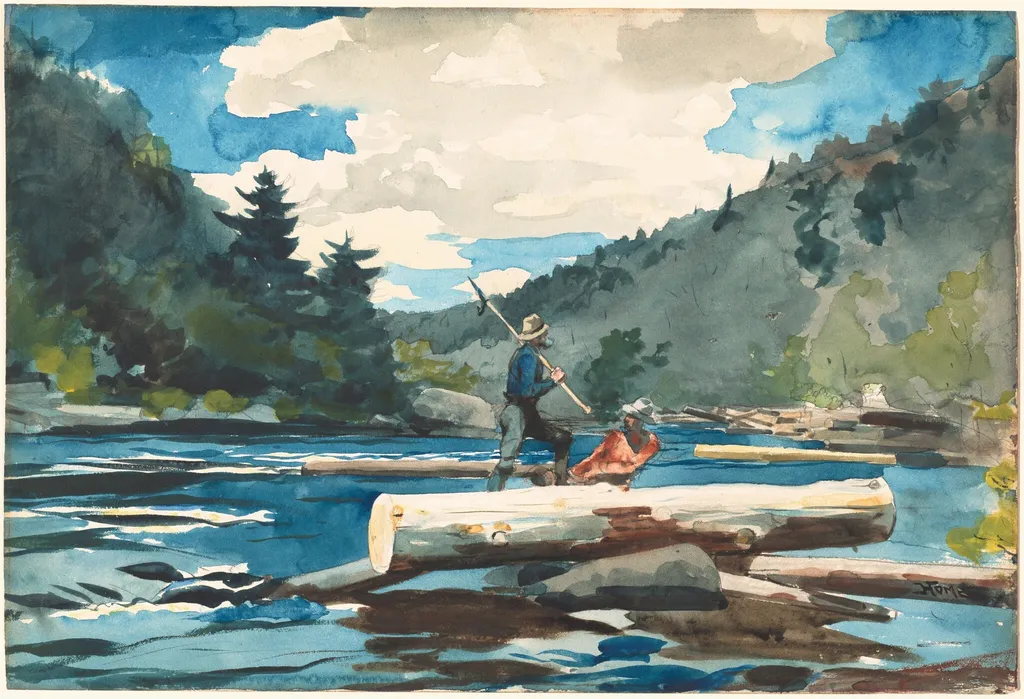
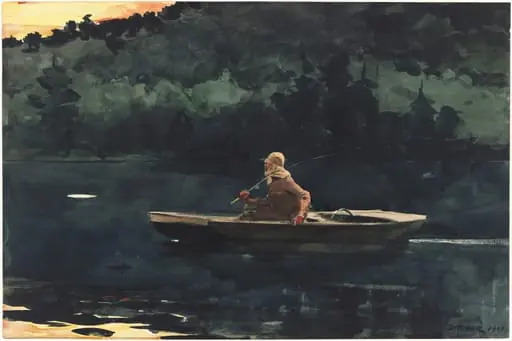
Hudson River, Logging is a graphite drawing by the Impressionist artist Winslow Homer. It dates from 1892 and is held in the collection of the National Gallery of Art.
About this work
Overview
Hudson River, Logging is a watercolor drawing created by Winslow Homer in 1892, executed over graphite on wove paper.
Subject & Meaning
The work depicts a serene logging scene on the Hudson River, featuring two figures on a wooden raft: one actively maneuvering with a pole, the other seated, set against a backdrop of lush greenery and a varied sky.
Technique & Style
Characterized by quick, loose brushstrokes, the piece captures the play of light on water and foliage. Soft, natural color palette dominates, with blues and greens blending to evoke a sense of calm.
History & Provenance
Created in 1892, specific details on its historical ownership or exhibitions are not provided in the available information.
Context
Reflects Homer's interest in capturing everyday American life and landscapes, utilizing watercolor's expressive potential to convey a moment of tranquility in a working environment.
Legacy
Contributes to the broader appreciation of Homer's watercolor technique and his documentation of late 19th-century American scenes, though its individual impact within his oeuvre is not detailed here.
Own this work as a print
Artist & collection
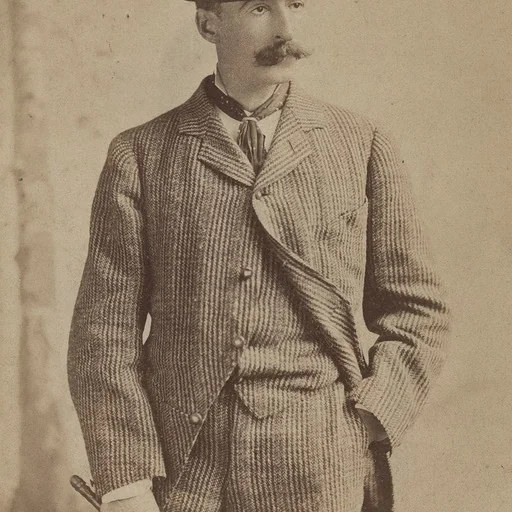
Artist
Winslow Homer (February 24, 1836 – September 29, 1910) was an American landscape painter and illustrator, best known for his marine subjects.