Artwork
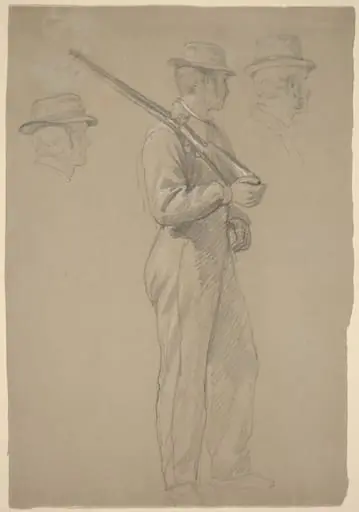
Soldier Taking Aim [recto]
![Soldier Taking Aim [recto], by Winslow Homer, graphite, 1864](https://artifactworldgallery.com/img/winslow-homer--soldier-taking-aim-recto--59bbf30d729c412f-w1024.webp)
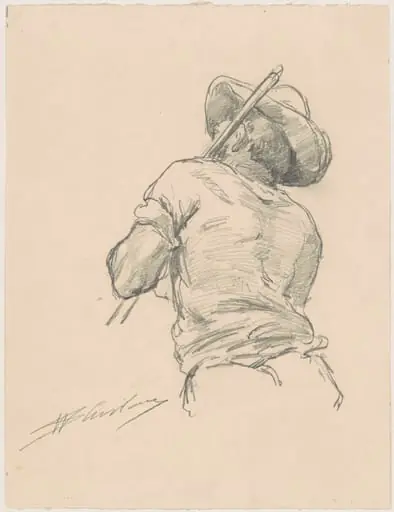
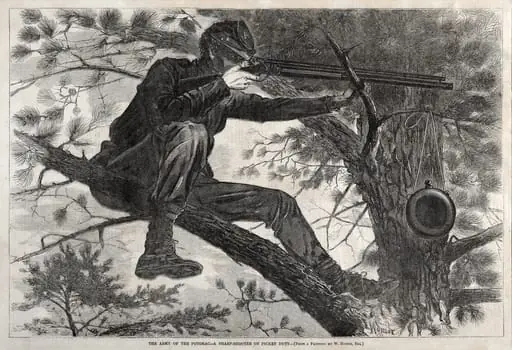
Soldier Taking Aim [recto] is a graphite drawing by the Impressionist artist Winslow Homer. It dates from 1864 and is held in the collection of the National Gallery of Art.
About this work
Overview
Winslow Homer produced the drawing Soldier Taking Aim in 1864. Executed in black and white chalk on a graphite underdrawing, the work is mounted on brown wove paper. The piece is a compact study rather than a finished composition, capturing a moment of military action during the Civil War era.
Subject & Meaning
The image presents a lone soldier crouched forward, both hands gripping his rifle as he aligns his aim. His body is sharply angled, conveying tension and concentration. The sparse background, suggested by a few gestural lines that may indicate foliage, keeps the viewer’s attention on the figure’s poised readiness.
Technique & Style
Homer employed chalk to render stark contrasts, allowing for both crisp lines and softened, smudged areas where pressure was applied. The underlying graphite sketch provides structural guidance, while the chalk adds immediacy. The limited palette and rapid execution reflect a realist interest in depicting ordinary, unembellished moments.
History & Provenance
Created in the midst of the American Civil War, the drawing aligns with Homer’s early career as a war correspondent and illustrator. Its paper support and materials are typical of mid‑19th‑century sketchbooks. The work remains part of the artist’s documented output from that period, though it has not been exhibited as a finished piece.
Own this work as a print
Artist & collection
Artist
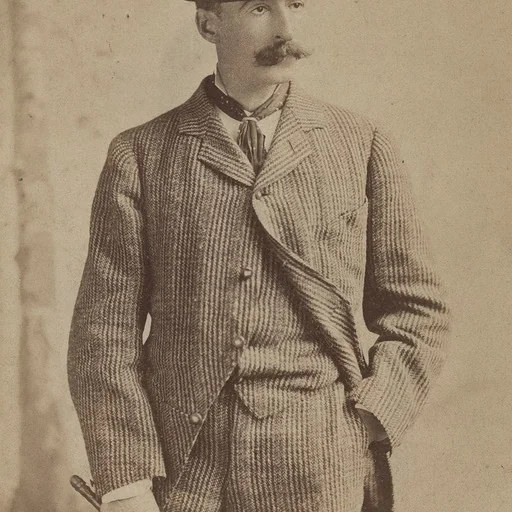
Winslow Homer (February 24, 1836 – September 29, 1910) was an American landscape painter and illustrator, best known for his marine subjects.