Artwork
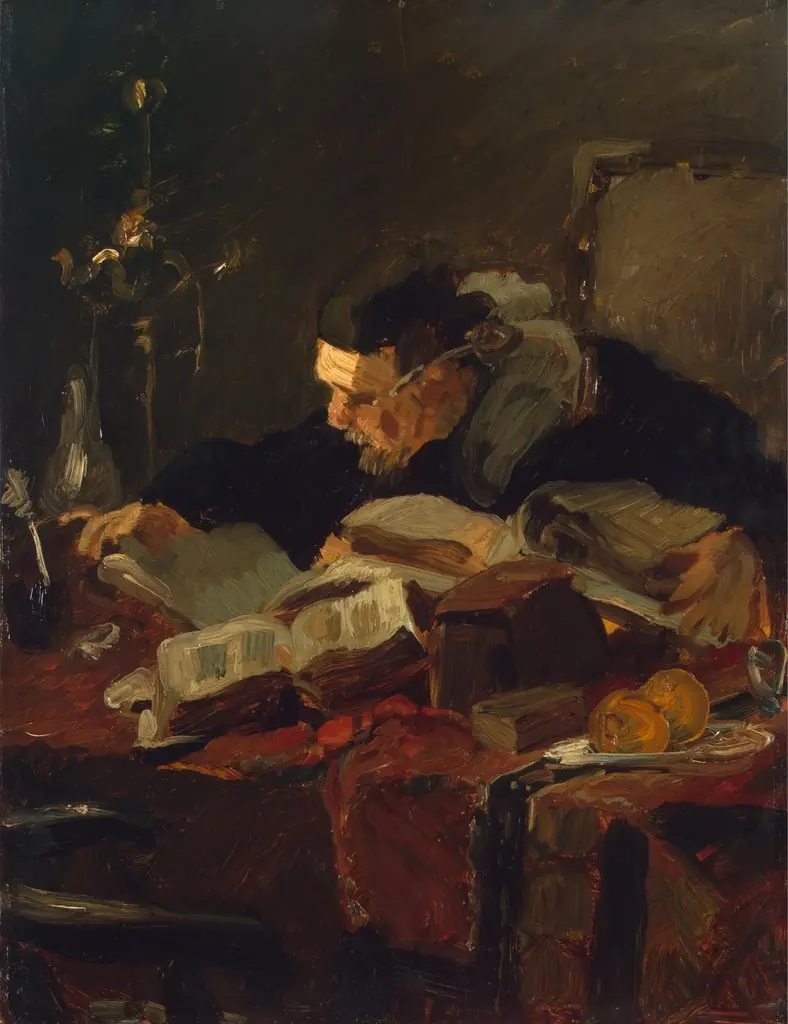
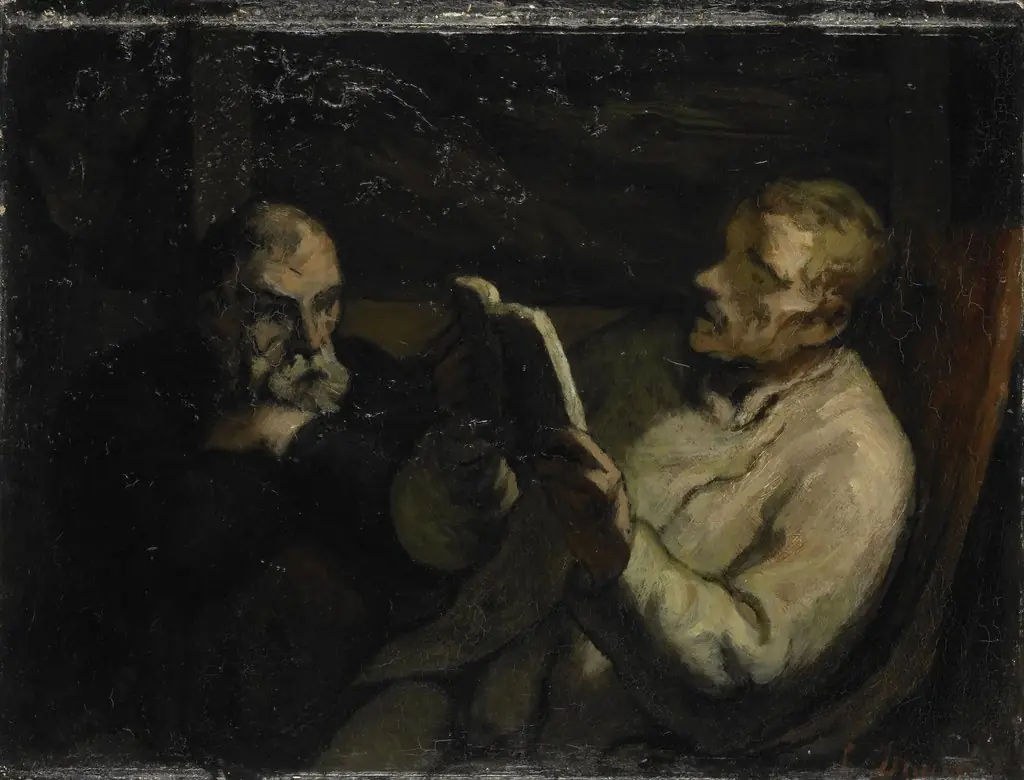
Don Quixote reading
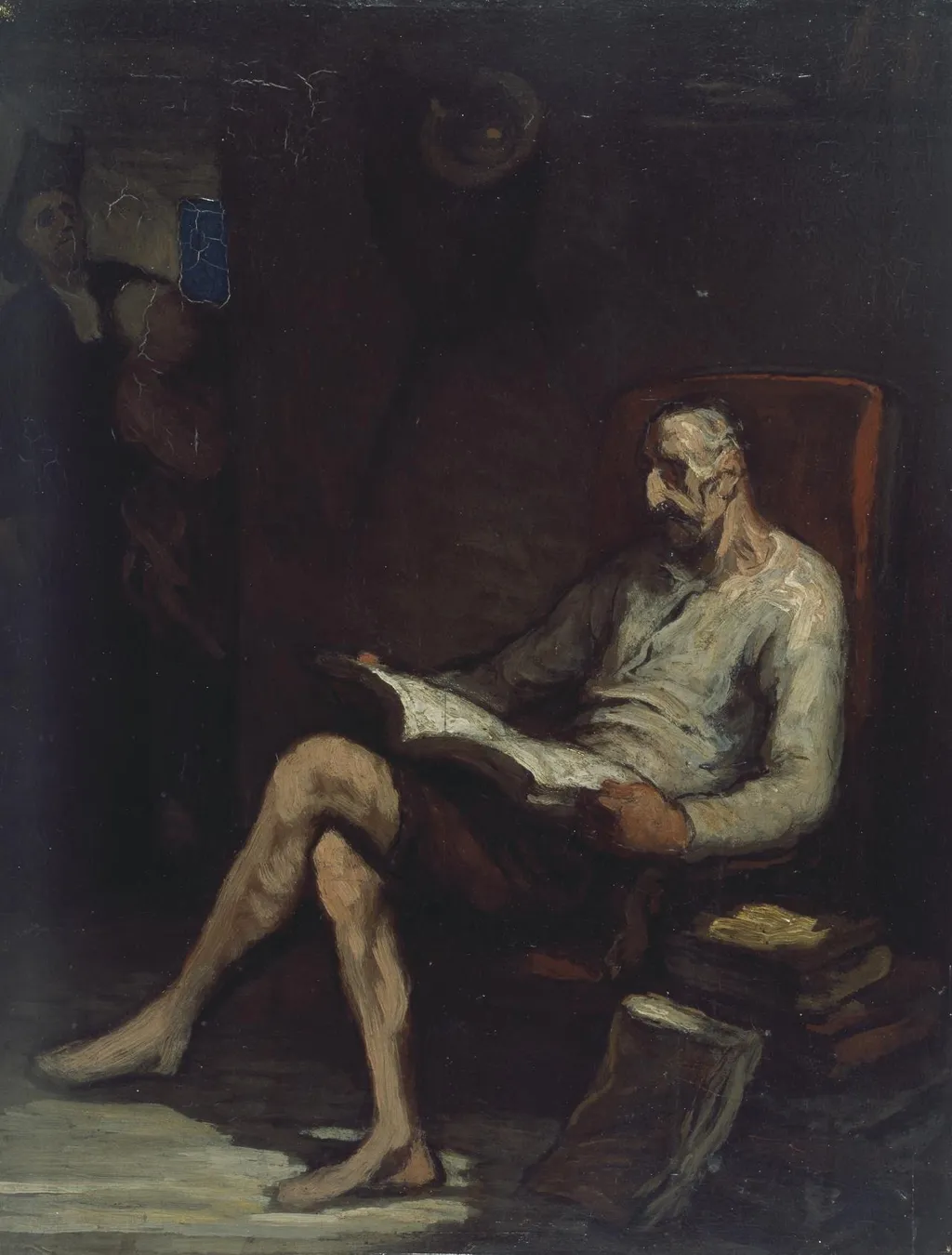
Don Quixote reading is an oil painting by Honoré Daumier. It dates from 1867 and is held in the collection of the National Gallery of Victoria.
About this work
Overview
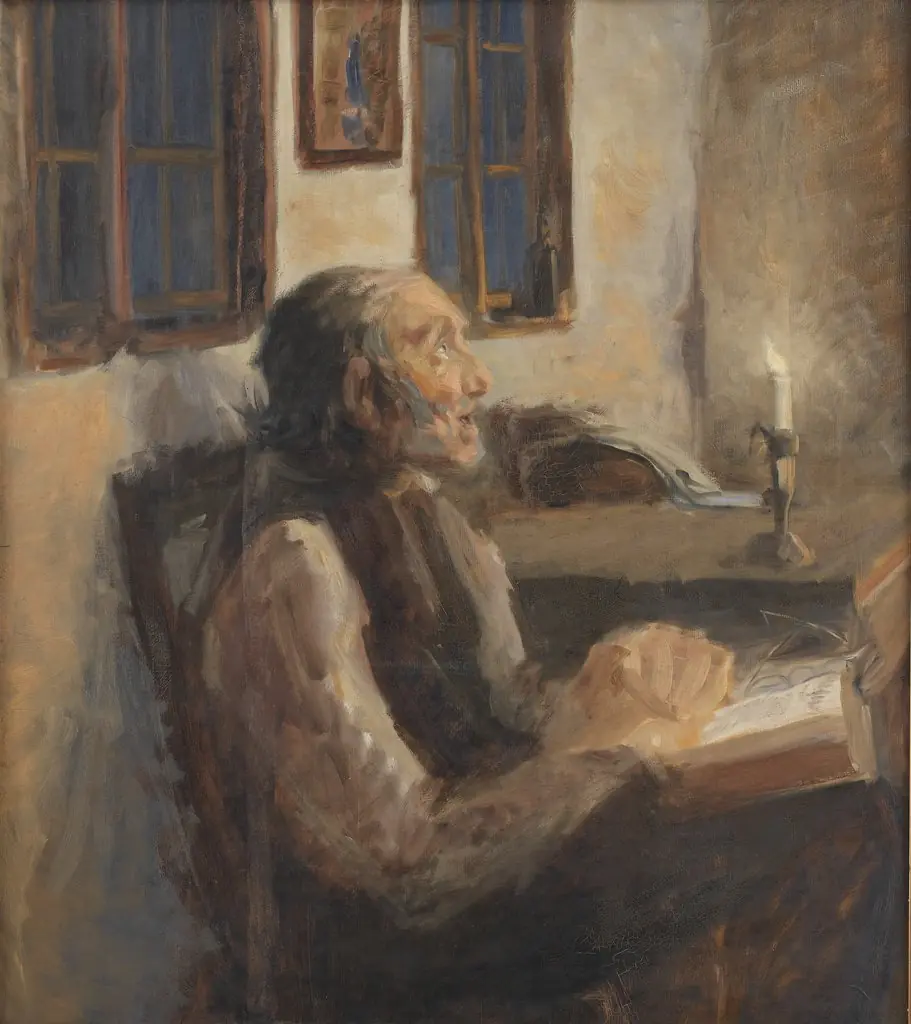
Painted in 1867 by Honoré Daumier, this oil on canvas work portrays a solitary figure absorbed in reading. The composition is restrained, focusing on a single figure in a dimly lit interior. The National Gallery of Victoria holds the painting, which exemplifies Daumier’s late interest in literary themes and introspective human moments, rendered with minimal detail and strong tonal contrast.
Subject & Meaning
The figure is widely interpreted as Don Quixote, the idealistic knight from Cervantes’ novel, caught in a quiet moment of private reflection. Dressed in plain, worn clothing, he is stripped of heroic ornamentation, emphasizing his humanity over myth. The act of reading suggests an inner world—his fantasies, regrets, or memories—contrasting with the physical solitude of his surroundings.
Technique & Style
The background recedes into near darkness, while subtle illumination falls on the face and book, guiding the viewer’s focus.
Daumier employs chiaroscuro to model the figure with soft, gradual transitions between light and shadow. The background recedes into near darkness, while subtle illumination falls on the face and book, guiding the viewer’s focus. Brushwork is loose yet deliberate, avoiding fine detail in favor of emotional resonance. The muted palette and simplified forms reflect a move toward expressive realism in his later years.
History & Provenance
Created near the end of Daumier’s career, the painting was likely made for private collectors rather than public exhibition. It entered the National Gallery of Victoria’s collection in the 20th century, following a trajectory common to many 19th-century French works acquired by Australian institutions. Its provenance before that remains largely undocumented.
Context
Daumier produced numerous works inspired by literature during the 1860s, turning away from political satire toward literary and philosophical subjects. This period coincided with his declining health and increasing isolation. The quiet intensity of this painting reflects a broader cultural interest in inner life and the psychological depth of literary characters during the late Romantic era.
Legacy
Though less known than his caricatures, this painting exemplifies Daumier’s capacity for emotional subtlety. It influenced later artists interested in introspective portraiture and the literary imagination in visual art. Its enduring presence in a major public collection underscores its role as a quiet, contemplative counterpoint to the artist’s more overtly satirical output.
Own this work as a print
Artist & collection

Artist
Honoré-Victorin Daumier was a French painter, sculptor, and printmaker, whose many works offer commentary on the social and political life in France, from the Revolution of 1830 to the fall of the Second French Empire in 1870.