Artwork
Theater Audience
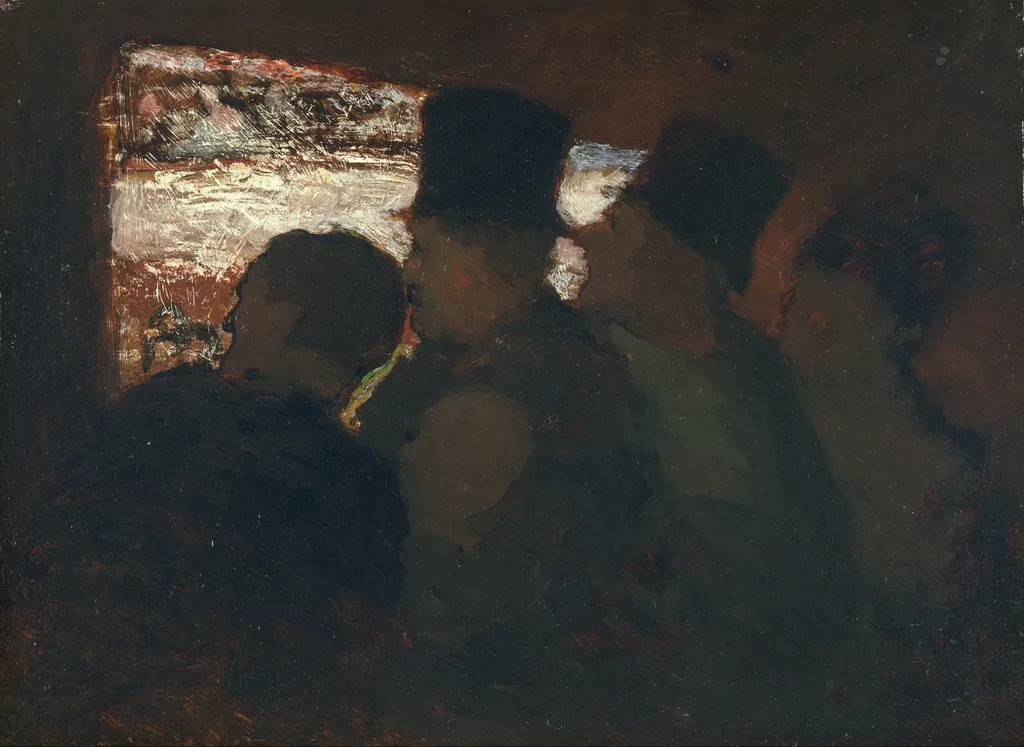
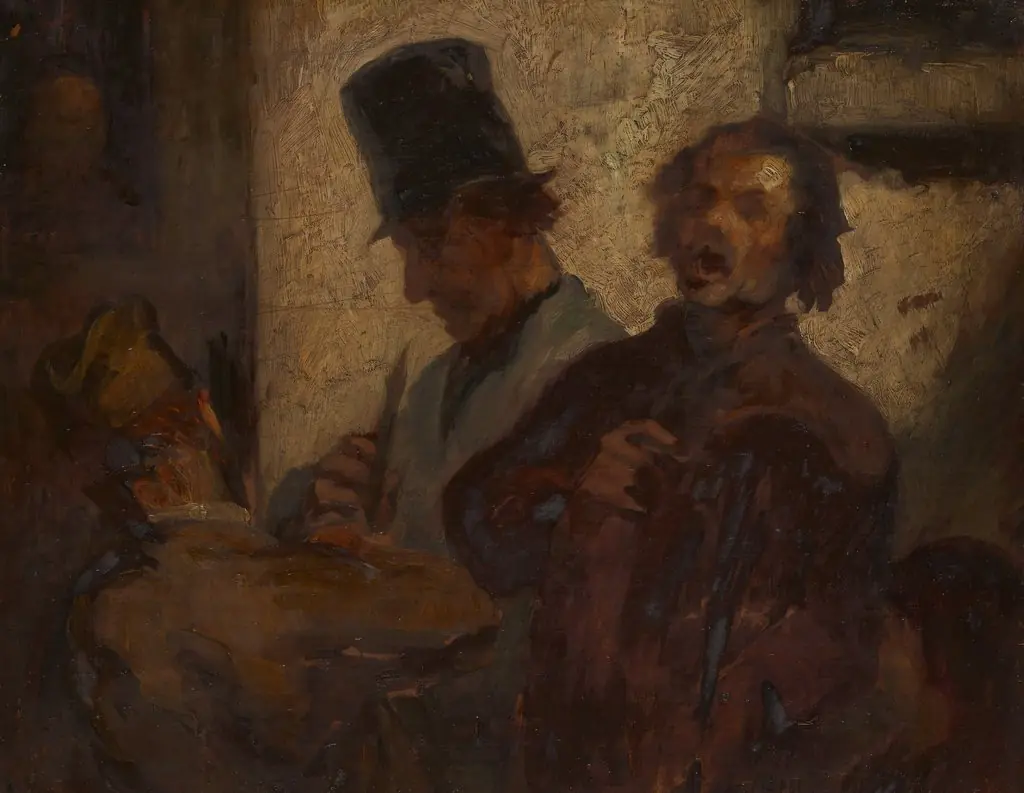
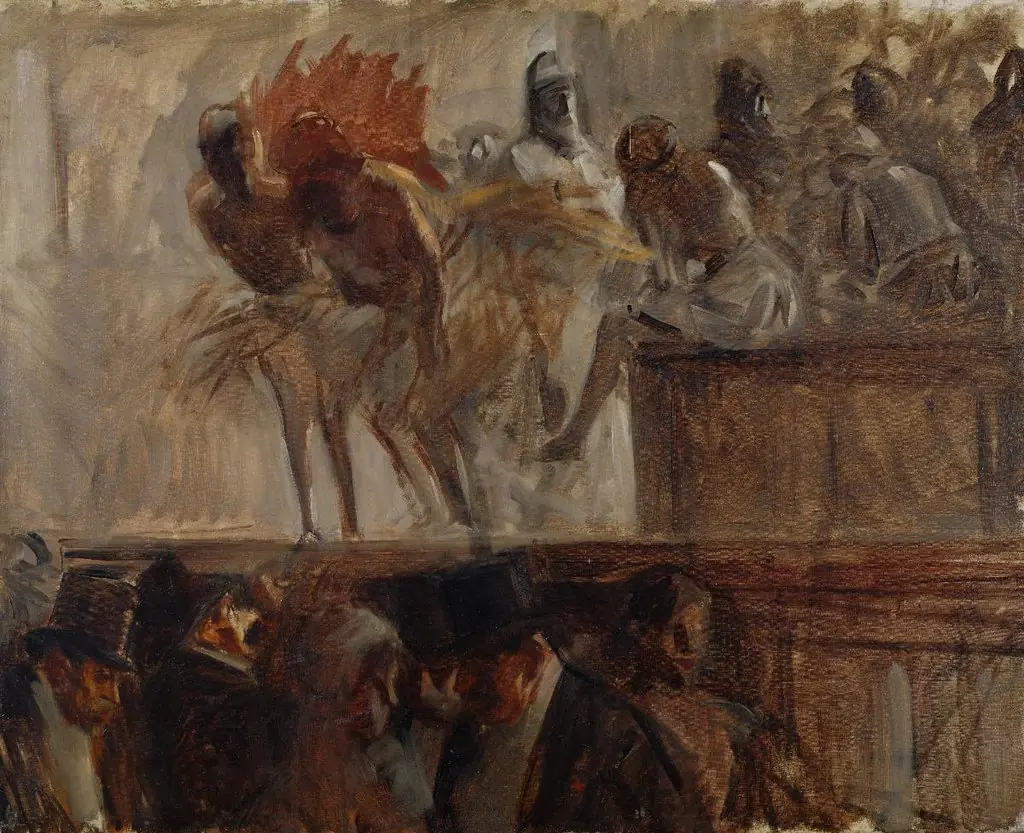
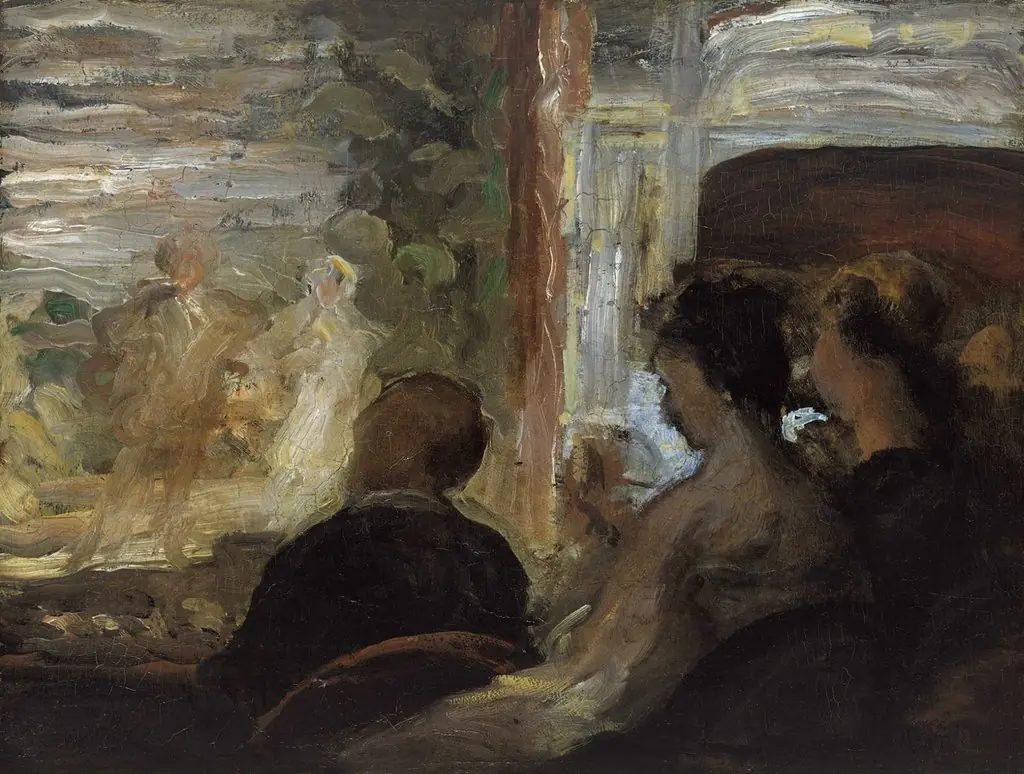
Theater Audience is an oil painting by the Realist artist Honoré Daumier. It dates from 1856 and is held in the collection of the National Museum of Western Art.
About this work
Overview
Painted in 1856, Theater Audience is an oil-on-canvas work by French artist Honoré Daumier. It depicts a crowded theater balcony filled with spectators, rendered in muted tones and loose brushwork. The painting is part of the collection at the National Museum of Western Art in Tokyo, where it serves as an example of Daumier’s interest in urban social life during the mid-nineteenth century.
Subject & Meaning
The painting captures a moment of collective stillness among theatergoers, focusing not on the stage but on the audience itself. Daumier observes the varied postures and expressions of individuals in a public space, suggesting a quiet commentary on social conformity and the performative nature of spectatorship. There is no dramatic action—only the quiet ritual of watching.
Technique & Style
Daumier employed a restrained palette of grays, browns, and ochres, emphasizing atmosphere over detail. His brushwork is swift and suggestive, with forms emerging from layered washes rather than precise outlines. The composition is tightly cropped, drawing attention to the density of figures and the dim, enclosed space of the balcony.
History & Provenance
Created during Daumier’s mature period, the painting was likely made for private collectors rather than official exhibitions. It entered the collection of the National Museum of Western Art in Tokyo in the 20th century, following the acquisition of the Matsukata Collection, which included several European works from the 1800s.
Context
In 1850s Paris, theater was a central social institution, and Daumier frequently depicted its audiences in lithographs and paintings. Unlike idealized scenes of high culture, his portrayals emphasized the ordinary and the unvarnished, reflecting his broader interest in class dynamics and the rhythms of everyday urban life.
Legacy
Theater Audience exemplifies Daumier’s shift from caricature to more contemplative genre scenes. While less known than his political cartoons, this work influenced later realist painters who sought to portray modern life without sentimentality. Its quiet observation of public behavior remains a quiet but persistent contribution to 19th-century European art.
Own this work as a print
Artist & collection

Artist
Honoré-Victorin Daumier was a French painter, sculptor, and printmaker, whose many works offer commentary on the social and political life in France, from the Revolution of 1830 to the fall of the Second French Empire in 1870.