Artwork
Untitled
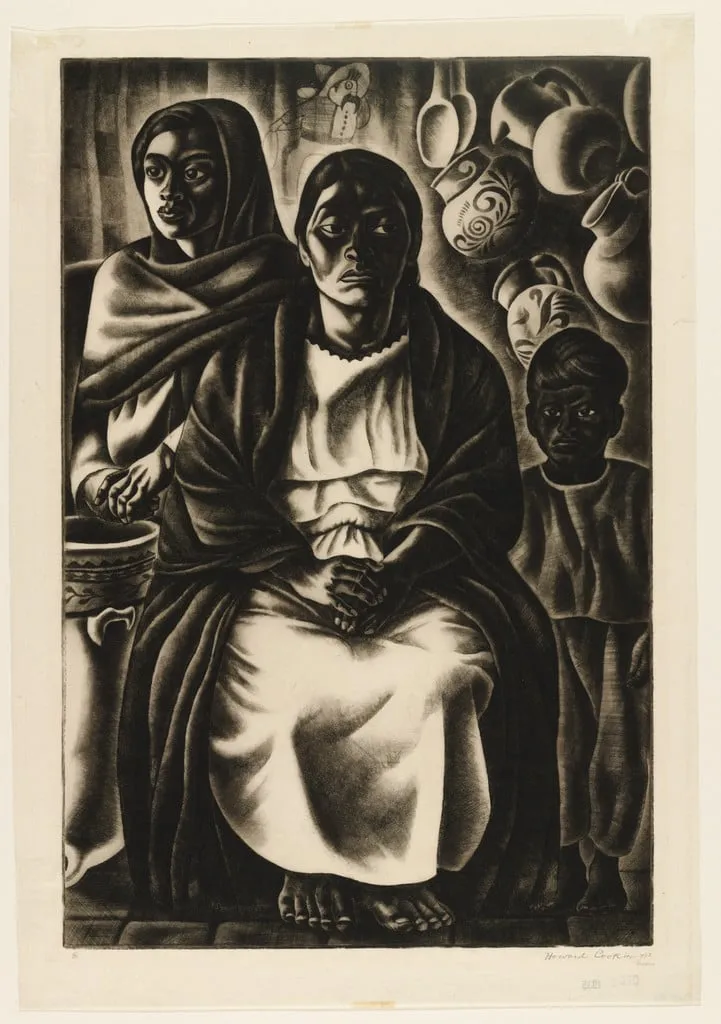
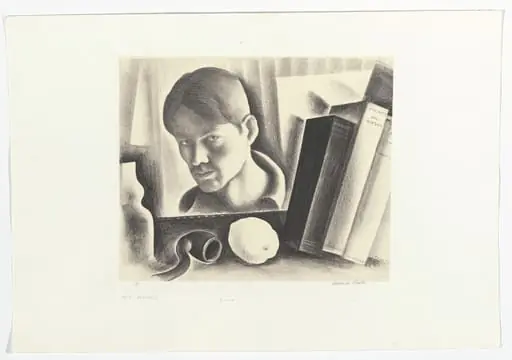
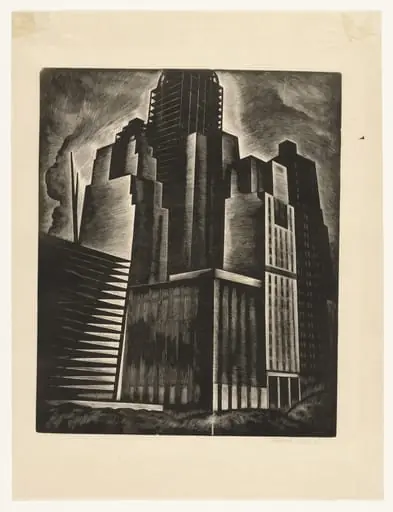
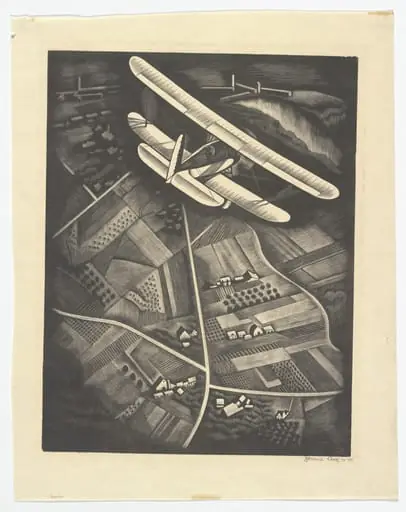
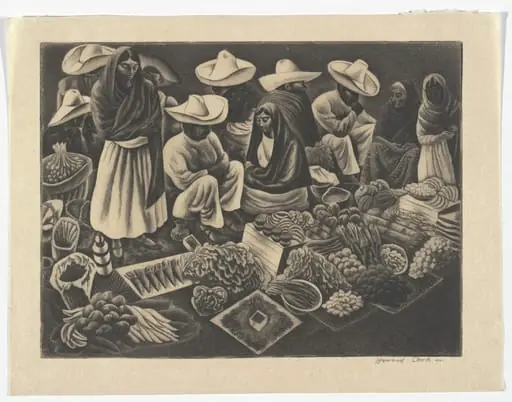
Untitled is an ink print by Howard Cook. It dates from 1933 and is held in the collection of the Museum of Modern Art. Created in 1933, this black-and-white engraving by Howard Norton Cook is a quiet study of domestic intimacy.
About this work
Overview
Executed on a small scale, it reflects Cook’s engagement with printmaking during a period of extensive travel and cultural observation.
Created in 1933, this black-and-white engraving by Howard Norton Cook is a quiet study of domestic intimacy. Executed on a small scale, it reflects Cook’s engagement with printmaking during a period of extensive travel and cultural observation. The work belongs to the collection of The Museum of Modern Art, where it stands as an example of American printmaking from the early 20th century, shaped by both European training and regional American influences.
Subject & Meaning
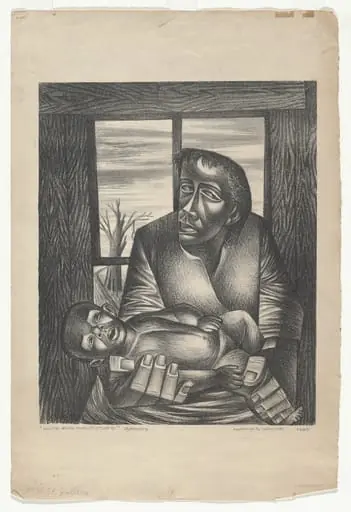
The scene depicts three figures in a domestic setting: a woman seated with a child on her lap, and another woman standing behind her, holding a bowl. The figures are arranged closely, suggesting shared space and quiet routine. The absence of facial detail and the focus on posture and garment suggest a universal portrayal of care and labor, rather than a specific narrative. The objects surrounding them—pots, jars, a ladder—hint at daily life without overt symbolism.
Technique & Style
Cook employed sharp, precise lines and contrasting tones to define form against a flat, patterned background. Deep shadows anchor the figures, while smooth gradations model their clothing and bodies. The background elements are rendered with rhythmic, simplified contours, creating a decorative yet grounded setting. The engraving’s clarity and economy of line reflect a disciplined approach, blending observational detail with stylized composition typical of early modernist printmaking.
History & Provenance
Cook produced this work during a period of personal and artistic transition, following his marriage to artist Barbara Latham in 1927 and their travels across Europe, Mexico, and the American South. The engraving emerged from his sustained interest in printmaking, which began with woodcuts in Taos and evolved into metal engraving. It entered The Museum of Modern Art’s collection as part of its broader effort to document American graphic arts of the 1930s.
Context
In the early 1930s, American artists increasingly turned to printmaking as a means of accessible, socially resonant expression. Cook’s work aligned with this trend, influenced by his time abroad and his immersion in regional American life. His engravings often captured everyday moments with a restrained elegance, distinguishing them from the more overtly political imagery of the era while still reflecting a deep engagement with ordinary experience.
Legacy
Though not widely known outside specialist circles, Cook’s engravings contributed to the recognition of printmaking as a serious medium in American art. His ability to merge precise technique with subtle emotional tone influenced later generations of printmakers. This work remains a quiet testament to his commitment to capturing the dignity of daily life through disciplined craftsmanship.
Artist & collection
Artist
Howard Norton Cook (1901–1980) was an American artist, particularly known for his wood engravings and murals.