Artwork
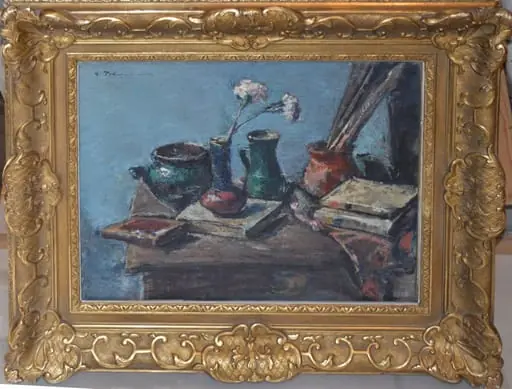
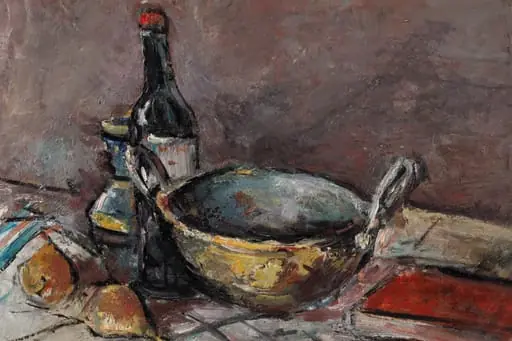
Natură moartă
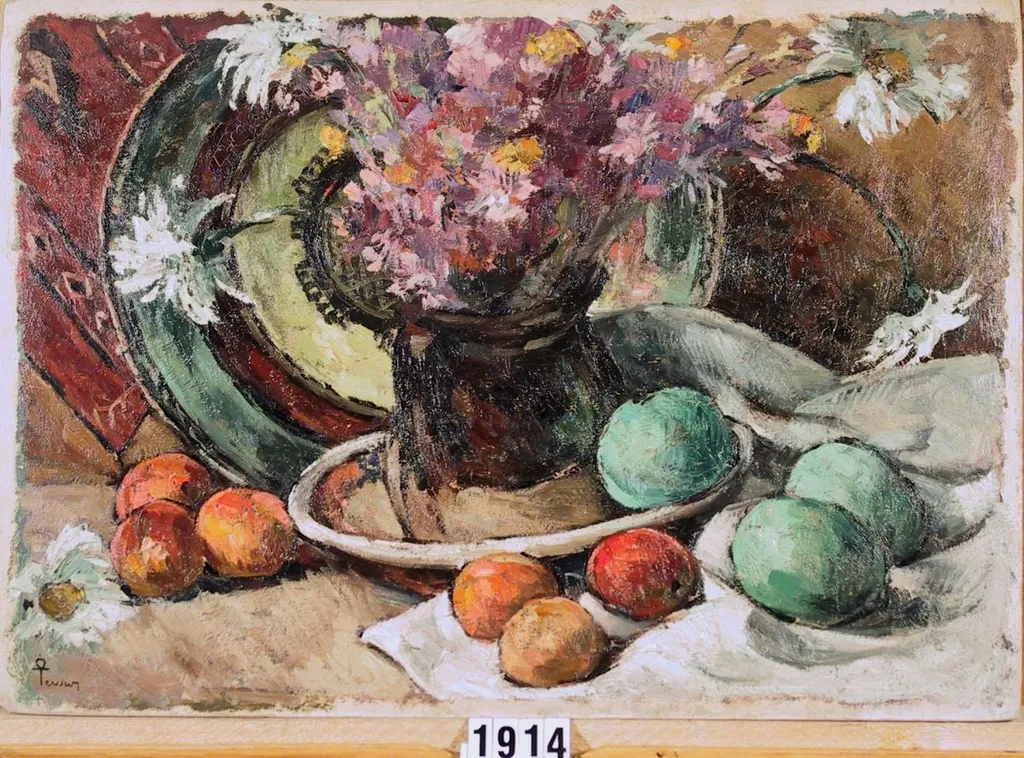
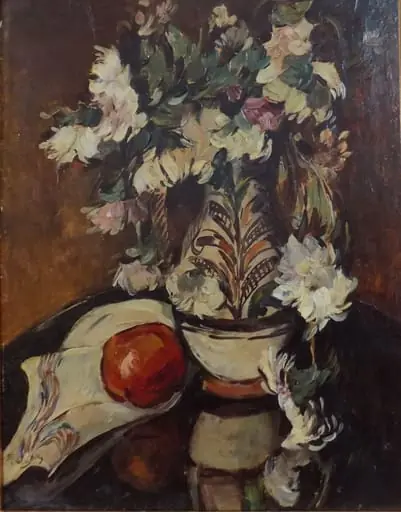
Natură moartă is an unspecified painting by Ion Theodorescu-Sion. It is held in the collection of the Brukenthal National Museum.
About this work
Overview
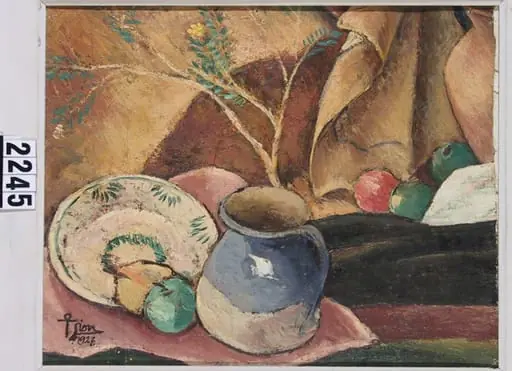
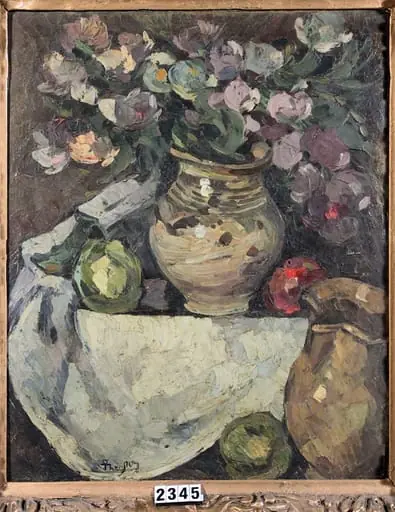
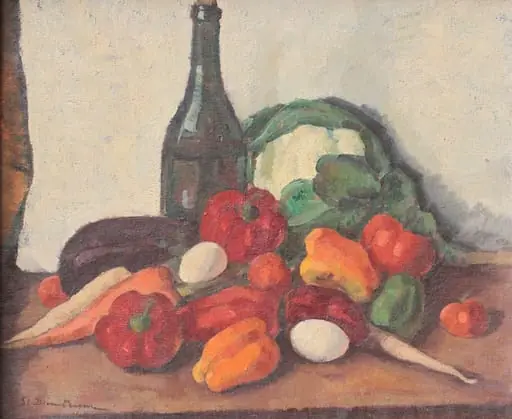
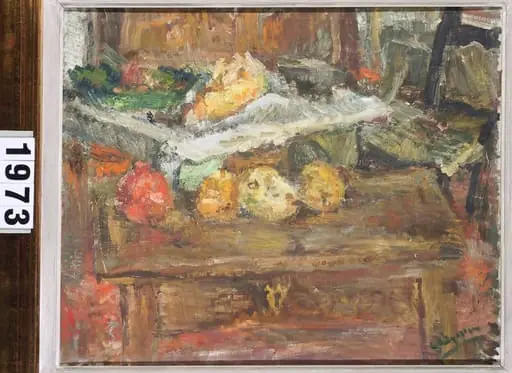
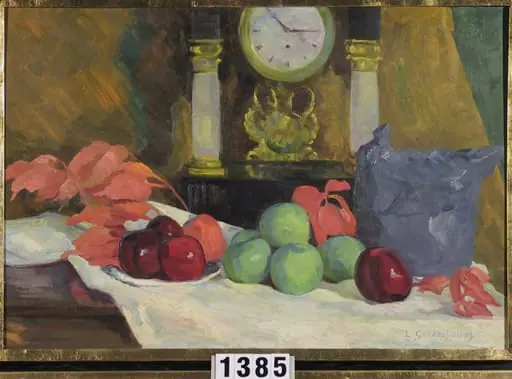
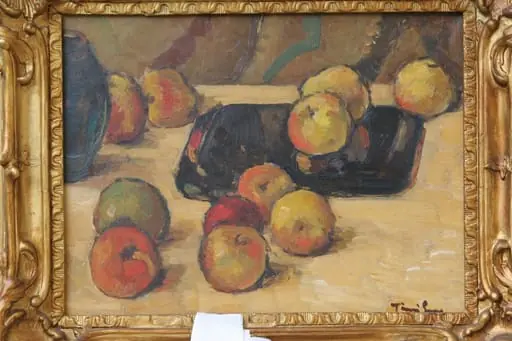
This still life presents a modest arrangement of flowers, fruit, and a bowl on a plain surface, rendered with energetic, unrefined brushwork. The composition avoids symmetry or idealized order, instead emphasizing the physical presence of each object through dense layers of paint. The background is dark and unobtrusive, allowing the vivid forms to emerge with tactile immediacy.
Subject & Meaning
The arrangement includes a overflowing vase of mixed blooms, a white bowl of red peaches, and a small dish with green apples. These common domestic items carry no overt symbolism; their value lies in their ordinary presence. The untamed spill of petals and uneven placement suggest a moment captured mid-decay, honoring transience rather than perfection.
Technique & Style
Thickly applied paint, or impasto, dominates the surface, creating a textured, almost sculptural effect. Brushstrokes are visible and deliberate, not smoothed into polish. Color contrasts—vivid reds against muted greens and purples—are jarring yet intentional, rejecting harmonious tonality in favor of raw sensory impact and physicality.
History & Provenance
The work’s origins are undocumented, with no known exhibition history or collector lineage. Its attribution remains uncertain, though its style aligns with late 19th-century regional still-life practices that favored expressive handling over academic precision. It likely emerged from a private studio rather than a formal atelier.
Context
Created during a period when still life was often relegated to academic exercises, this piece resists convention. While contemporaries pursued refined compositions, this work embraces spontaneity and materiality, reflecting a broader shift toward personal expression over idealized representation in rural or non-institutional art circles.
Legacy
Though not widely recognized in major collections, the painting exemplifies a quiet rebellion against polished still-life traditions. Its unpolished texture and emotional directness anticipate later modernist approaches to still life, where the act of painting itself became as significant as the subject depicted.
Artist & collection
Artist