Artwork
Natură moartă cu tingire
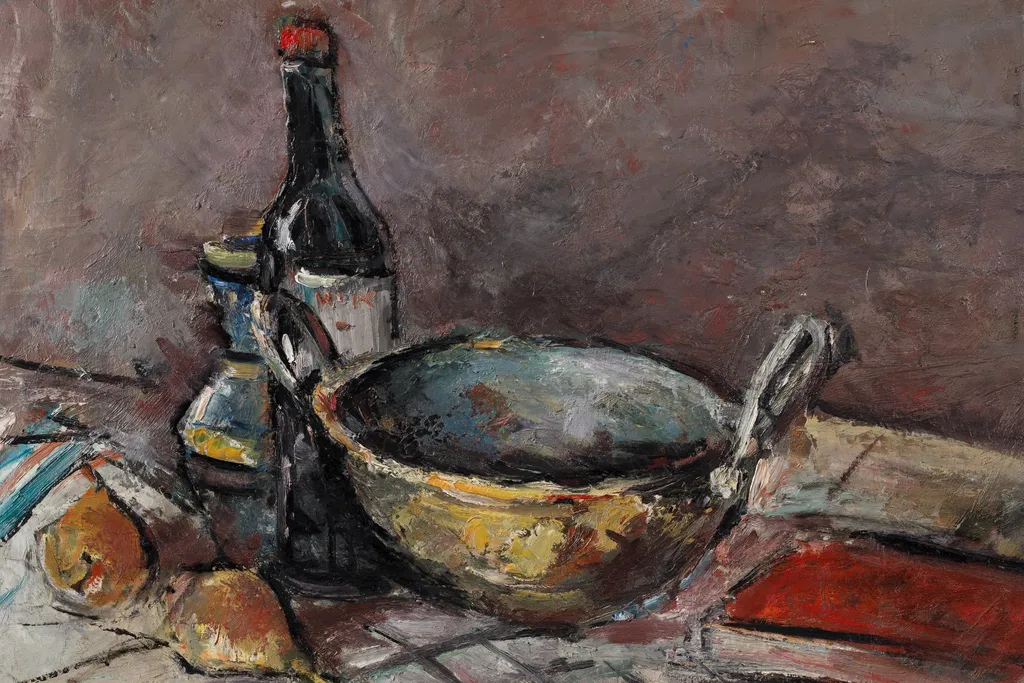
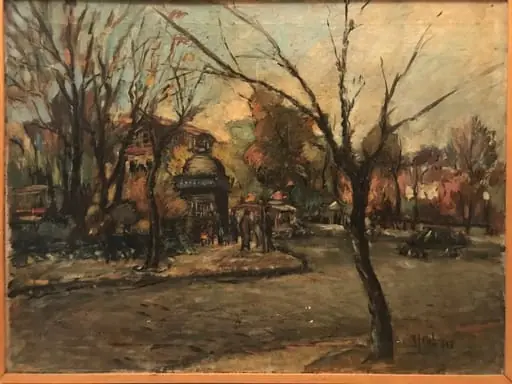
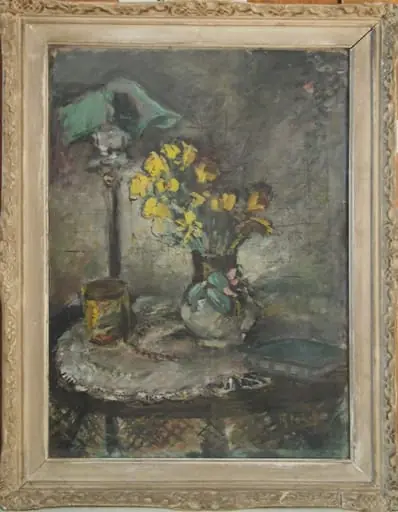
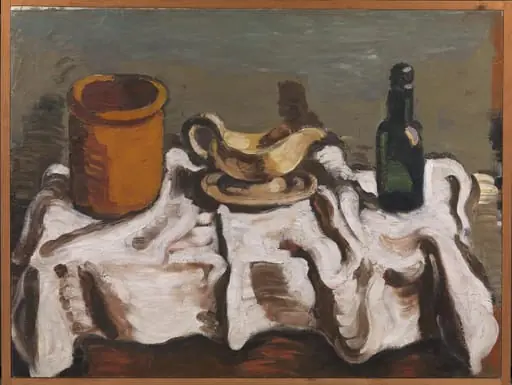
Natură moartă cu tingire is an unspecified painting by Iosif Rosenblut. It dates from 1850 and is held in the collection of the National Museum of Art of Romania.
About this work
Overview
The work reflects a quiet, unadorned approach to still life common in mid-19th-century Romanian painting.
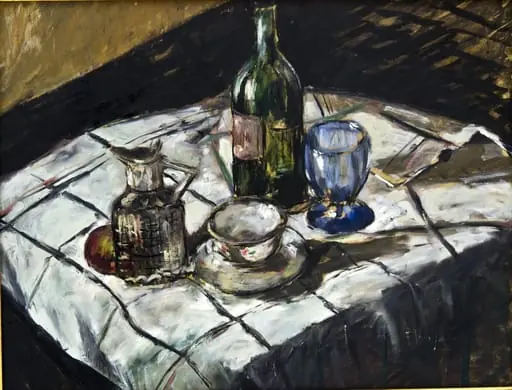
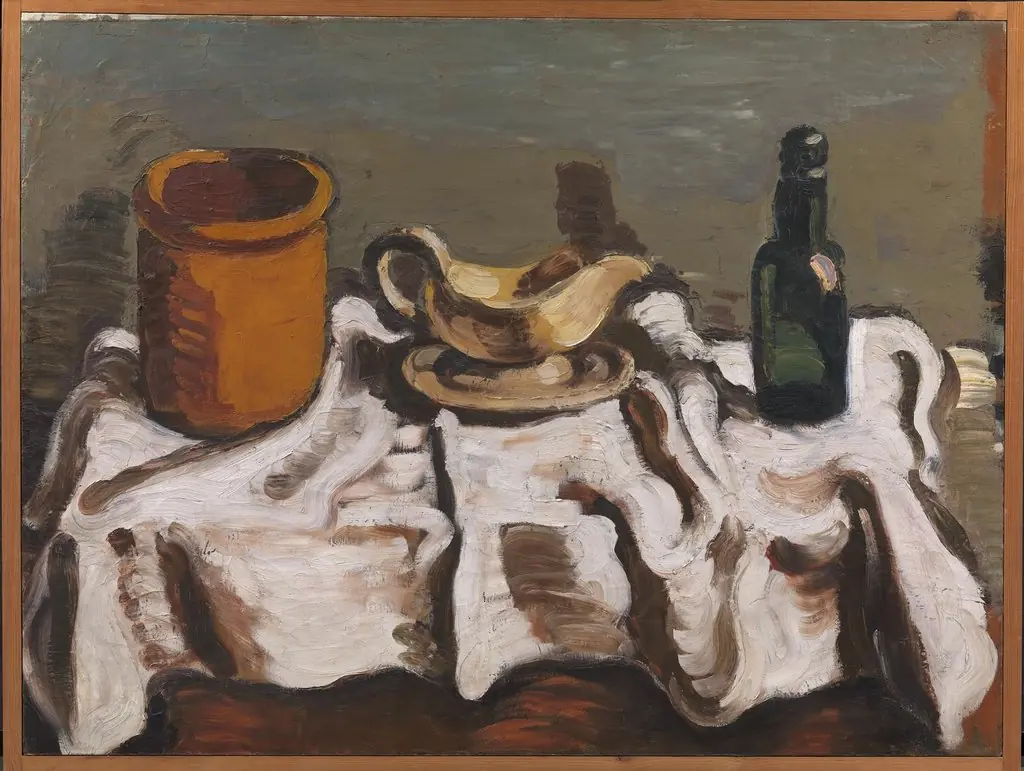
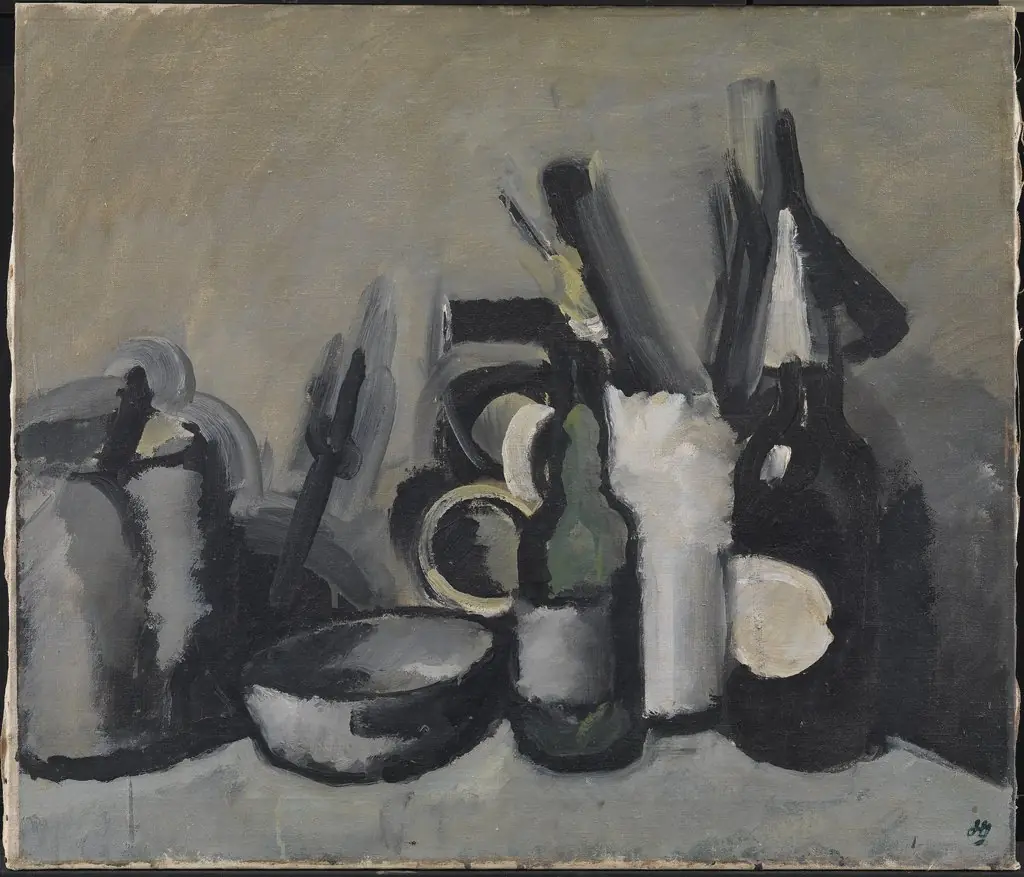
Painted around 1850 by Iosif Rosenblut, this still life presents a modest domestic scene with minimal elements: a dark bottle, a large metal bowl containing food, and a small cup. The composition is restrained, focusing on everyday objects without ornamentation. The background lacks detail, receding into muted tones that emphasize the foreground items. The work reflects a quiet, unadorned approach to still life common in mid-19th-century Romanian painting.
Subject & Meaning
The objects depicted—a bottle, bowl, and cup—suggest a humble meal or storage of basic provisions. There is no indication of luxury or symbolism; the scene appears grounded in daily life. The absence of human presence or narrative context invites contemplation of routine, sustenance, and the quiet dignity of ordinary things. The painting’s simplicity may reflect a deliberate focus on material reality rather than allegory.
Technique & Style
Rosenblut employs thick, uneven brushwork that imparts a tactile quality to the surfaces of the bottle and bowl. The paint is applied with visible texture, creating a sense of weight and materiality. Lighting is uneven, casting sharp contrasts that define form without softening edges. The background is rendered in loose, muddy hues of red and brown, deliberately blurred to isolate the foreground objects and enhance their physical presence.
History & Provenance
The painting’s early history is undocumented, and its ownership prior to modern institutional records remains unclear. It is attributed to Iosif Rosenblut based on stylistic analysis and limited archival references from mid-19th-century Romanian art circles. No exhibition history or documented sale is known before its inclusion in public collections in the 20th century.
Context
Created during a period when Romanian art was beginning to develop a distinct national identity, this work aligns with a trend toward realism and domestic subject matter. While Western European still lifes often emphasized abundance or symbolism, Rosenblut’s approach reflects a local sensibility—focusing on the unembellished, the utilitarian, and the quietly observed. It stands apart from academic traditions of the time.
Legacy
Rosenblut’s still life contributes to an understudied body of Romanian realist painting from the mid-1800s. Its emphasis on texture and unidealized form anticipates later developments in regional art that valued direct observation over idealization. Though not widely reproduced, it remains a representative example of how everyday life was rendered with quiet sincerity in pre-modern Romanian visual culture.
Own this work as a print
Artist & collection
Artist
Iosif Rosenblut painted still lifes and city scenes in mid-20th-century Bucharest.