Artwork
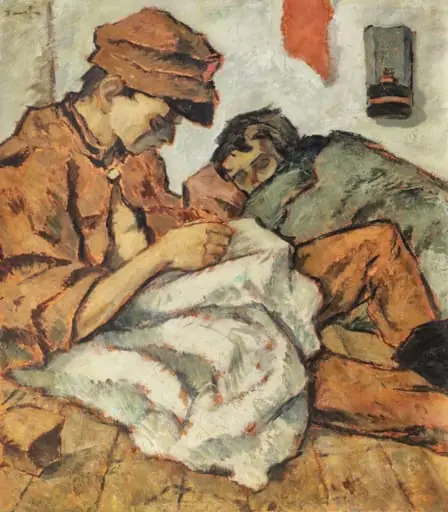
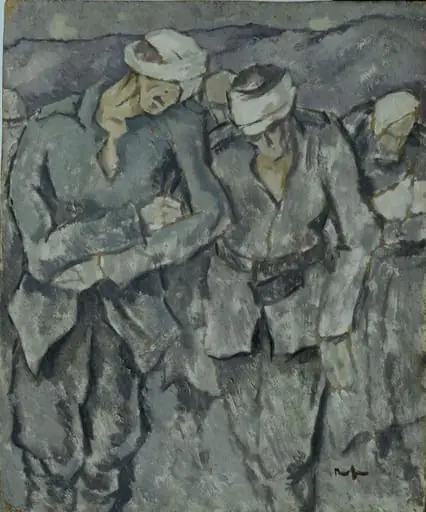
Soldați în refacere
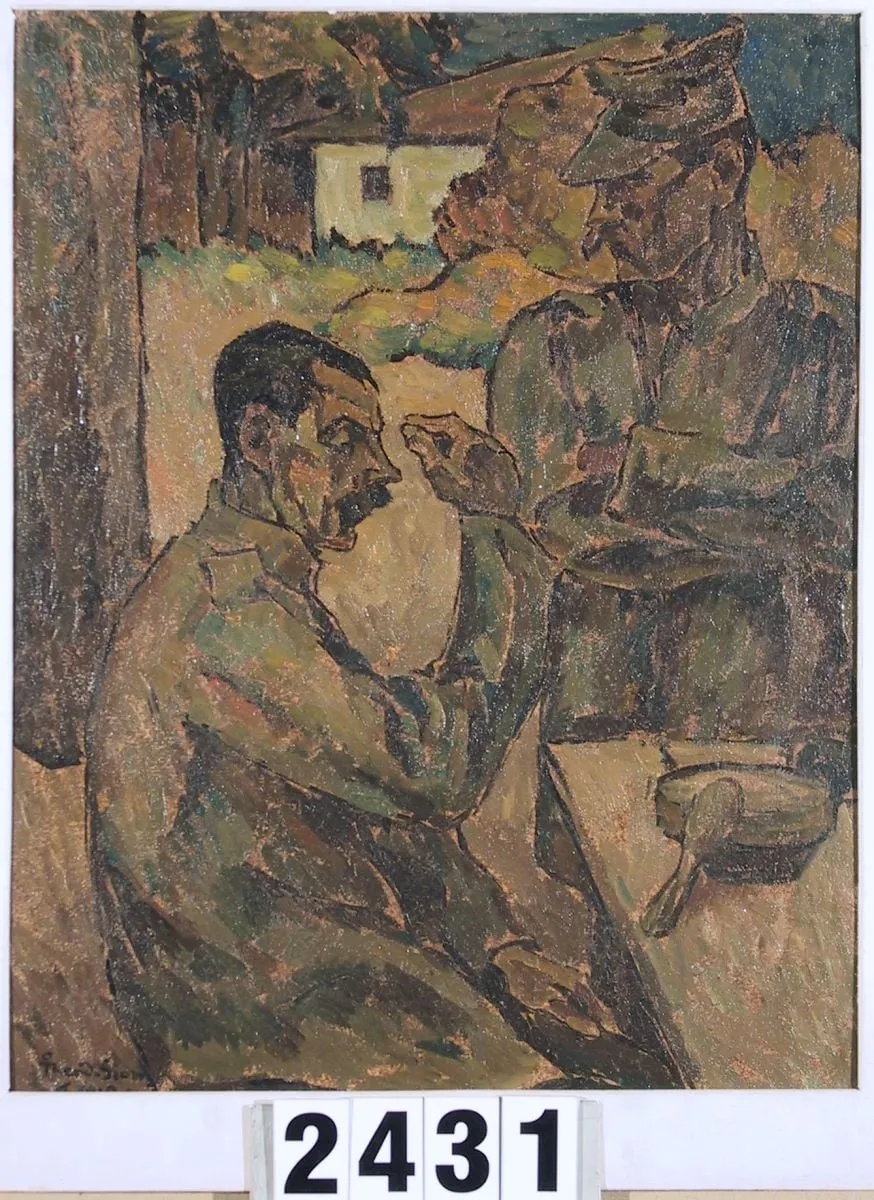
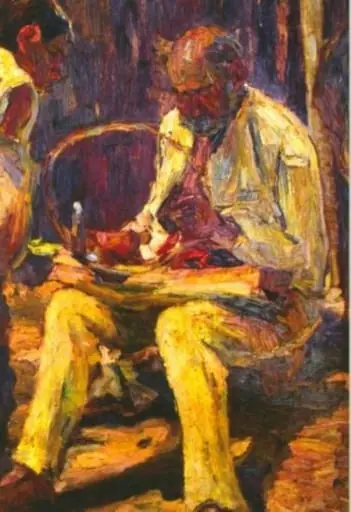
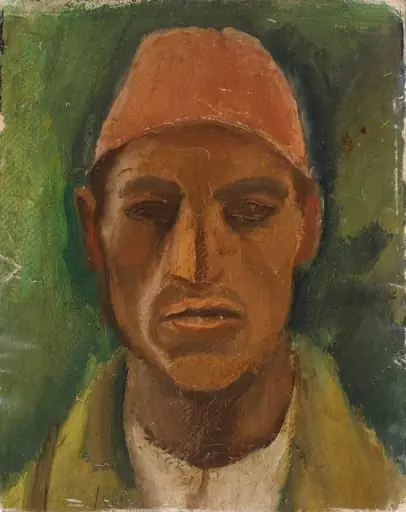
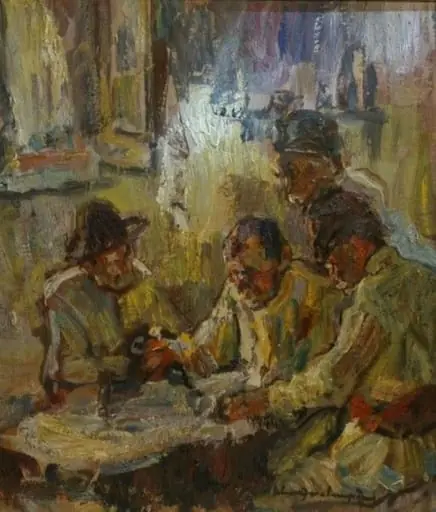
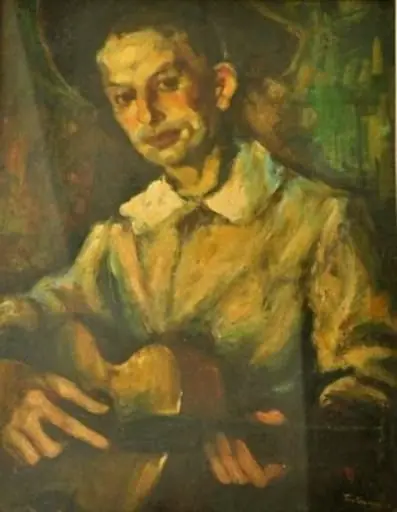
Soldați în refacere is an unspecified painting by Ion Theodorescu-Sion. It is held in the collection of the Brukenthal National Museum. This work depicts a solitary soldier seated outdoors, resting against a tree or post.
About this work
Overview
The entire scene is built through thick applications of paint, creating a tactile surface that emphasizes physical presence over detail.
This work depicts a solitary soldier seated outdoors, resting against a tree or post. His posture suggests exhaustion or quiet contemplation. The background features a modest house on a distant hill, rendered with rough, uneven strokes. The entire scene is built through thick applications of paint, creating a tactile surface that emphasizes physical presence over detail. The palette is restrained, dominated by earth tones without artificial harmony.
Subject & Meaning
The figure, likely a soldier returning from conflict, appears withdrawn, his gaze averted from the viewer. His isolation and stillness convey an emotional weight, possibly reflecting post-war dislocation. The modest dwelling behind him hints at a fragile return to civilian life, but the harshness of the landscape and the figure’s demeanor suggest an uneasy reintegration. The scene resists narrative clarity, favoring mood over story.
Technique & Style
The painting employs impasto, applying paint in thick, visible layers that build texture rather than smooth form. Brushwork is direct and unrefined, with no blending between colors. Greens, browns, and muted yellows are applied in patches, creating a fragmented, almost geological surface. This method prioritizes material presence and emotional intensity over illusionistic realism, aligning with expressive modernist tendencies.
History & Provenance
The painting’s origin is undocumented in public records, and its creator remains unidentified. It was acquired as an anonymous work, likely from a private collection or regional source. No exhibition history or archival references are known prior to its current cataloging. Its attribution to a specific movement or artist has not been confirmed, though its style suggests early 20th-century European expressionism.
Context
Created in the aftermath of widespread conflict, the image reflects a broader cultural preoccupation with the psychological toll of war. Similar themes appear in works by artists responding to the trauma of early 20th-century upheavals. The rejection of polished technique in favor of raw, physical brushwork aligns with broader shifts in art toward emotional authenticity over academic convention during this period.
Legacy
Though not widely exhibited or studied, the painting contributes to a quieter strand of post-war visual expression that values emotional resonance over public monumentality. Its unassuming scale and unpolished execution contrast with grand historical narratives, offering instead a personal, introspective record. It remains a quiet example of how art can convey inner states through materiality rather than symbolism.
Artist & collection
Artist