Artwork
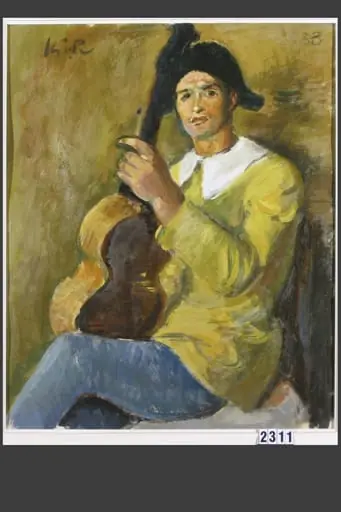
Băiatul cu chitara
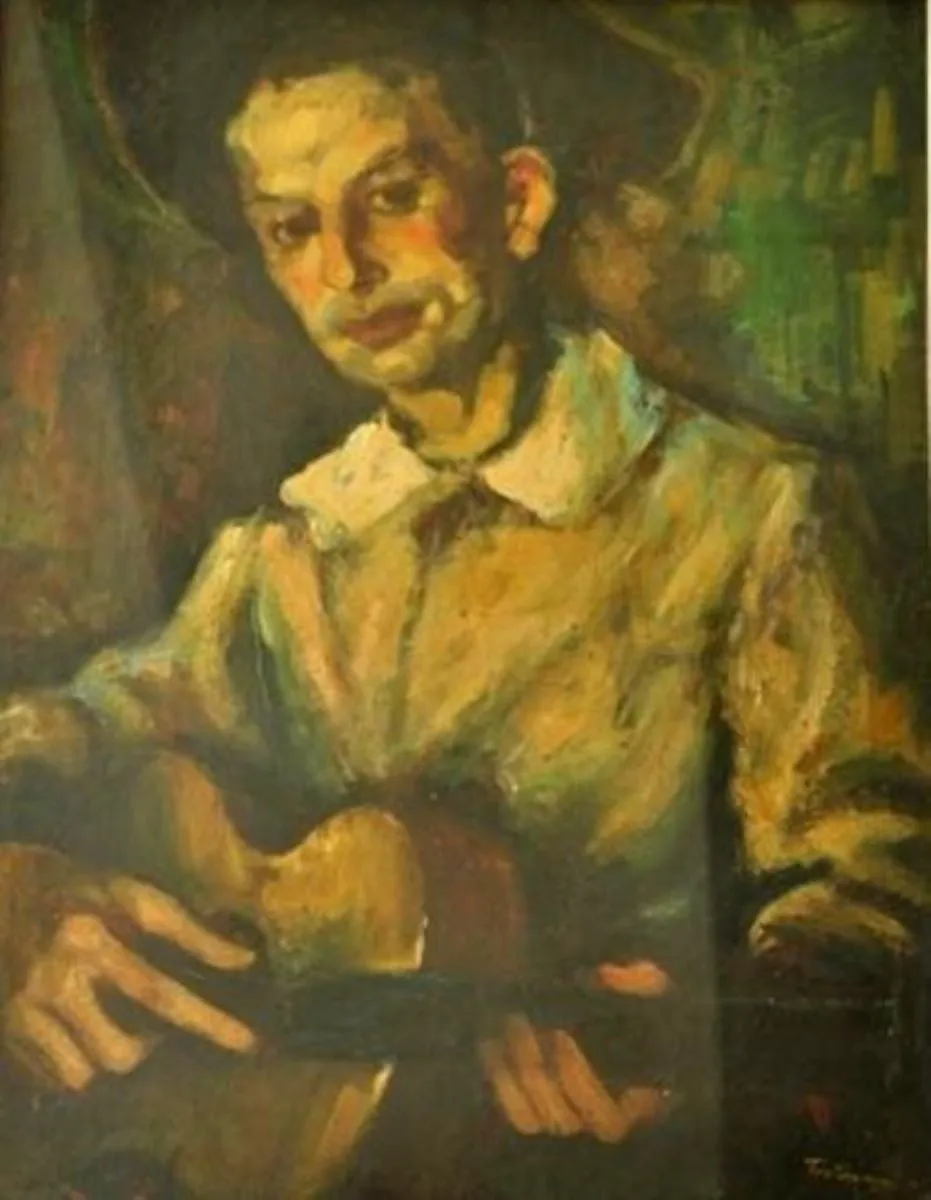
Băiatul cu chitara is an unspecified painting by Petru Remus Troteanu. It is held in the collection of the Botoșani County Museum.
About this work
Overview
Thick applications of paint create a tactile surface, particularly in the clothing and foliage, suggesting an emphasis on material presence over precise detail.
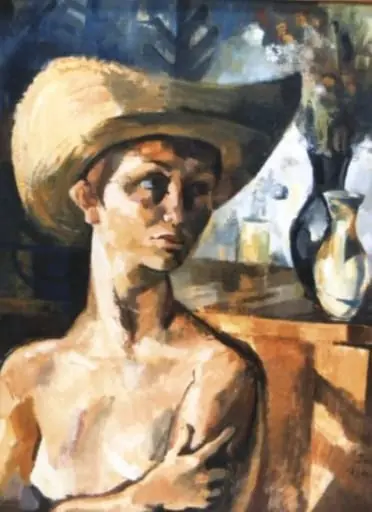
This oil painting depicts a young man seated outdoors, holding a small object—likely a guitar—while gazing directly at the viewer with a calm expression. The composition emphasizes his face through focused lighting, contrasting with the loosely rendered natural surroundings. Thick applications of paint create a tactile surface, particularly in the clothing and foliage, suggesting an emphasis on material presence over precise detail.
Subject & Meaning
The figure appears at ease, his relaxed posture and gentle smile convey quiet introspection rather than performance. The object in his hands, though indistinct, suggests music as a private, intimate act. No narrative context is given; the focus remains on the individual’s presence, inviting contemplation of solitude and ordinary moments rather than dramatic storytelling.
Technique & Style
The artist employs impasto to build texture, especially in the shirt’s stripes and the background foliage, where paint is applied generously and visibly. Brushwork is loose and expressive, avoiding fine detail in favor of atmospheric suggestion. Light falls sharply on the face, isolating it against a dimmer, earth-toned environment, enhancing emotional immediacy through contrast rather than definition.
History & Provenance
No documented ownership history or exhibition record is provided. The work lacks a clear date or artist attribution in the available information. Its origins remain unspecified, though its style aligns with late 19th- or early 20th-century plein air practices common in rural European painting traditions.
Context
The scene reflects a broader trend in post-impressionist and regional realist art that valued everyday subjects and natural settings. The emphasis on texture and light, combined with the informal pose, situates the painting within movements that rejected academic idealism in favor of personal, unembellished observation of common life.
Legacy
Though not widely recognized in major art historical narratives, the work exemplifies a quiet, persistent mode of painting that prioritized sensory experience over narrative. Its survival as a standalone image underscores the enduring appeal of intimate, unadorned human presence rendered with material honesty.
Artist & collection
Artist
Petru Remus Troteanu smoked a pipe while he painted, always leaving a faint blue haze in his studio.