Artwork
Studiu de nud
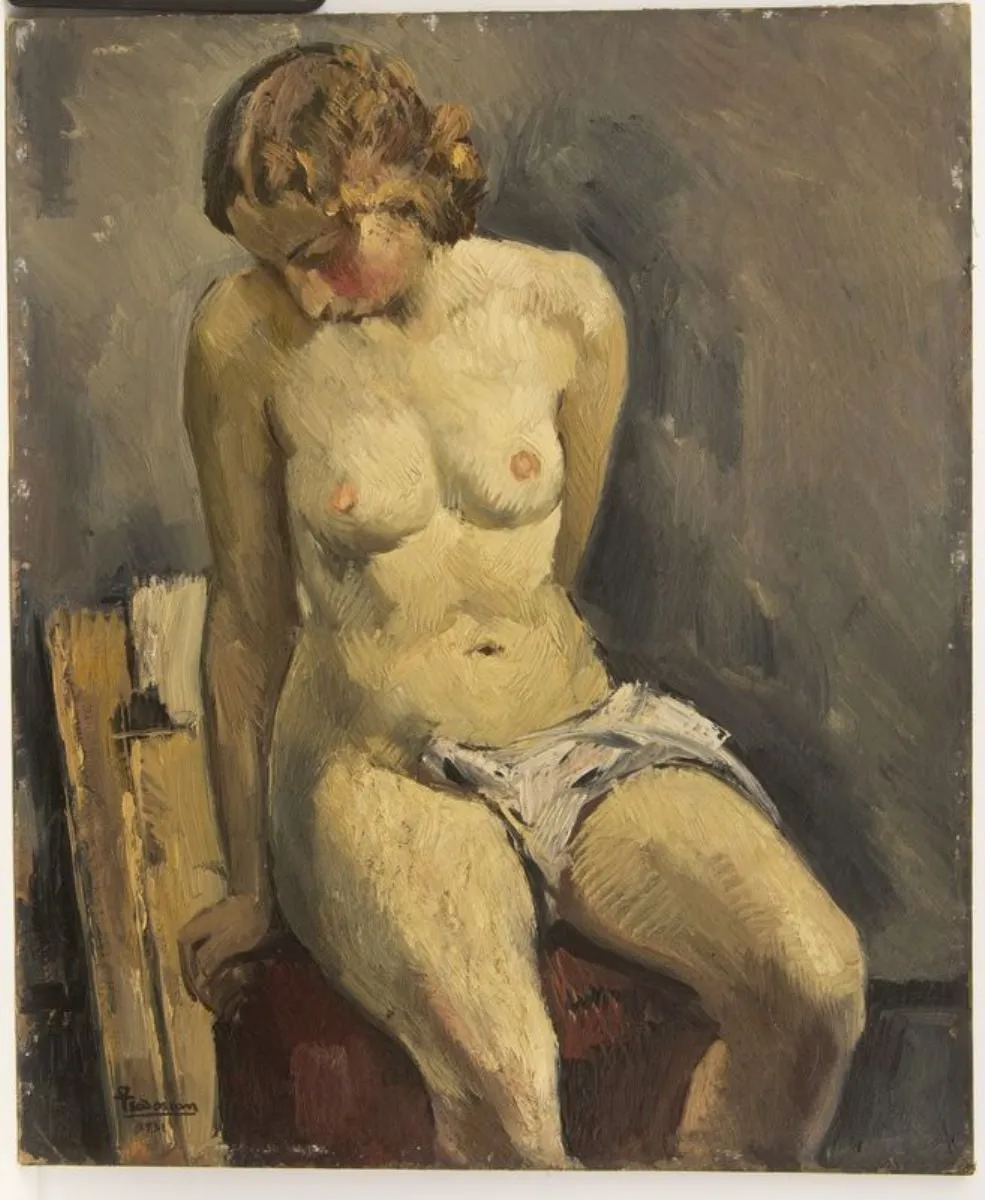
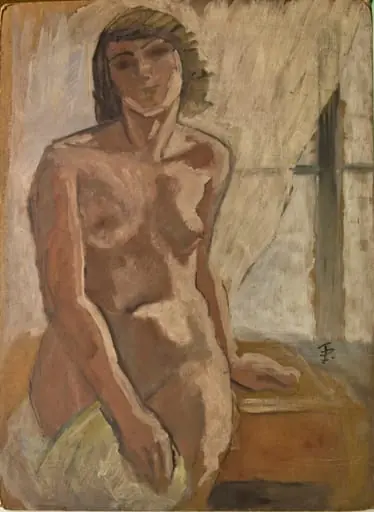
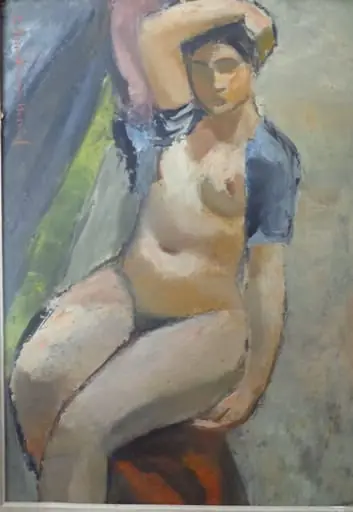
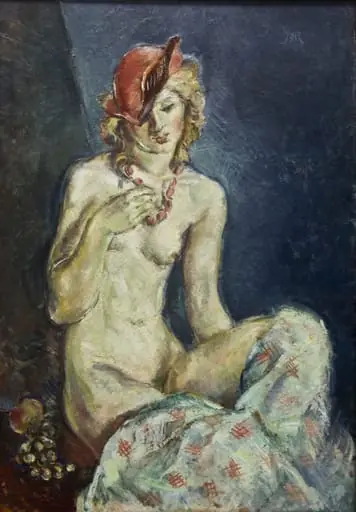
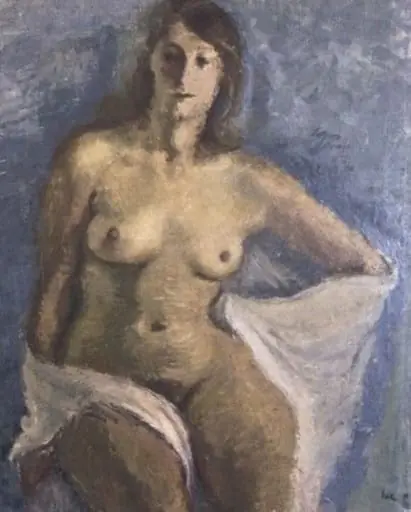
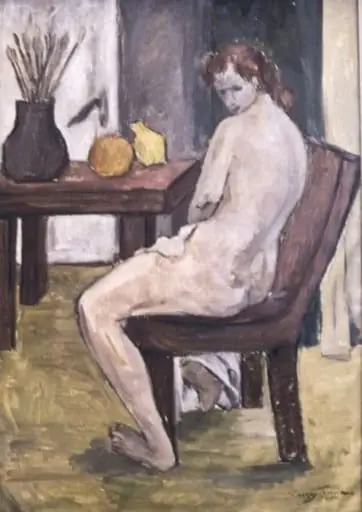
Studiu de nud is an unspecified painting by Ion Theodorescu-Sion. It is held in the collection of the National Museum of Art of Romania. This work presents a solitary female figure seated on a chair, rendered in thick, tactile brushwork.
About this work
Overview
The dark, indistinct background isolates her form, emphasizing the contrast between her pale skin and the muted surroundings.
This work presents a solitary female figure seated on a chair, rendered in thick, tactile brushwork. Her nudity is modestly moderated by a draped cloth around the waist, and her hair is gathered tightly at the back. The dark, indistinct background isolates her form, emphasizing the contrast between her pale skin and the muted surroundings. The paint is applied with visible texture, creating a physical presence that draws attention to the surface of the canvas.
Subject & Meaning
The figure is depicted without idealization, focusing on quiet presence rather than narrative or symbolism. Her posture suggests introspection or stillness, avoiding theatricality. The minimal clothing and direct gaze toward the viewer invite contemplation of the human form in its unadorned state. The absence of context or props shifts focus entirely to the body as both subject and object of observation.
Technique & Style
The artist employs impasto to build the figure’s surface with dense, uneven strokes, giving skin a tactile, almost sculptural quality. The thick paint catches light differently than the smooth, dark background, enhancing the figure’s three-dimensionality. This method rejects fine detail in favor of expressive texture, prioritizing physicality over realism. The brushwork is deliberate yet unrefined, contributing to an intimate, raw atmosphere.
History & Provenance
The work’s origins are undocumented in public records, with no known exhibition history or collector lineage. It is cataloged simply as a study, suggesting it was not intended for public display. Its anonymous status and lack of signature imply it may have been created for personal exploration rather than commercial or institutional purposes.
Context
Created during a period when academic nudes dominated formal art, this piece diverges by rejecting classical harmony in favor of raw, unpolished expression. It aligns with late 19th- to early 20th-century shifts toward subjective representation, where the artist’s hand and emotional response took precedence over idealized form. The work reflects a broader movement toward personal, experimental approaches to the human figure.
Legacy
Though not widely known or reproduced, the painting exemplifies a quiet but significant strand of modern figuration. Its emphasis on materiality over perfection influenced later artists exploring the body through texture and gesture. As a study, it remains a testament to the value of unmediated observation in artistic practice, offering insight into the artist’s process rather than a polished final statement.
Artist & collection
Artist