Artwork
Nud
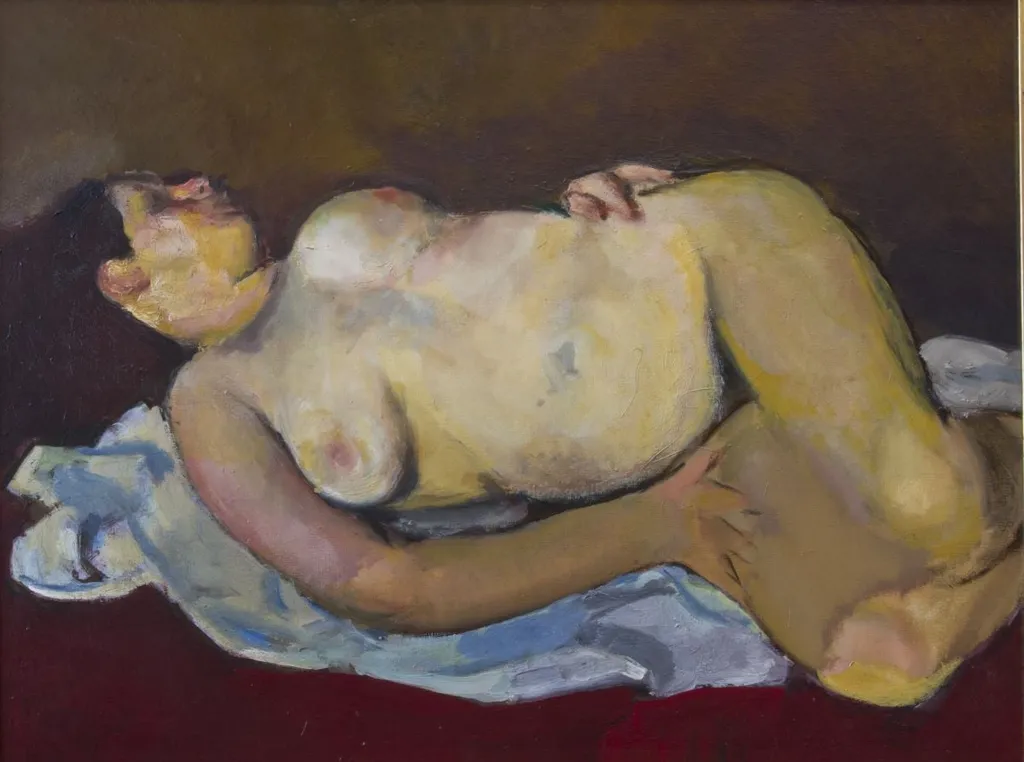
Nud is a print by Corneliu Baba. It dates from 1959 and is held in the collection of the National Museum of Art of Romania.
About this work
Overview
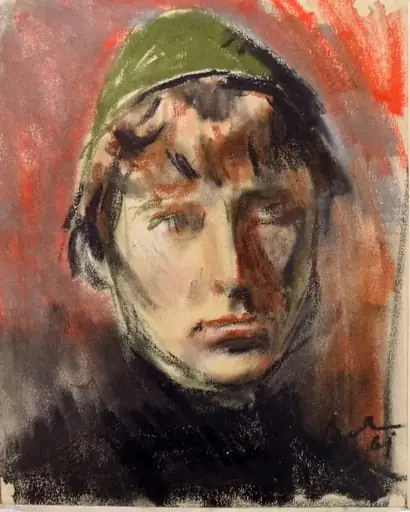
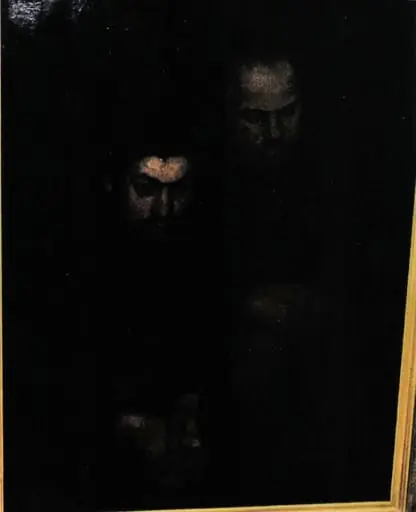
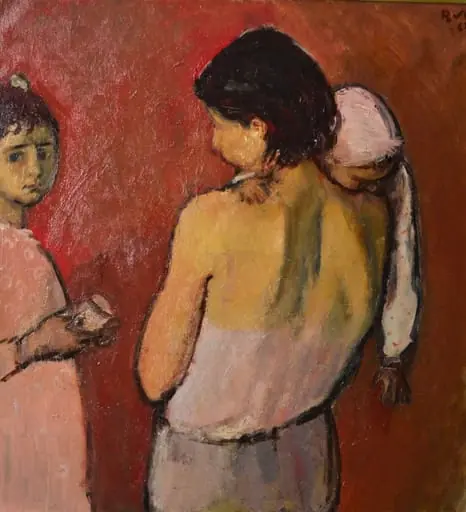
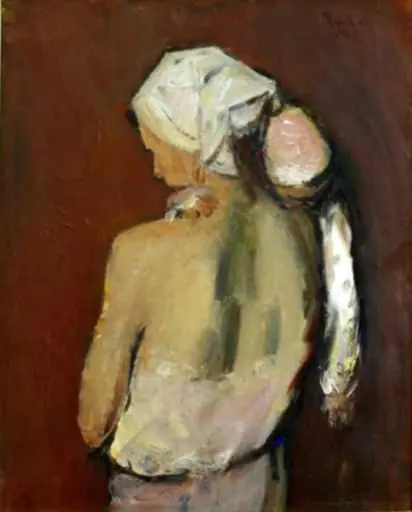
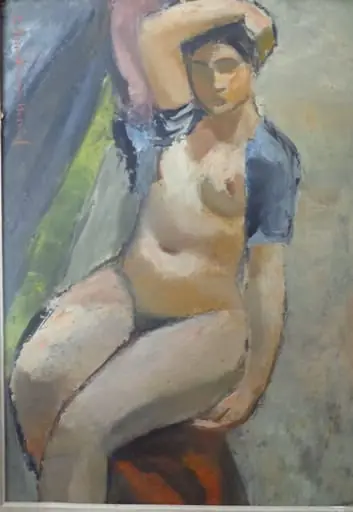
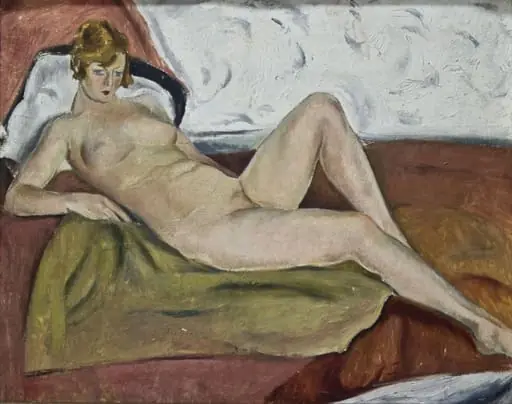
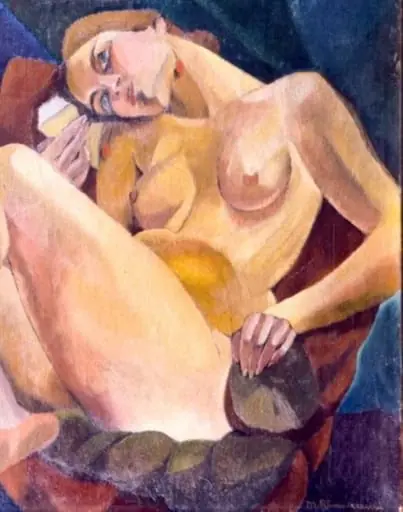
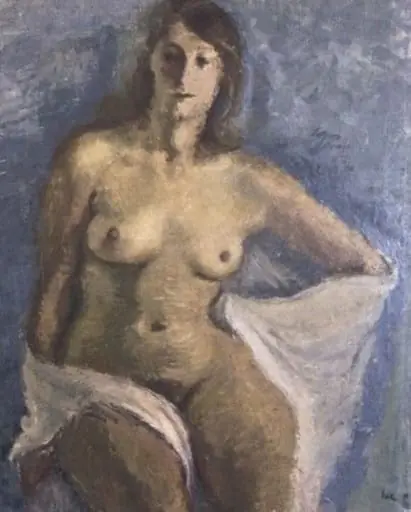
Painted in 1959 by Corneliu Baba, this work presents a reclining female nude in a quiet, introspective posture. The figure lies on her back, head turned left, limbs gently curved, conveying stillness rather than theatricality. The composition avoids overt drama, focusing instead on the quiet presence of the body within a subdued environment.
Subject & Meaning
The subject is a solitary woman in repose, her closed eyes and parted lips suggesting inner calm or surrender. There is no narrative context or symbolic object to guide interpretation; the emphasis lies in the vulnerability and autonomy of the figure. Her serenity invites contemplation rather than desire, aligning with Baba’s tendency toward psychological depth over idealization.
Technique & Style
Baba employs a restrained palette of soft pinks, creams, and muted browns to render skin tones with subtle gradations. Brushwork is deliberate but not polished, allowing texture to suggest flesh without idealized smoothness. The background, a neutral earth tone, recedes without distraction, anchoring the figure in a space that feels intimate yet undefined.
History & Provenance
Created during Baba’s mature period in Romania, the work reflects his engagement with figurative painting amid state-mandated socialist realism. Though not overtly political, its quiet humanity distinguishes it from official art of the era. The painting remained in private collections until entering institutional hands, preserving its unassuming character.
Context
In late 1950s Romania, artistic expression was tightly regulated, yet Baba maintained a personal style rooted in observation rather than propaganda. This nude, devoid of mythological or allegorical framing, stands as a quiet act of artistic integrity—prioritizing the individual form over ideological demands.
Legacy
The work exemplifies Baba’s enduring interest in the human figure as a vessel of emotional nuance. It contributes to a body of Romanian modernist painting that values psychological realism over spectacle. Though not widely exhibited internationally, it remains a significant reference in discussions of postwar Eastern European art.
Artist & collection
Artist
Corneliu Baba made prints and paintings that feel like quiet stories, often borrowing from older art.