Artwork
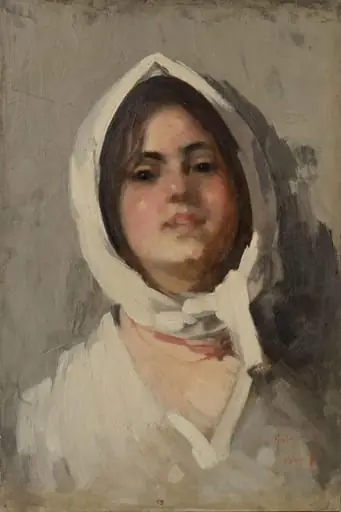
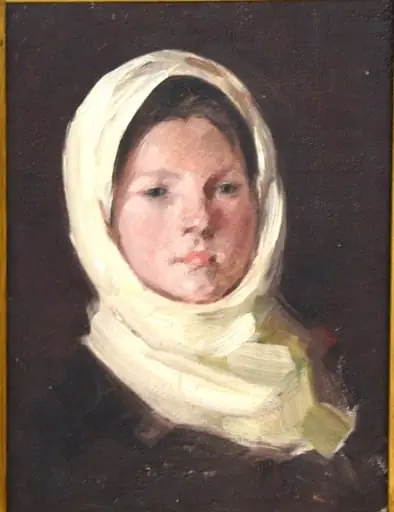
Cap de țărăncuță
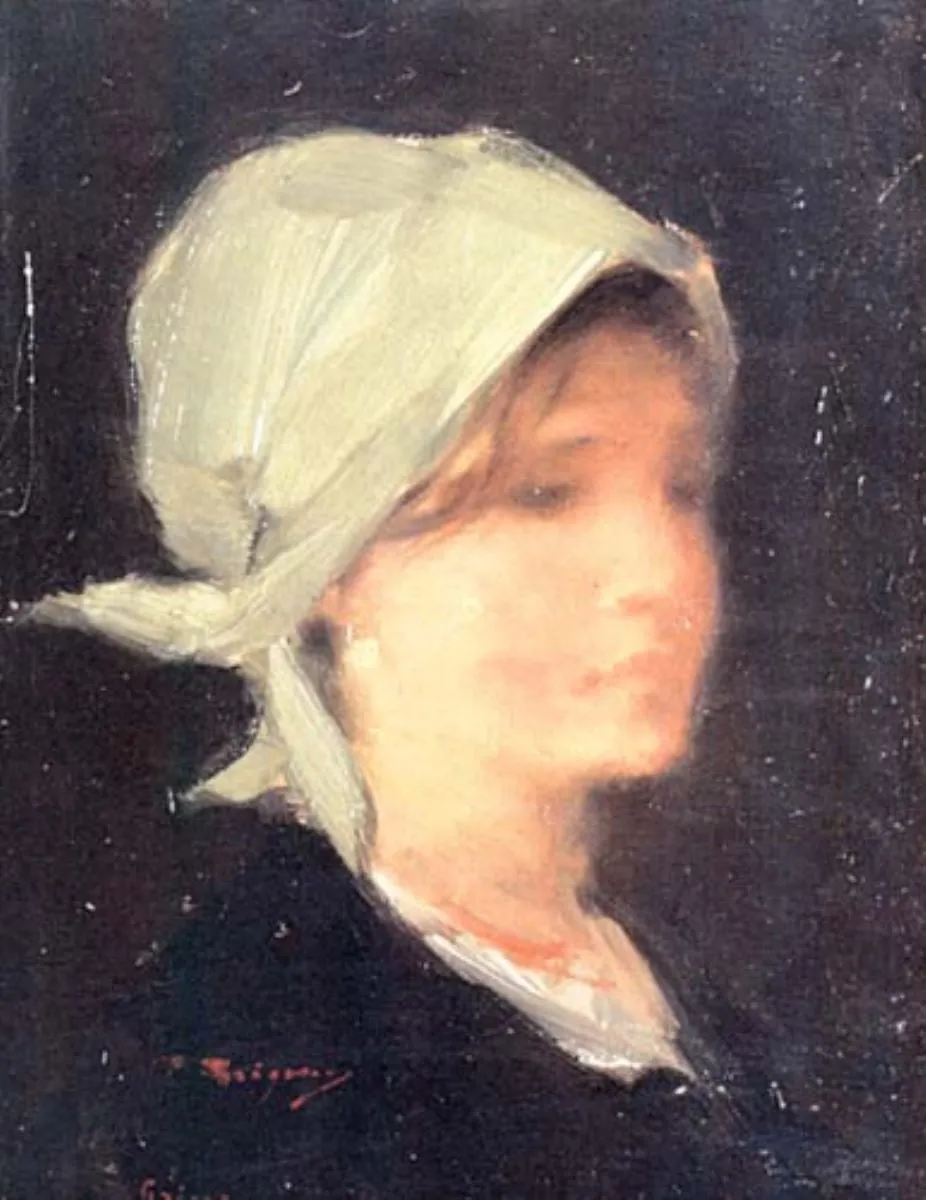
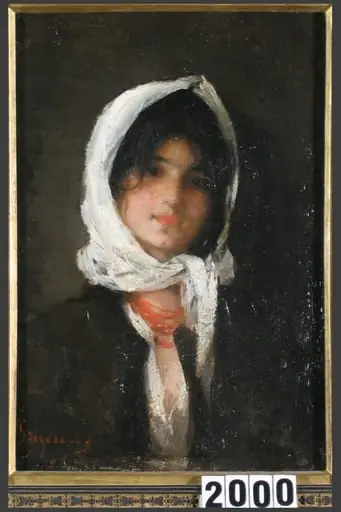
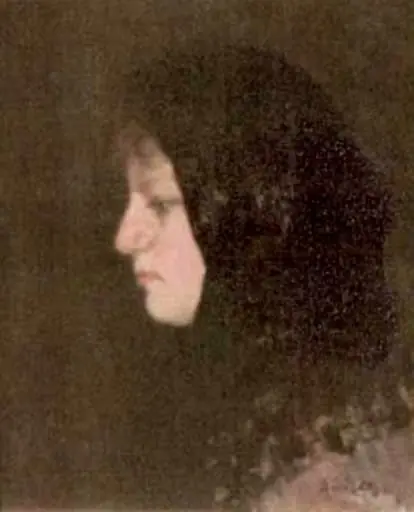
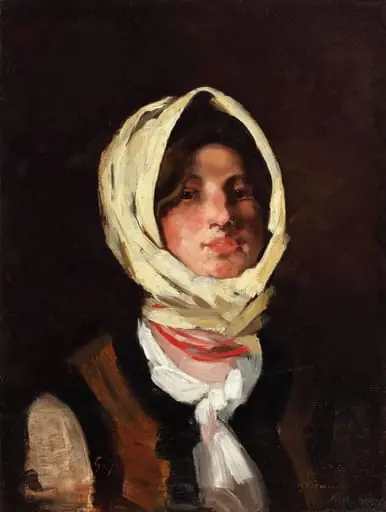
Cap de țărăncuță is an unspecified painting by Nicolae Grigorescu. It is held in the collection of the National Museum of Art of Romania.
About this work
Overview
This portrait captures a young Romanian peasant girl in a moment of stillness, rendered with loose, expressive brushwork that conveys vitality without overt detail. The dark background isolates her figure, emphasizing her presence through contrast and subtle modeling. The composition avoids narrative detail, focusing instead on atmosphere and quiet introspection.
Subject & Meaning
The subject is a rural girl, identified by her white headscarf and simple attire, likely representing the everyday life of Romania’s peasantry. Her turned gaze and soft expression suggest inward reflection rather than engagement with the viewer. The absence of context or props reinforces a sense of solitude, inviting contemplation of her inner world.
Technique & Style
Loose, fluid brushstrokes define form without rigid outline, creating a sense of immediacy. Chiaroscuro is used sparingly but effectively to model the face and shoulders, lending volume against the deep background. The palette is restrained—warm skin tones and white fabric stand out against near-black shadows—enhancing emotional restraint and visual focus.
History & Provenance
Painted by Nicolae Grigorescu in the late 19th century, the work belongs to a series of studies of rural Romanians made during his travels. It was likely created as an independent study rather than a commissioned portrait, reflecting his interest in documenting ordinary lives with dignity and sensitivity.
Context
Grigorescu worked during a period of national cultural awakening in Romania, when artists sought to define a distinct national identity through depictions of peasant life. This portrait aligns with that movement, avoiding idealization in favor of quiet realism, and contributing to a broader shift toward authentic representation in Romanian art.
Legacy
The painting exemplifies Grigorescu’s role in modernizing Romanian painting through direct observation and expressive technique. It influenced later generations who valued emotional subtlety over academic precision, helping establish a tradition of intimate, psychologically grounded portraiture in Romanian art.
Artist & collection
Artist
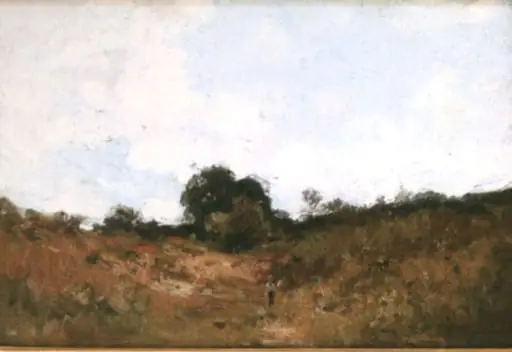
Romanian painter Nicolae Grigorescu made quiet, honest scenes of everyday life and country roads around 1900.