Artwork
Țigancă
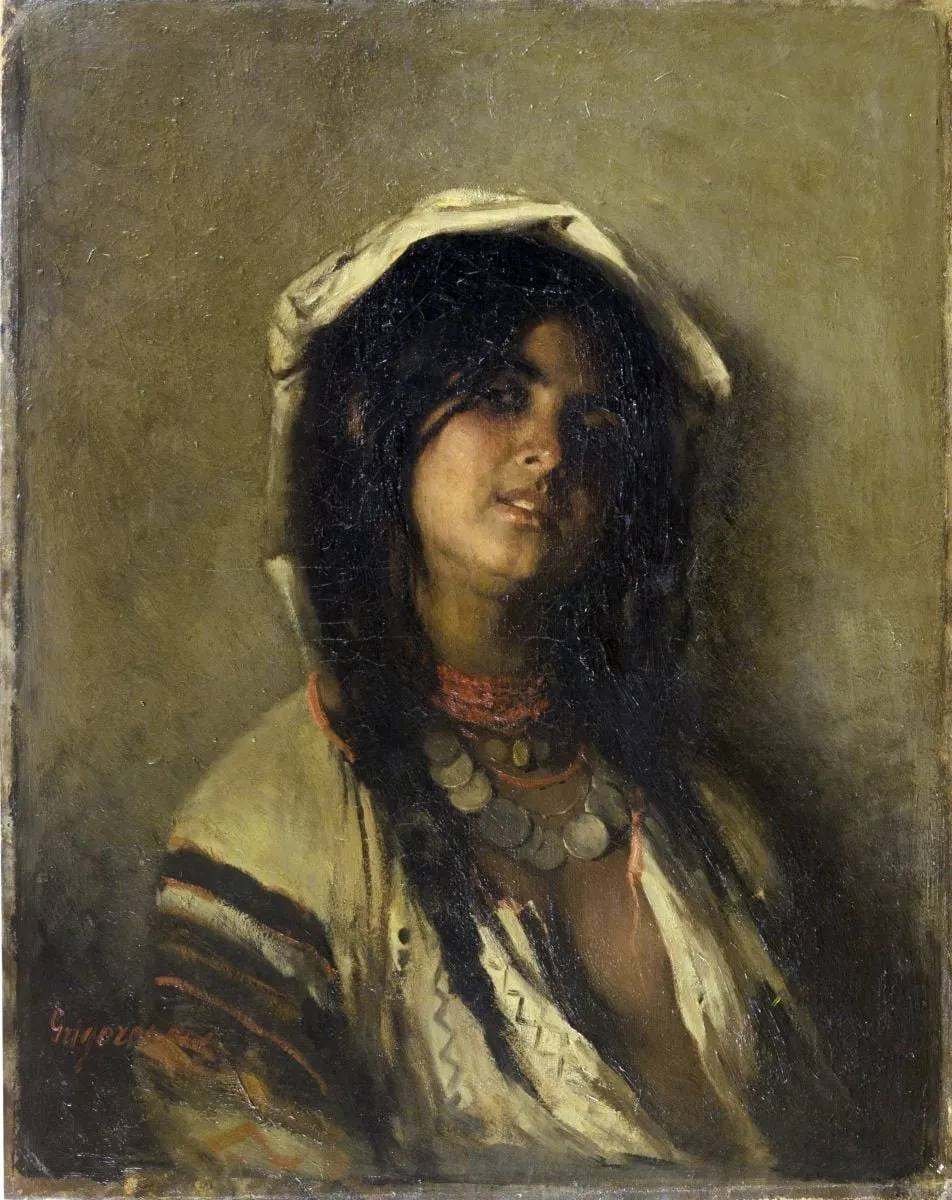
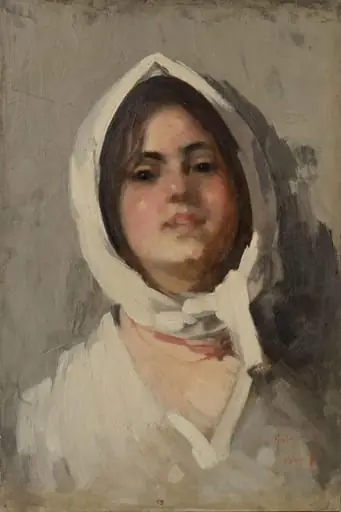
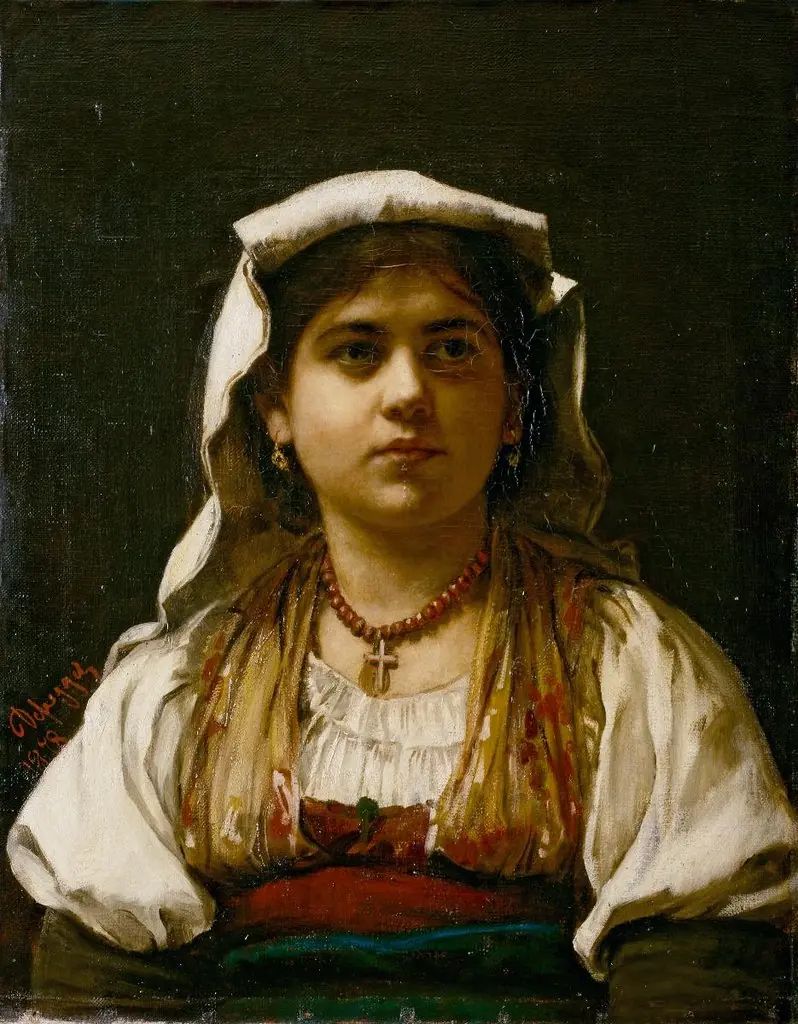
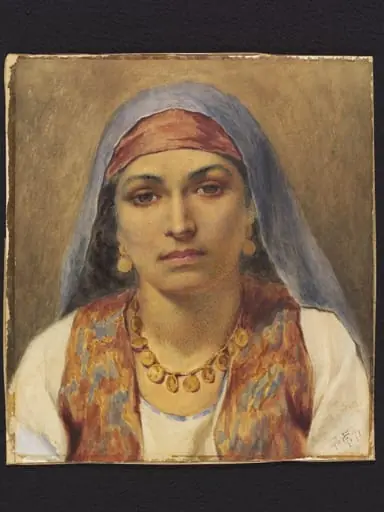
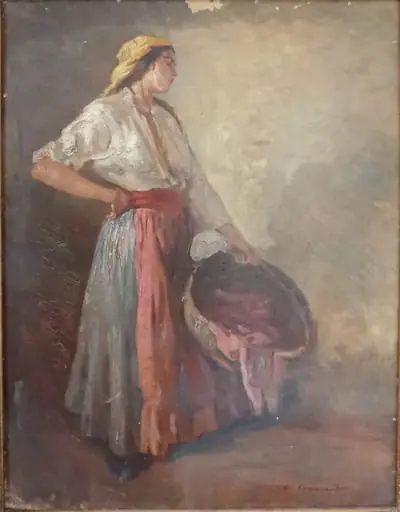
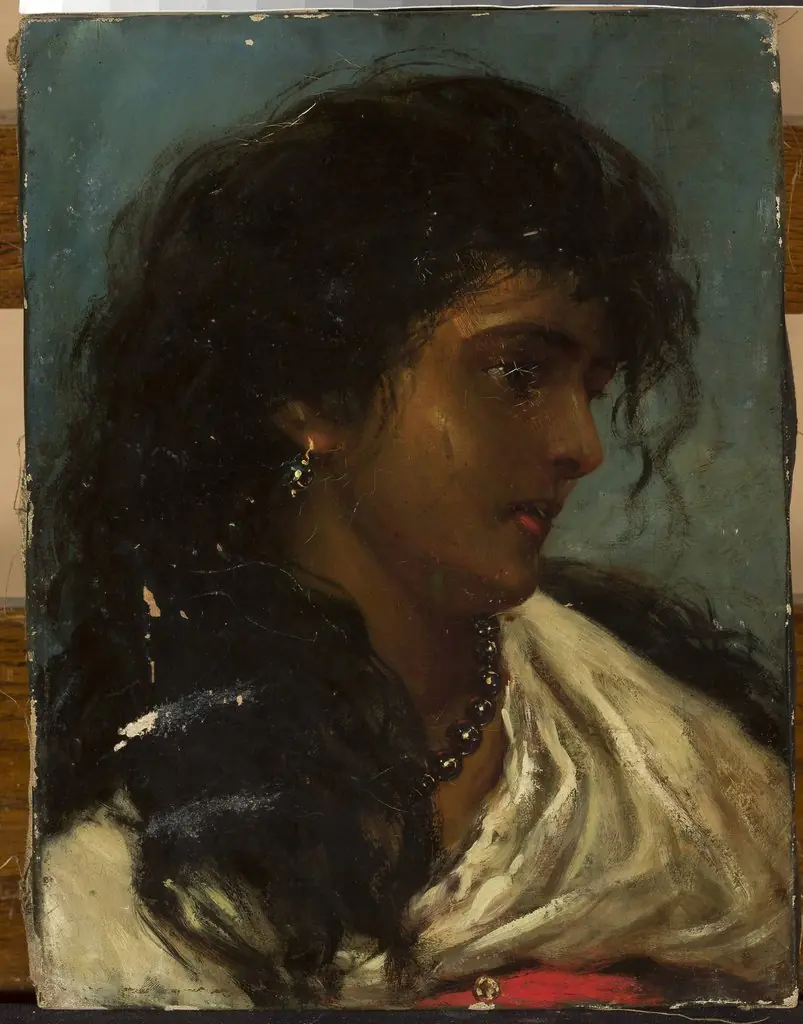
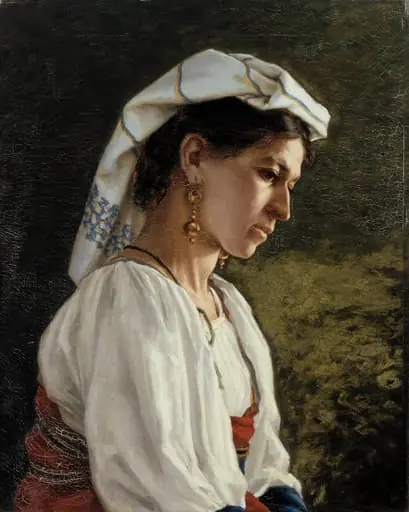
Țigancă is an unspecified painting by Nicolae Grigorescu. It is held in the collection of the National Museum of Art of Romania. This portrait depicts a Romani woman seated in quiet stillness, her gaze averted from the viewer.
About this work
Overview
This portrait depicts a Romani woman seated in quiet stillness, her gaze averted from the viewer. Rendered with thick, tactile brushwork, the painting emphasizes texture over detail, particularly in her clothing. A dark green background isolates her figure, while focused lighting carves out her face in soft contrast, employing chiaroscuro to heighten presence without narrative intrusion.
Subject & Meaning
The woman’s attire—white headscarf, striped shirt with red collar, and necklaces of small coins—suggests cultural identity and personal adornment.
The woman’s attire—white headscarf, striped shirt with red collar, and necklaces of small coins—suggests cultural identity and personal adornment. Her stillness and averted gaze invite contemplation rather than interpretation, avoiding stereotypical portrayals. The coins may signify labor, heritage, or personal value, but the painting resists explicit storytelling, favoring dignity through restraint.
Technique & Style
Thick, deliberate brushstrokes build the fabric of her shirt and scarf, creating a tactile surface that contrasts with the smoother rendering of her face. Chiaroscuro directs attention to her features, with light emerging from above and shadows softening the edges. The dark green backdrop eliminates distraction, reinforcing the figure’s solitude and the artist’s focus on form and light.
History & Provenance
The work’s origin and early ownership remain undocumented. It was likely created during a period when artists in Eastern Europe began depicting Romani subjects with greater attention to individuality. No exhibition or collector records from its early years are known, and its current location reflects later institutional acquisition.
Context
In early 20th-century Eastern European art, Romani figures were often portrayed through romanticized or exoticized lenses. This painting diverges by avoiding sentimentality, instead presenting the subject with quiet autonomy. Its stylistic choices align with regional realist trends that valued emotional restraint and physical presence over dramatic narrative.
Legacy
The painting contributes to a quieter strand of portraiture that centers marginalized individuals without overt political or sentimental framing. Its emphasis on texture, light, and composed stillness influenced later artists seeking to depict everyday subjects with psychological depth rather than symbolic weight.
Artist & collection
Artist
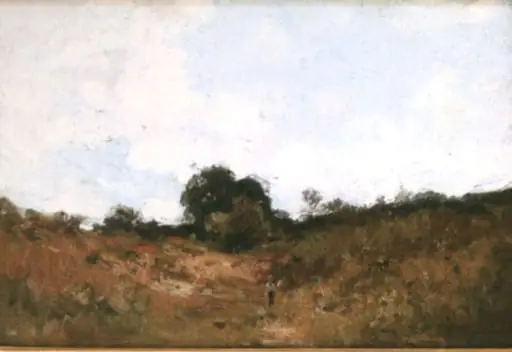
Romanian painter Nicolae Grigorescu made quiet, honest scenes of everyday life and country roads around 1900.