Artwork
Țigani cu ursul
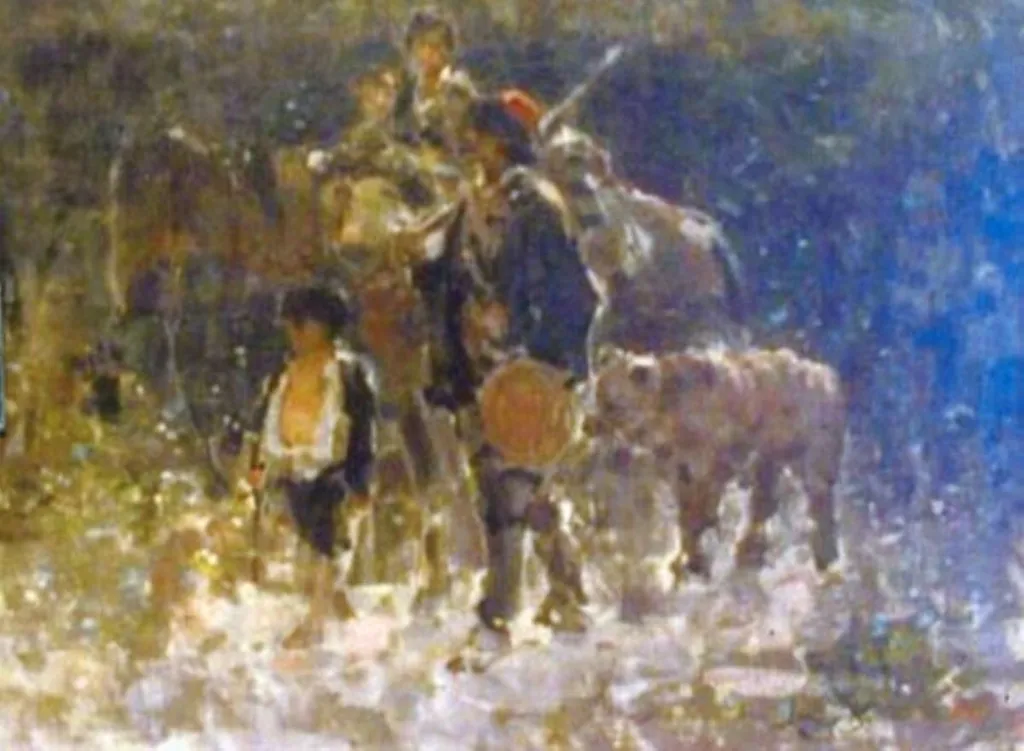
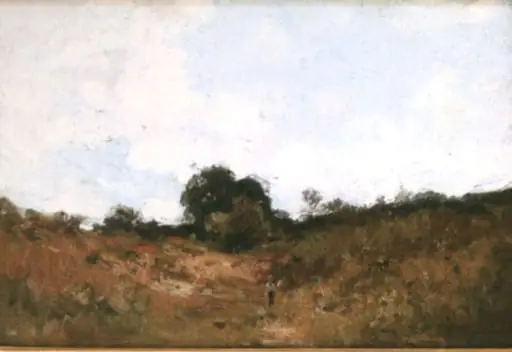
Țigani cu ursul is an unspecified painting by Nicolae Grigorescu. It is held in the collection of the Museum of Art Cluj-Napoca.
About this work
Overview
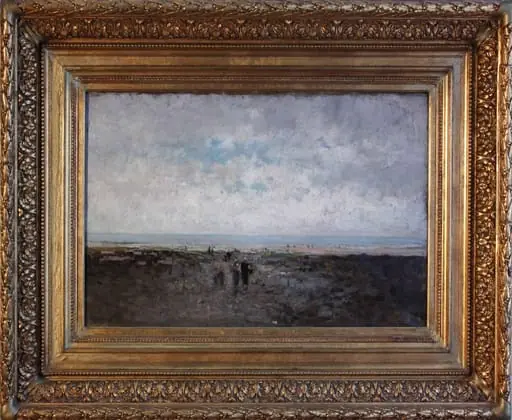
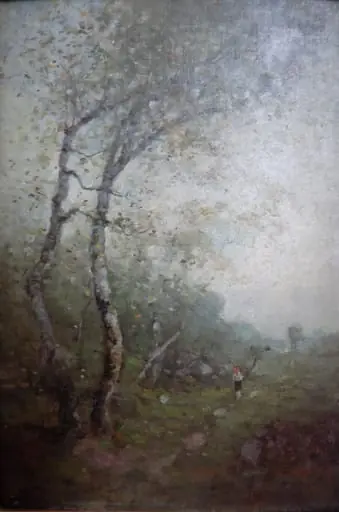
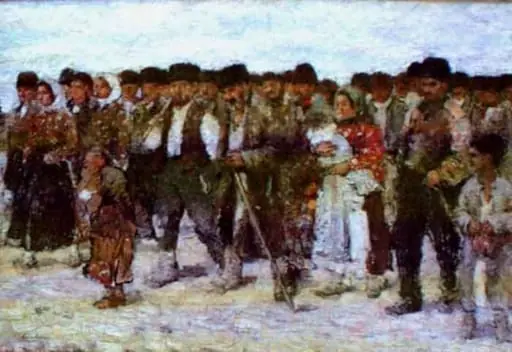
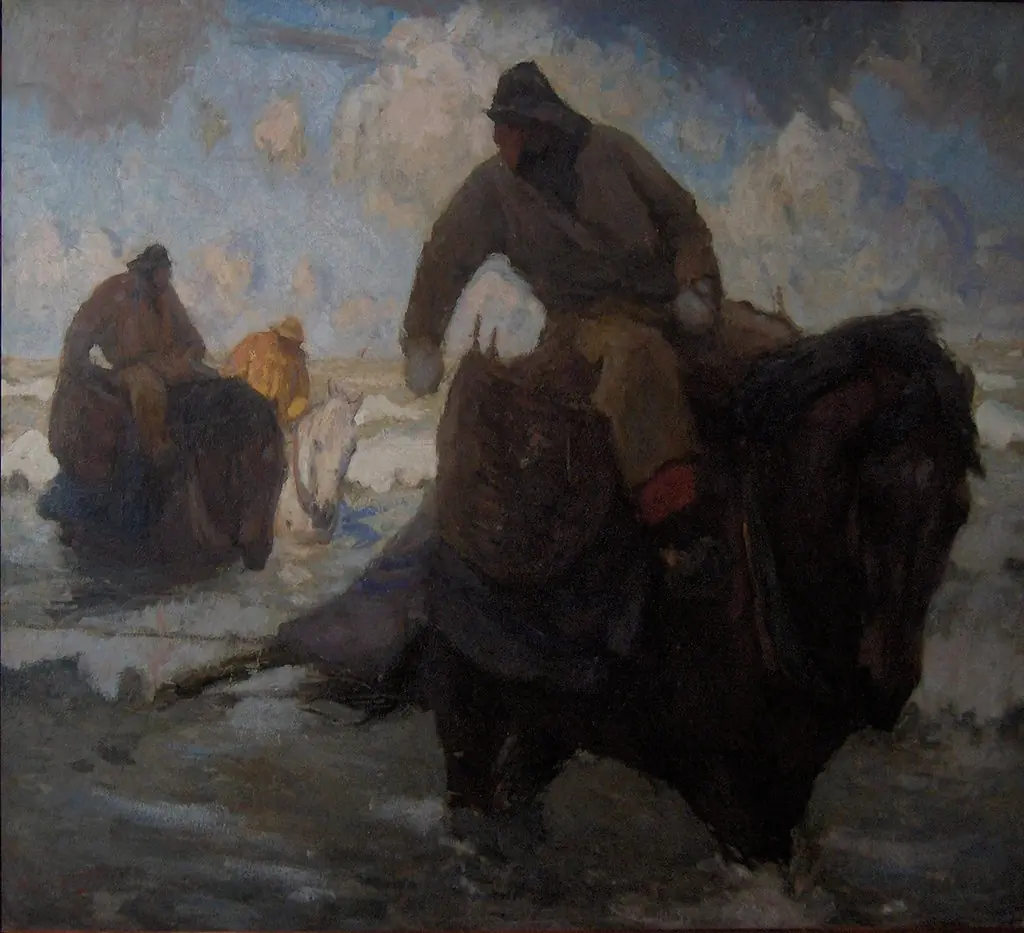
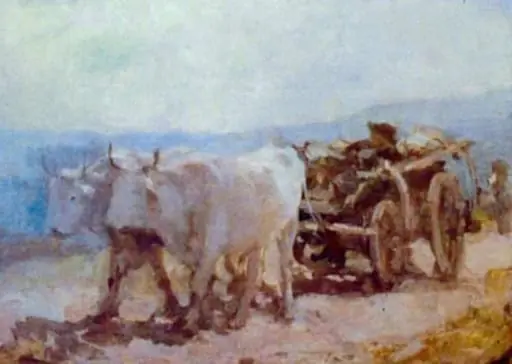
The work titled “Țigani cu ursul” depicts a procession of figures moving through a verdant, brush‑filled landscape accompanied by two sizeable bears. The participants wear unadorned, dark garments, while each bear is restrained by a collar. The palette consists of muted earth tones—greens, browns, and subdued blues—rendered with a slightly worn appearance.
Subject & Meaning
The composition juxtaposes human travelers with the ostensibly tame bears, suggesting a relationship of control or coexistence between people and wild animals. The calm demeanor of the bears, integrated into the group, invites contemplation of the cultural or symbolic role of such creatures within the depicted community.
Technique & Style
The artist employs a restrained chiaroscuro, highlighting the texture of fur and the contours of faces through contrasts of light and shadow. The handling of illumination creates focal points on the bears’ heads and the figures’ features, while the overall rendering retains a soft, faded quality that emphasizes the earthy tonal scheme.
Context
Set in a rural, possibly nomadic environment, the scene reflects a tradition of itinerant groups traveling with trained animals. The simple clothing and natural setting align with depictions of itinerant peoples in Eastern European visual culture, where bears have historically been part of traveling shows or rituals.
Legacy
While specific reception details are unavailable, the painting contributes to visual records of human‑animal partnerships in folk contexts, offering insight into how such relationships were visually narrated in regional art.
Artist & collection
Artist
Romanian painter Nicolae Grigorescu made quiet, honest scenes of everyday life and country roads around 1900.