Artwork
Peisaj de vară cu boi și păstor
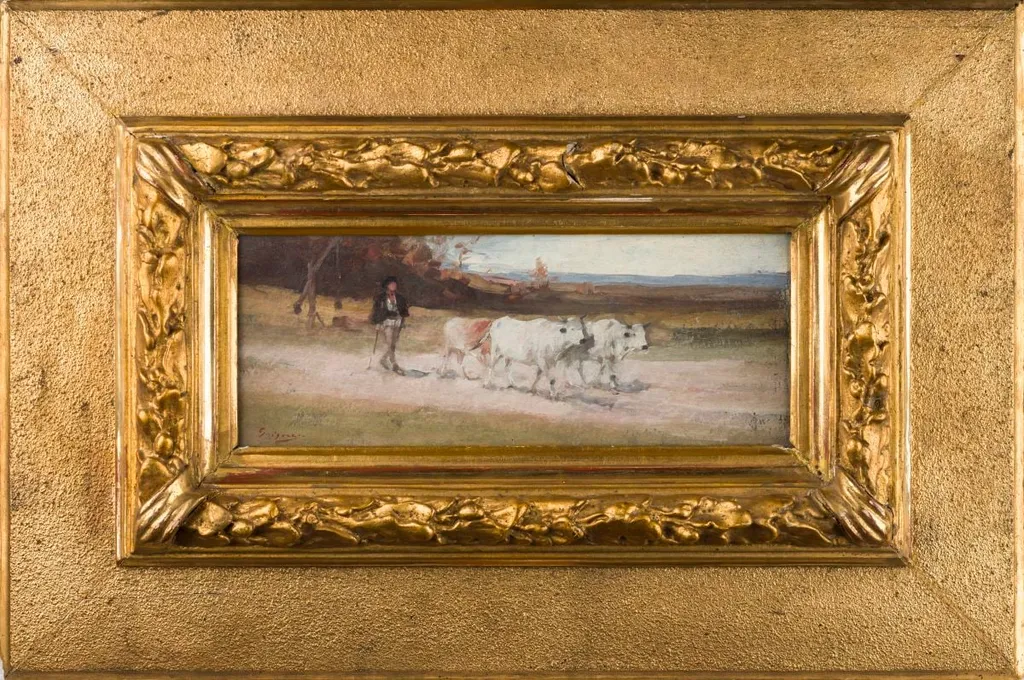
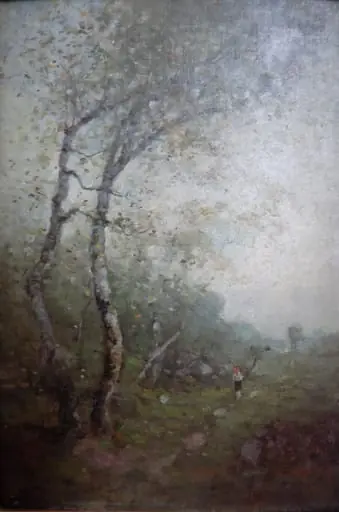
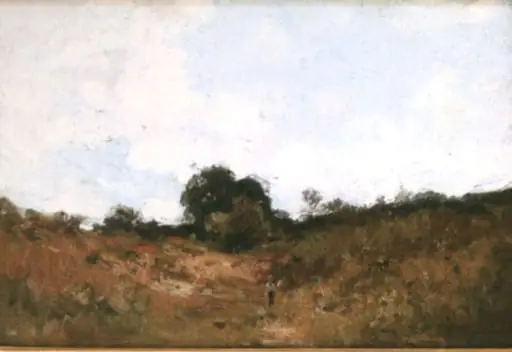
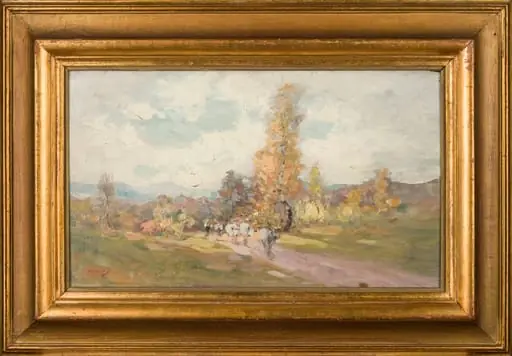
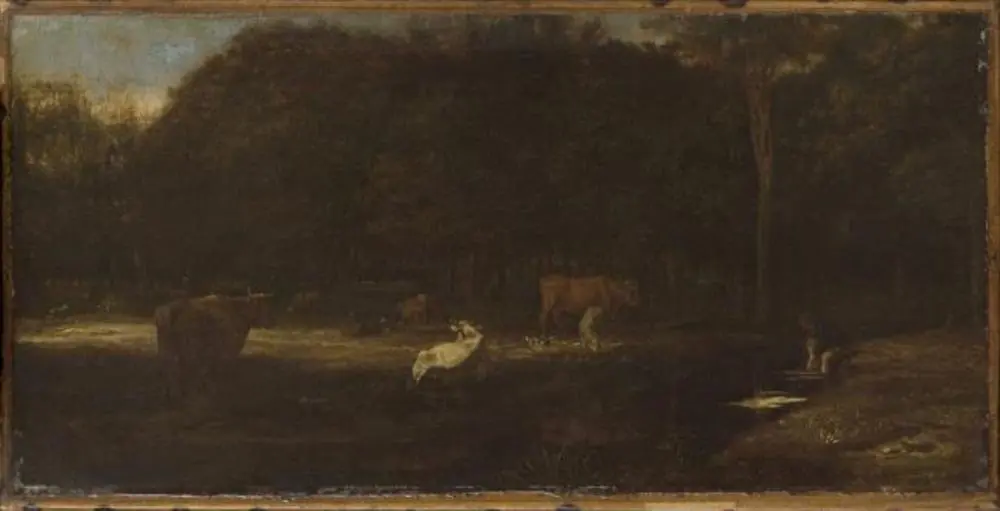
Peisaj de vară cu boi și păstor is an unspecified painting by Nicolae Grigorescu. It is held in the collection of the Brukenthal National Museum. This work depicts a rural scene in which a figure in dark attire leads two white oxen across a broad, grassy field.
About this work
Overview
The composition emphasizes stillness, with no overt movement or narrative tension, inviting contemplation of quiet labor and natural rhythm.
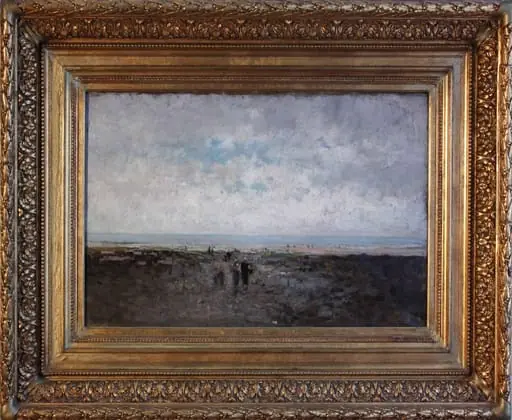
This work depicts a rural scene in which a figure in dark attire leads two white oxen across a broad, grassy field. The atmosphere is subdued, with a pale sky and distant trees displaying autumnal hues. The brushwork is loose and fluid, suggesting immediacy rather than polished finish. The composition emphasizes stillness, with no overt movement or narrative tension, inviting contemplation of quiet labor and natural rhythm.
Subject & Meaning
The figure, likely a shepherd or farmer, moves calmly with the oxen, their quiet coordination suggesting routine rather than drama. The absence of human interaction or external events focuses attention on the harmony between person and animal within the landscape. The scene reflects an unembellished view of agricultural life, valuing endurance and simplicity over spectacle, rooted in the daily rhythms of the countryside.
Technique & Style
The painting employs loose, open brushstrokes that convey texture and light without fine detail. Colors are muted, with soft transitions between the pale sky, golden grass, and warm tree foliage. The lack of sharp outlines and the fluid handling of forms create a sense of atmospheric haze, aligning with plein air practices. The technique prioritizes sensory impression over precise rendering, emphasizing mood over definition.
History & Provenance
Attributed to Nicolae Grigorescu, this work belongs to a body of Romanian landscape paintings from the late 19th century. It reflects the artist’s commitment to depicting rural life with sincerity, away from academic idealization. While specific ownership history is not documented here, the piece aligns with Grigorescu’s broader practice of recording the Romanian countryside through direct observation and informal sketches.
Context
Created during a period when Romanian artists sought to define a national visual identity, this painting participates in a shift toward realism and naturalism. It contrasts with grand historical or mythological themes by focusing on ordinary rural labor. The emphasis on local terrain and everyday figures reflects broader cultural movements seeking authenticity in art, grounded in the land and its people.
Legacy
Grigorescu’s approach influenced later generations of Romanian painters by validating everyday rural scenes as worthy subjects. His loose technique and attention to light and atmosphere helped bridge academic traditions with emerging modern sensibilities. This work, though modest in scale and subject, contributes to a legacy of art that honors quiet observation over dramatic narrative.
Artist & collection
Artist
Romanian painter Nicolae Grigorescu made quiet, honest scenes of everyday life and country roads around 1900.