Artwork
Peisaj cu copaci
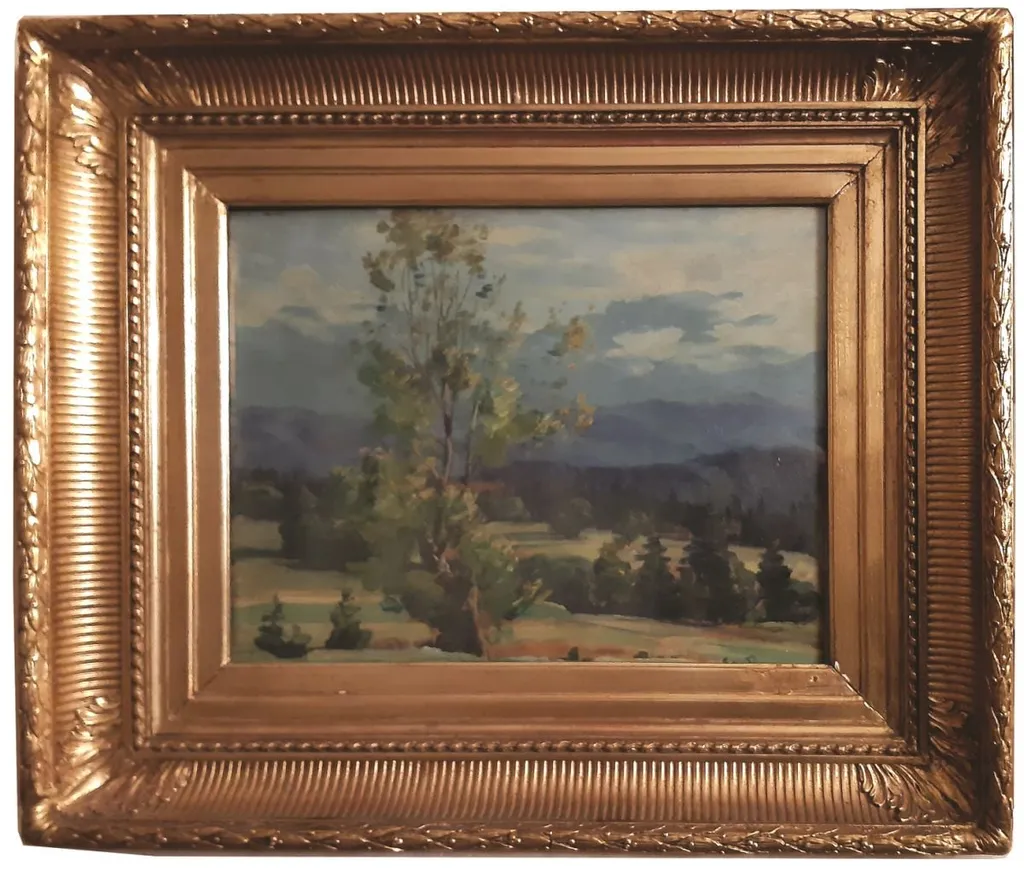
Peisaj cu copaci is an unspecified painting by Ștefan Popescu. It dates from 1914 and is held in the collection of the Cotroceni National Museum.
About this work
Overview
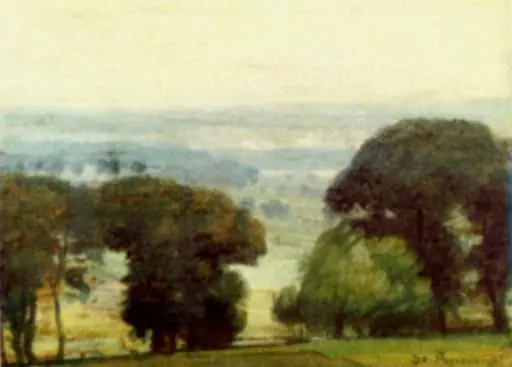
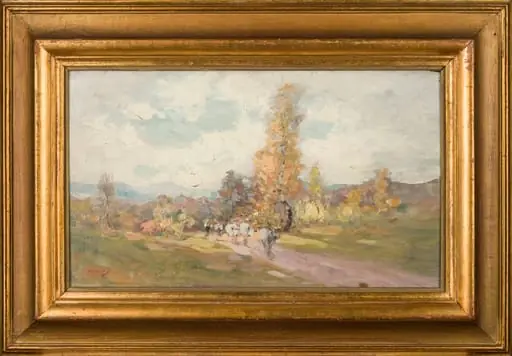
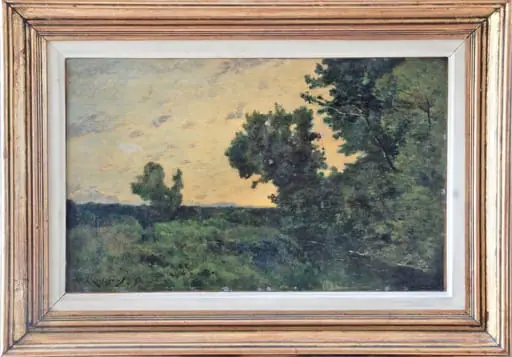
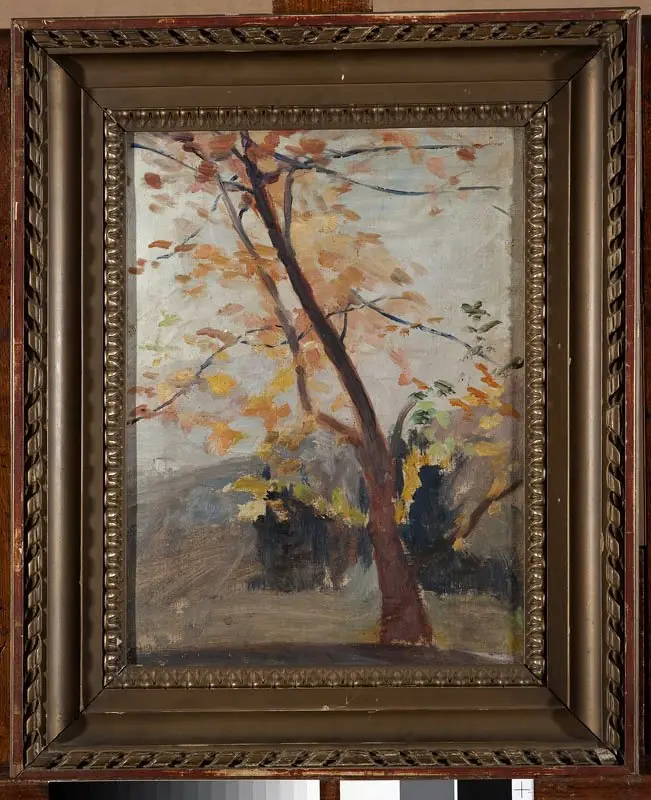
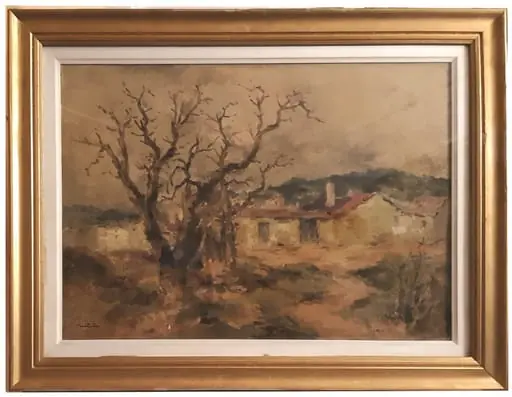
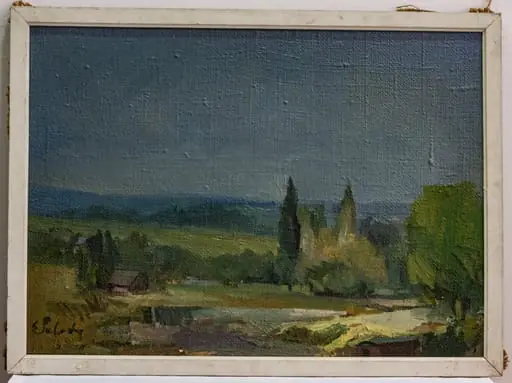
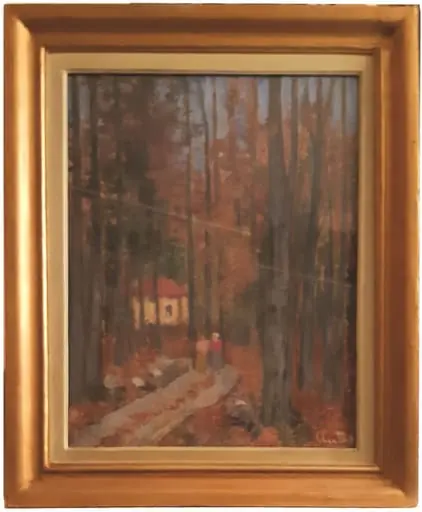
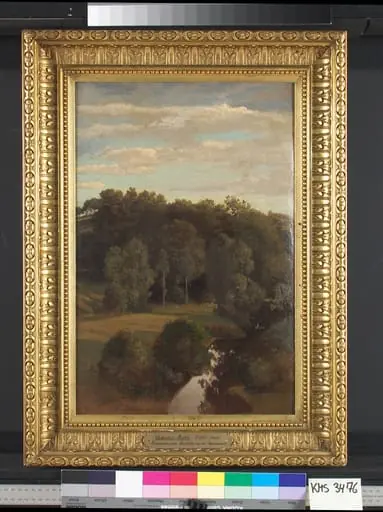
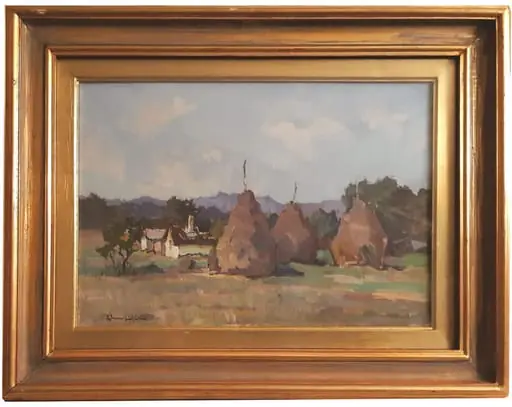
Painted in 1914 by Ștefan Popescu, this landscape depicts a tranquil rural scene dominated by a solitary, mature tree.
Painted in 1914 by Ștefan Popescu, this landscape depicts a tranquil rural scene dominated by a solitary, mature tree. Executed in oil on canvas, the work is part of the collection at the Museum of Ethnography. Its quiet composition and restrained palette reflect an interest in natural harmony rather than dramatic narrative, aligning with early 20th-century Romanian tendencies toward intimate, observational painting.
Subject & Meaning
The central tree, its branches softly framing the sky, serves as both structural anchor and quiet symbol of endurance. Surrounding hills and distant mountains suggest a timeless, unspoiled countryside. The absence of human figures or built structures emphasizes solitude and the quiet rhythm of nature. Light filters through the foliage, drawing attention to the tree’s presence without overt symbolism, inviting contemplation rather than interpretation.
Technique & Style
Popescu employed soft, blended brushwork to unify the sky, hills, and foliage, avoiding sharp contours. Colors are subdued—ochres, olives, and muted blues—creating a sense of atmospheric depth. The tree’s leaves are suggested through layered dabs of warm yellow and brown, allowing light to appear as if naturally diffused. This approach prioritizes mood over detail, aligning with impressionistic sensibilities adapted to local terrain.
History & Provenance
The painting entered the Museum of Ethnography’s collection shortly after its creation, likely through direct acquisition or donation by the artist. It remained in institutional hands throughout the 20th century, with no record of public exhibition beyond regional shows. Its preservation reflects early efforts to document Romania’s rural visual culture, though Popescu’s broader oeuvre remains understudied.
Context
Created during a period of national cultural consolidation, the work reflects a broader interest among Romanian artists in capturing the countryside as a site of identity. While urban centers embraced modernist experimentation, many painters like Popescu turned to quiet landscapes as a form of quiet resistance to rapid change. This piece sits between academic tradition and emerging modernism, rooted in observation rather than ideology.
Legacy
Though not widely reproduced or critically analyzed, the painting contributes to a quieter strand of Romanian art that values stillness and naturalism. It remains a reference point for regional studies on early 20th-century landscape painting, illustrating how artists interpreted their surroundings without grandeur or spectacle. Its presence in the Museum of Ethnography underscores its role as a document of place as much as art.
Artist & collection
Artist
Ștefan Popescu painted quiet scenes from the 1920s, blending everyday places with soft light.