Artwork
Moara la Dârste
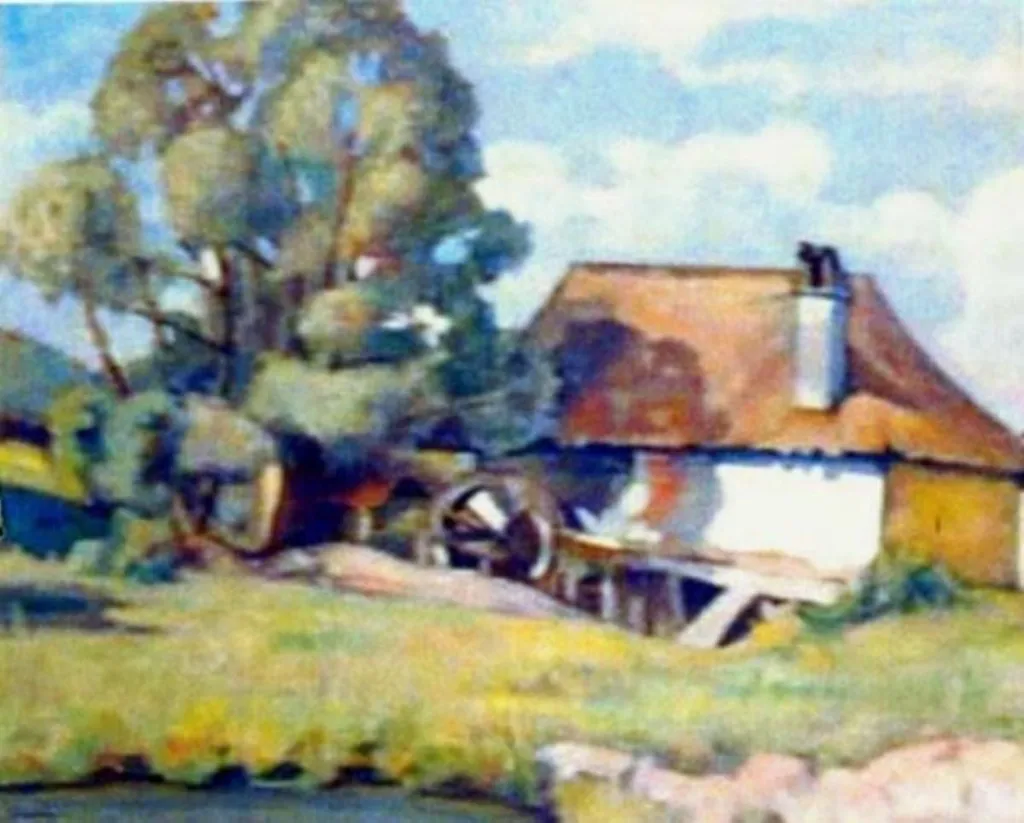
Moara la Dârste is an unspecified painting by Camil Ressu. It dates from 1922 and is held in the collection of the Museum of Art Cluj-Napoca.
About this work
Overview
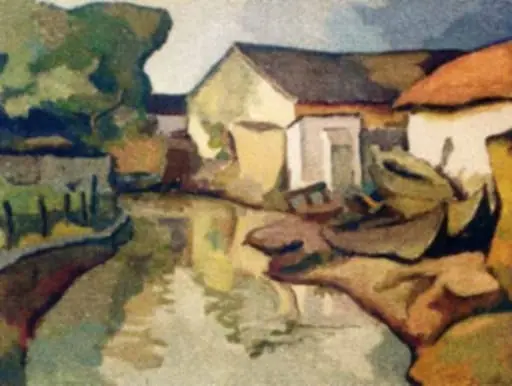
Painted in 1922 by Camil Ressu, Moara la Dârste is a landscape depicting a rural scene in Romania.
Painted in 1922 by Camil Ressu, Moara la Dârste is a landscape depicting a rural scene in Romania. The work is part of the collection at the Museum of Ethnography. It captures a quiet moment in the countryside, centered on a modest dwelling and surrounding vegetation, rendered with attention to seasonal change and natural light. The composition avoids dramatic elements, favoring stillness and spatial harmony.
Subject & Meaning
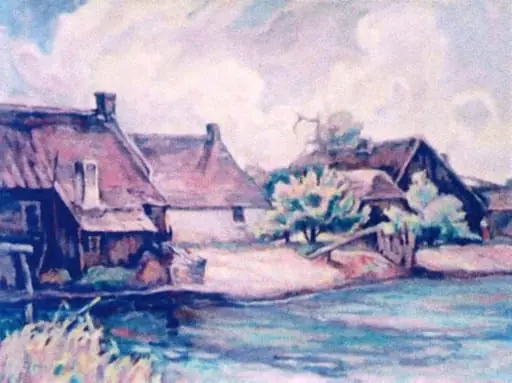
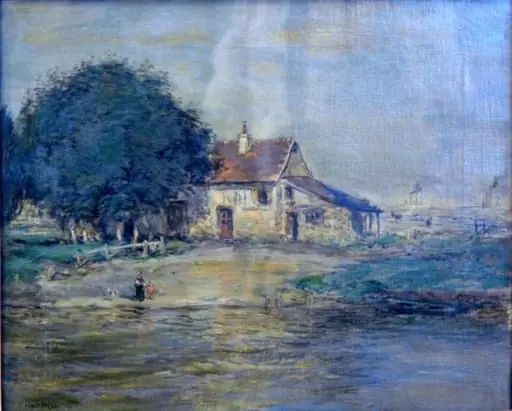
The painting portrays a millhouse near Dârste, set within a quiet agricultural landscape. The structure, with its white walls and brown roof, suggests domestic life integrated into the land. Trees in partial autumnal coloration and a field of golden grass imply the transition between seasons. The scene conveys no narrative, but rather an observation of rural continuity, reflecting a quiet reverence for everyday Romanian countryside life.
Technique & Style
Ressu employs soft, blended brushwork to model forms and suggest atmosphere. Color is used to define depth: warm yellows and ochres in the foreground recede into cooler blues and whites of the sky. The trees and roof are rendered with subtle tonal shifts rather than sharp outlines, creating a sense of volume without heavy definition. The overall approach is restrained, avoiding theatricality in favor of quiet realism.
History & Provenance
Created in 1922, the painting entered the collection of the Museum of Ethnography shortly after its completion. It was likely acquired as part of a broader effort to document Romanian rural life during the early decades of the 20th century. No significant changes in ownership are recorded, and it has remained in public institutional care since its acquisition.
Context
Ressu painted this work during a period when Romanian artists were increasingly turning to national themes, seeking to define a visual identity rooted in local landscapes and traditions. Moara la Dârste aligns with this movement, offering a non-idealized view of rural architecture and seasonal change. It reflects broader cultural interests in preserving regional character amid modernization.
Legacy
The painting remains a quiet example of early 20th-century Romanian landscape painting, valued for its understated observation rather than stylistic innovation. It contributes to the historical record of rural Romania and is often referenced in studies of interwar Romanian art that emphasize regional authenticity over urban or academic trends.
Artist & collection
Artist
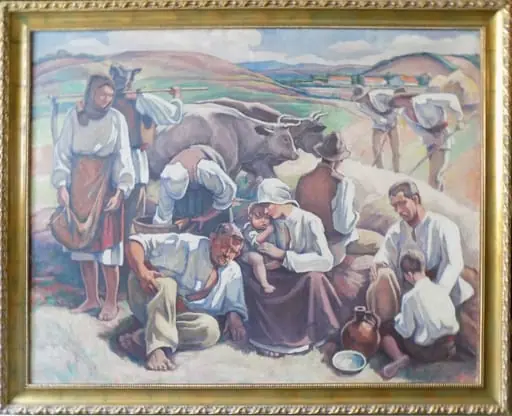
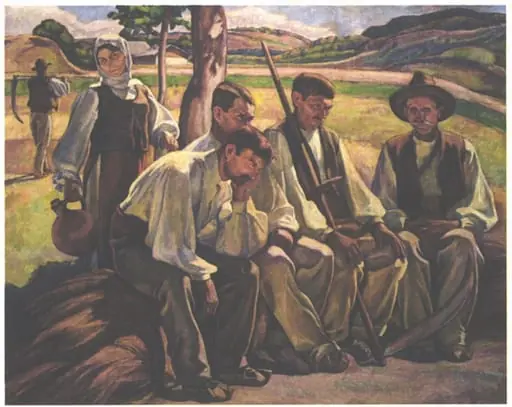
Romanian painter who captured rural life in the early 20th century. His 1925 scene "Cosași odihnindu-se" shows haymakers taking a break, their tools leaning against a wagon under a cloudy sky. A decade later, his 1946…