Artwork
Natură statică cu carte galbenă, ochelari și vas cu flori
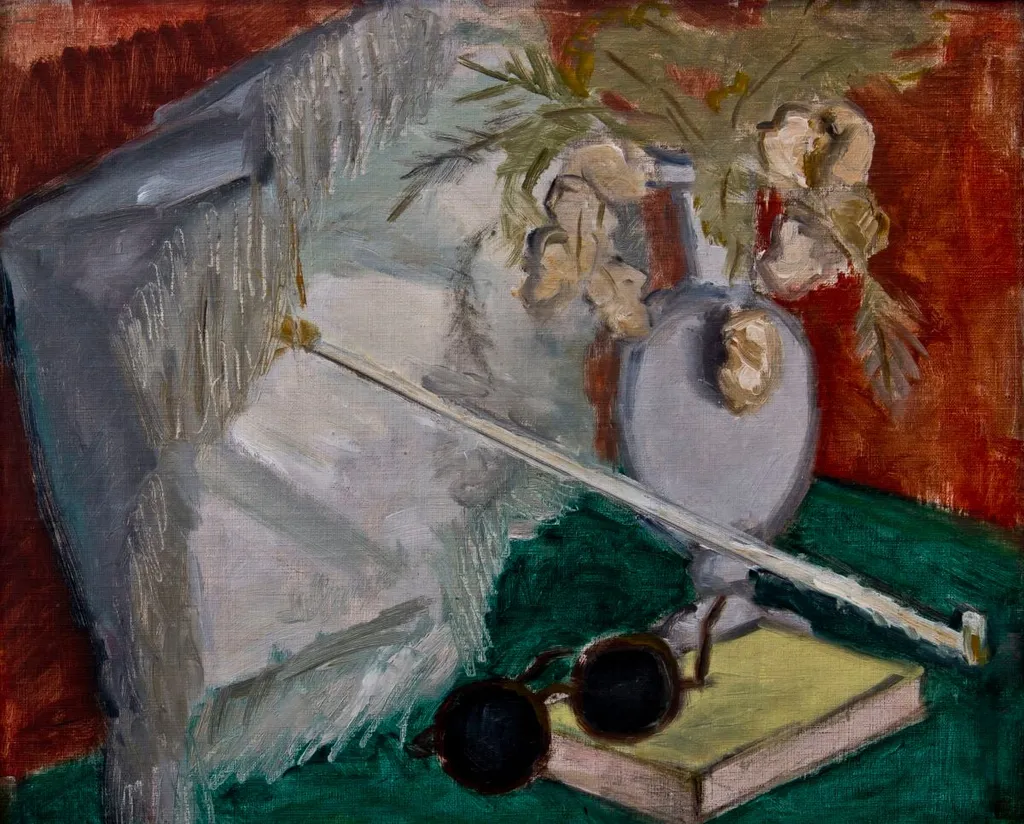
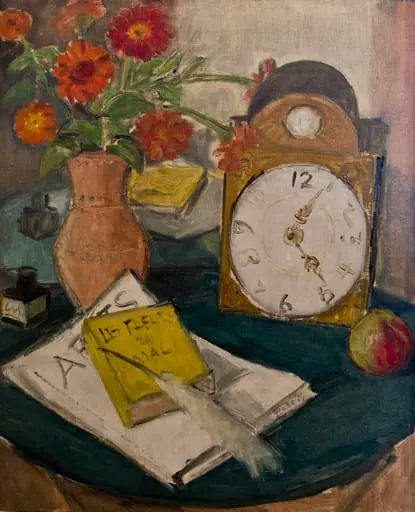
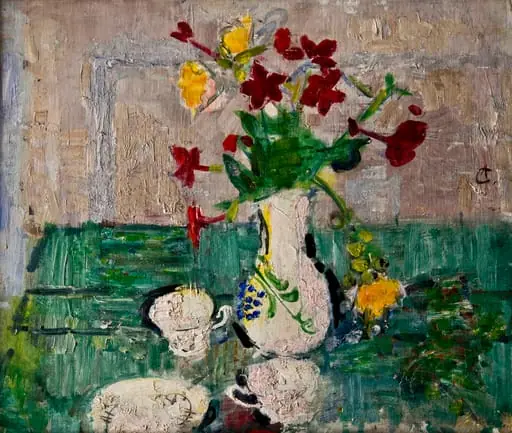
Natură statică cu carte galbenă, ochelari și vas cu flori is an unspecified painting by Theodor Pallady. It is held in the collection of the National Museum of Art of Romania. The work depicts a modest arrangement placed on a green tabletop.
About this work
Overview
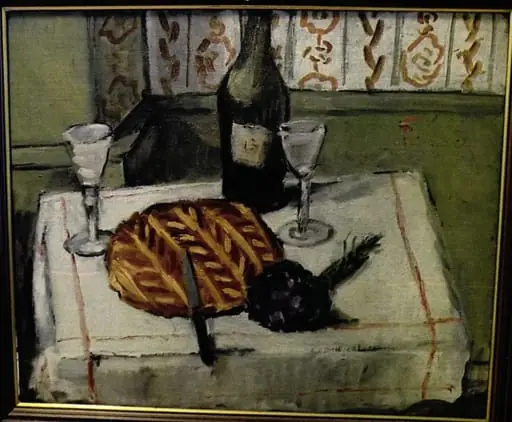
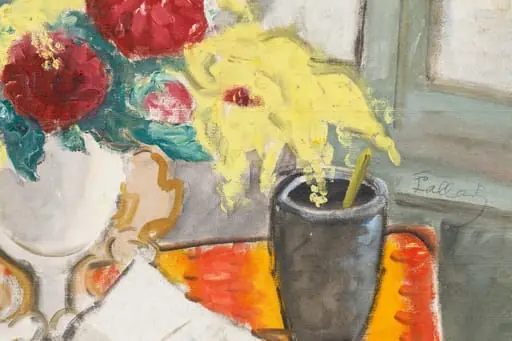
The work depicts a modest arrangement placed on a green tabletop. An open yellow book lies flat, topped by a pair of black spectacles. Behind them a pale, round vase contains a handful of drooping flowers accompanied by a sprig of foliage. The composition is rendered with pronounced, uneven brushwork that creates a tactile surface.
Subject & Meaning
The objects—a book, glasses, and wilted blossoms—suggest a quiet, perhaps introspective moment, evoking themes of study, aging, or the passage of time. The juxtaposition of the bright yellow volume against the muted vase and the fading flora may hint at the contrast between knowledge and the fleeting nature of life.
Technique & Style
The artist employs a heavy impasto application, laying thick layers of paint that stand out from the canvas. This method produces a rough, textured appearance, emphasizing the materiality of the medium. The visible, irregular strokes lend the piece an unfinished quality, as if the painter was working swiftly or exploring the surface itself.
History & Provenance
The painting’s origin, creator, and ownership trail are not documented in the supplied information. Consequently, its date of creation, exhibition history, and prior collections remain unknown, limiting scholarly attribution at present.
Context
Within the broader tradition of still-life painting, the work aligns with a modernist inclination toward surface and material over detailed realism. Its emphasis on texture and the immediacy of brushwork reflects a departure from classical precision, situating it among 20th‑century experiments that foreground the physical act of painting.
Artist & collection
Artist
Theodor Pallady made still lifes and interiors in early 20th-century Bucharest. His Place Dauphine shows a quiet Parisian square, while Natură moartă (Ulcică cu flori și chibrituri) piles everyday objects on a table.…