Artwork
Pe Sena - Peisaj
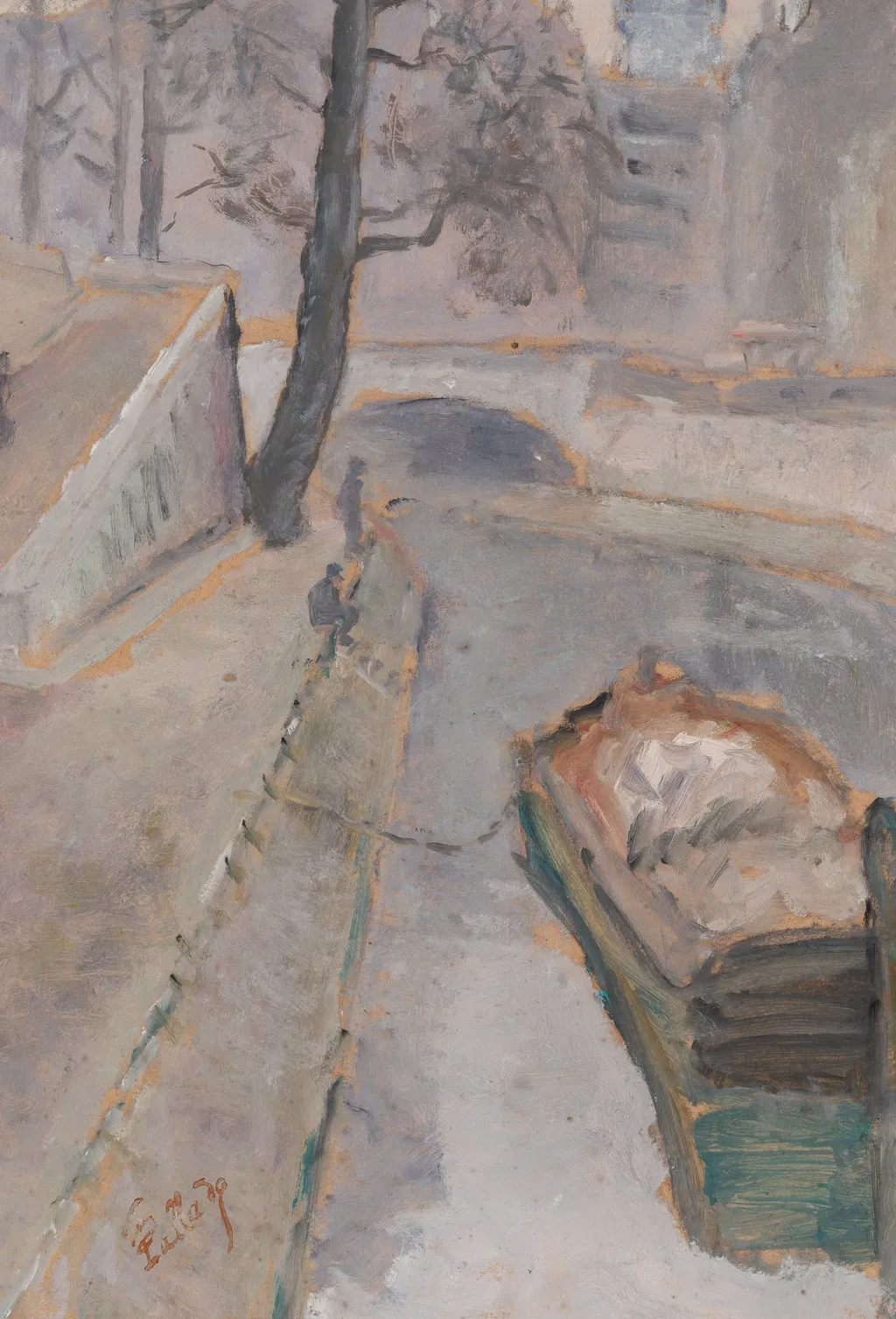
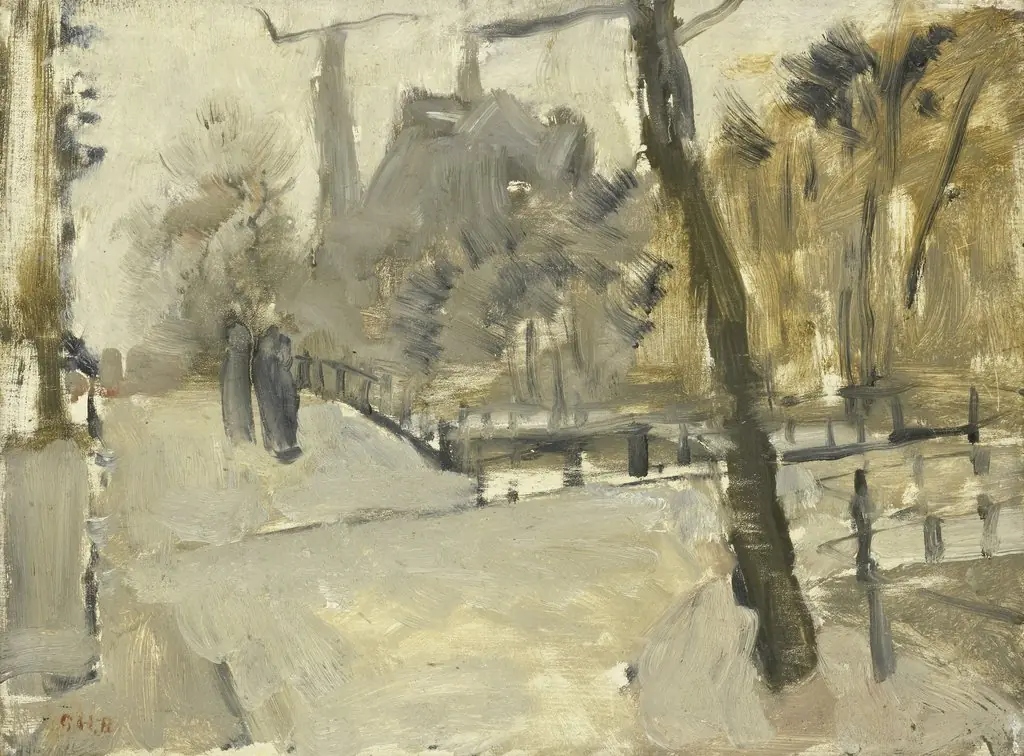
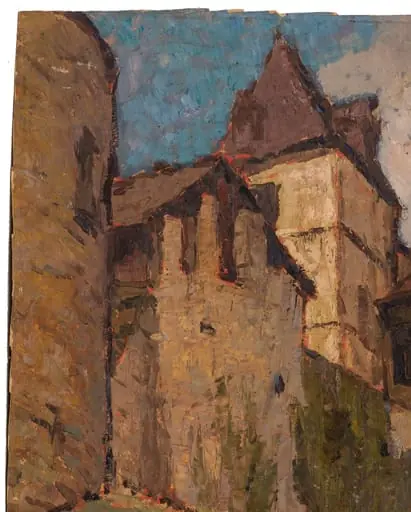
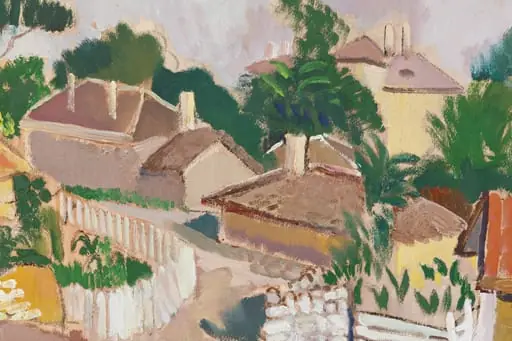
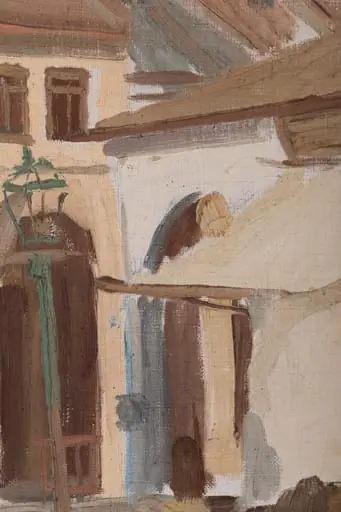
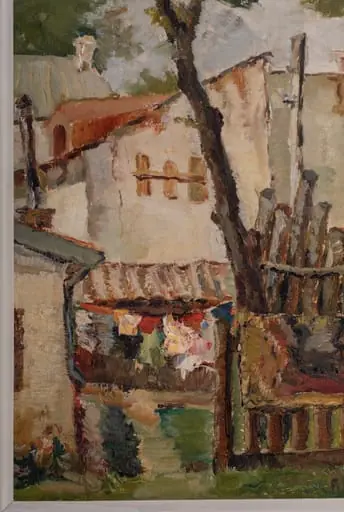
Pe Sena - Peisaj is an unspecified painting by Theodor Pallady. It dates from 1850 and is held in the collection of the National Museum of Art of Romania.
About this work
Overview
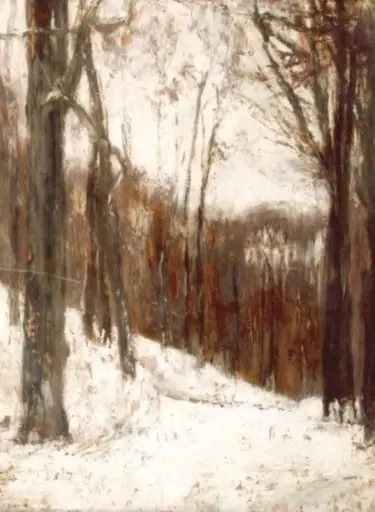
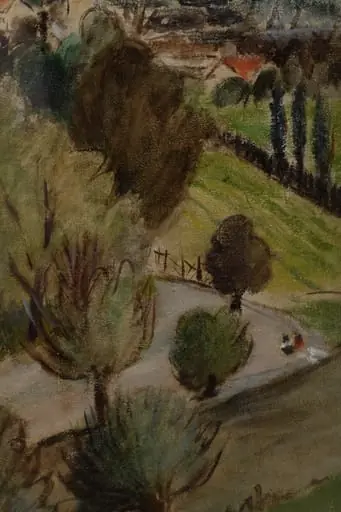
Pe Sena - Peisaj is a landscape painting attributed to Theodor Pallady, dating approximately to 1850. The work depicts a rustic, natural scene.
Subject & Meaning
The painting focuses on a rugged road, a prominent tree, and a small bridge, set against a muted color palette dominated by grays, browns, and touches of green. A vague, shadowy figure or animal is suggested on the right, adding a sense of ambiguity to the otherwise serene landscape.
Technique & Style
Characterized by quick, expressive brushstrokes and thick, impasto-like paint application in certain areas, the work conveys a sense of rapid execution or layered working process. The overall impression is one of incompleteness, with visible brushwork contributing to the piece's textured, spontaneous appearance.
History & Provenance
Created circa 1850, specific details regarding the painting's history, ownership, or exhibition record prior to its current status are not provided in the available information.
Context
While the exact context of its creation is unclear, the painting's style and subject matter align with mid-19th-century European landscape traditions, emphasizing the beauty of everyday, unremarkable natural settings.
Legacy
The painting's impact or influence on subsequent artistic movements or Pallady's oeuvre is not specified in the given information, highlighting a need for further research into its broader artistic significance.
Own this work as a print
Artist & collection
Artist
Theodor Pallady made still lifes and interiors in early 20th-century Bucharest. His Place Dauphine shows a quiet Parisian square, while Natură moartă (Ulcică cu flori și chibrituri) piles everyday objects on a table.…