Artwork
Peisaj din Cassis
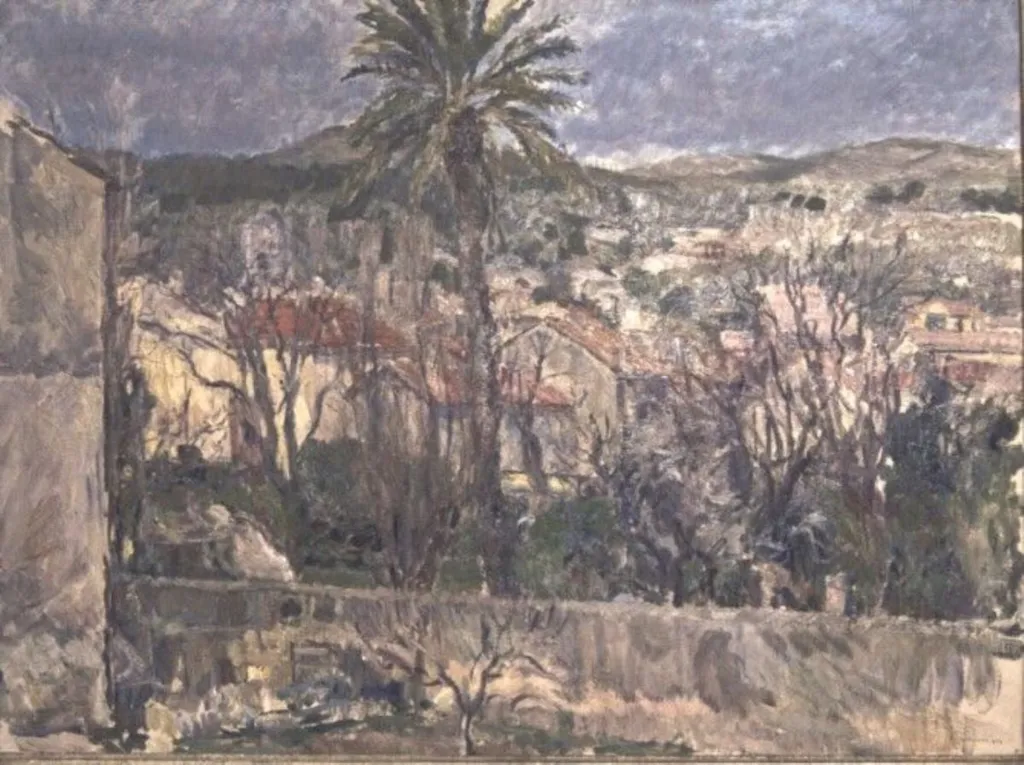
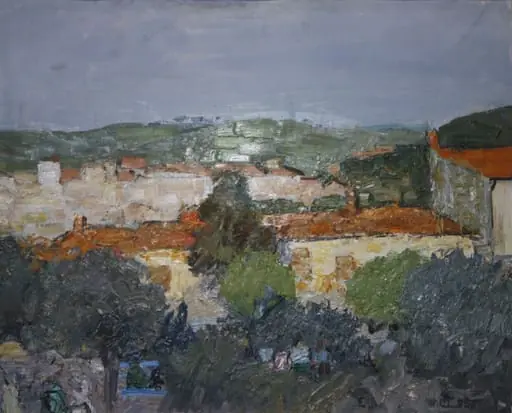
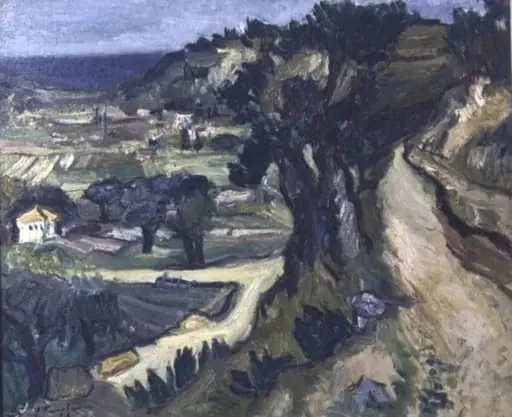
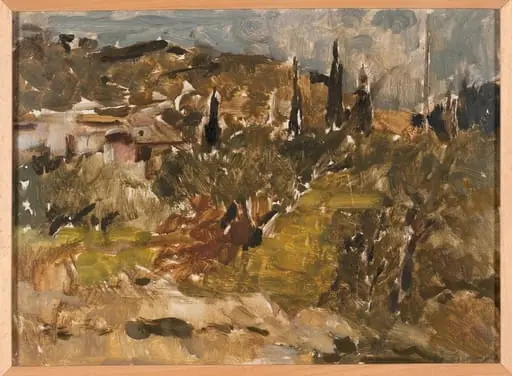
Peisaj din Cassis is an unspecified painting by Jean Alexandru Steriadi. It dates from 1933 and is held in the collection of the National Museum of Art of Romania.
About this work
Overview
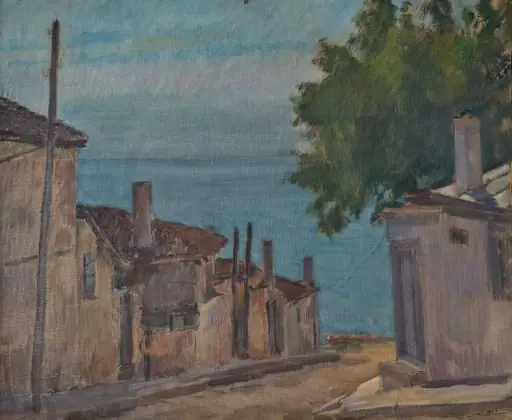
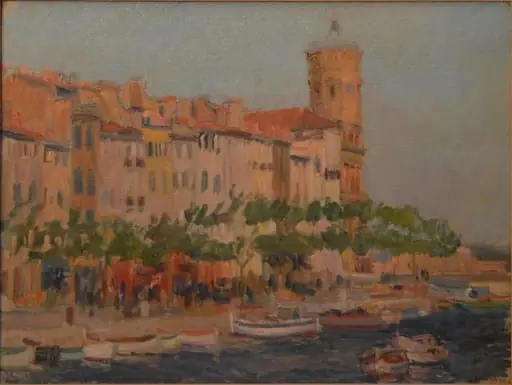
Painted in 1933 by Jean Alexandru Steriadi, Peisaj din Cassis captures a barren coastal landscape near Cassis, France. The scene is stripped of vibrant life, dominated by arid terrain and a subdued sky. Steriadi’s approach avoids idealization, presenting nature in a state of quiet endurance, where elements appear worn by time and climate.
Subject & Meaning
The composition centers on a solitary palm tree amid sparse vegetation and rocky outcrops. Its presence, out of place in a northern Mediterranean context, suggests displacement or resilience. Leafless shrubs and bare branches reinforce a sense of stillness, evoking isolation rather than decay. The painting conveys a contemplative mood, where nature endures without flourish.
Technique & Style
Steriadi applied paint thickly in places, using impasto to build texture on rocks and the palm’s trunk. Brushwork is deliberate and tactile, with areas scraped or layered to mimic the roughness of the terrain. Colors are restrained—ochres, ashen grays, and muted greens—enhancing the sense of sun-bleached austerity. The surface becomes a physical echo of the landscape itself.
History & Provenance
The painting remained in private hands until entering a public collection in the late 20th century, where it is now preserved as part of his documented oeuvre.
Created during Steriadi’s time in southern France, the work reflects his engagement with Mediterranean light and terrain outside his Romanian roots. It was likely painted en plein air, as the immediacy of observation aligns with his practice. The painting remained in private hands until entering a public collection in the late 20th century, where it is now preserved as part of his documented oeuvre.
Context
In the early 1930s, European artists increasingly turned to landscape as a vehicle for emotional and existential reflection, moving beyond impressionist color. Steriadi’s work aligns with this trend, sharing affinities with post-impressionist and expressionist approaches that valued structure and mood over realism. His focus on austerity resonated with broader interwar sensibilities of restraint and introspection.
Legacy
Peisaj din Cassis stands as a quiet example of Steriadi’s mature style, illustrating his ability to merge observation with emotional tone. While not widely exhibited, it contributes to understanding his role in bridging Romanian modernism with broader European landscape traditions. The work remains a testament to his interest in the poetic potential of barrenness and silence.
Artist & collection
Artist
Romanian painter Jean Alexandru Steriadi left scenes of everyday life and ports in the early 1900s.