Artwork
Homar
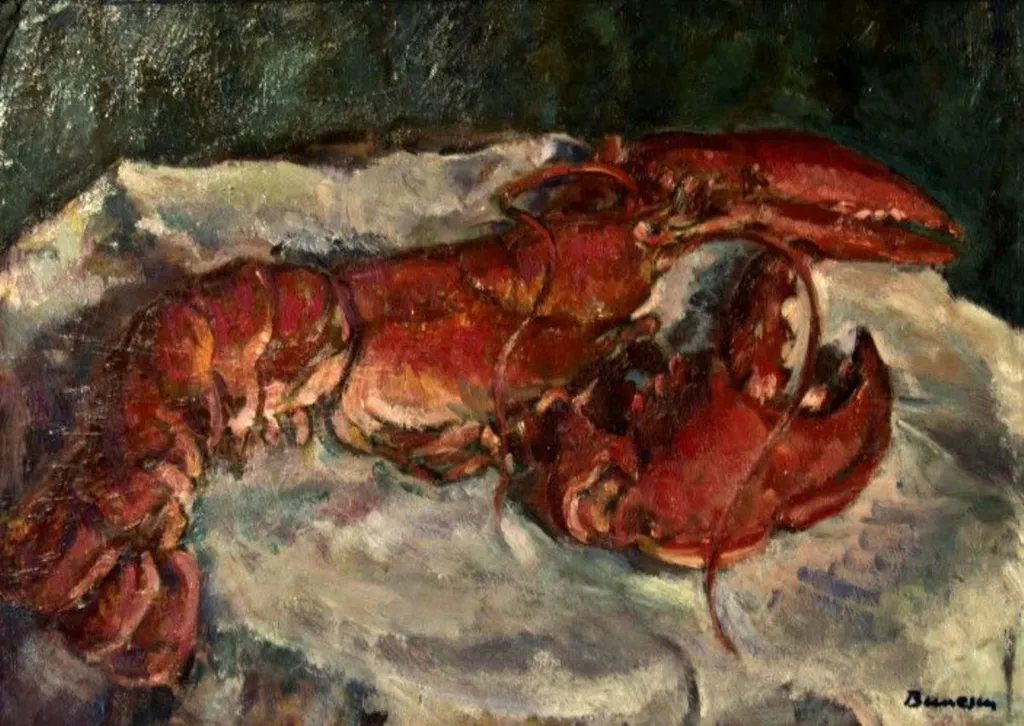
Homar is an unspecified painting by Marius Bunescu. It is held in the collection of the National Museum of Art of Romania. This painting presents a still life of lobsters arranged in a loose, unstructured heap.
About this work
Overview
The surface is built up with thick layers of paint, creating a sculptural quality that draws attention to materiality as much as subject.
This painting presents a still life of lobsters arranged in a loose, unstructured heap. Rendered with dense, tactile brushwork, the composition emphasizes weight and physical presence over formal arrangement. The palette is restrained, dominated by deep reds, earthy browns, and muted grays, with minimal contrast from white and black accents. The surface is built up with thick layers of paint, creating a sculptural quality that draws attention to materiality as much as subject.
Subject & Meaning
The lobsters are depicted not as decorative objects but as heavy, organic forms, their shells and limbs rendered with a sense of lived-in reality. Their piled arrangement suggests a moment after harvest, perhaps in a market or fishing context, stripped of theatricality. The absence of human figures or setting focuses attention on the creatures themselves, evoking themes of labor, mortality, and the quiet dignity of the natural world.
Technique & Style
The artist employs impasto techniques, applying paint thickly and unevenly to mimic the texture of lobster shells and exoskeletons. Brushstrokes are deliberate yet unrefined, avoiding smooth blending in favor of tactile immediacy. The paint’s physicality—raised ridges, scraped edges, and layered glazes—gives the forms a three-dimensional presence, transforming canvas into something resembling carved stone or weathered wood.
History & Provenance
The work is attributed to the Spanish artist Juan Gris, created during his later period in the 1920s. It emerged from a phase in which he increasingly returned to still-life subjects after his Cubist experiments. Though less documented than his earlier works, this piece reflects his sustained interest in materiality and the interplay between form and surface, aligning with broader trends in post-war European still-life painting.
Context
Painted in the interwar years, this work reflects a quiet shift away from avant-garde abstraction toward a more grounded, sensory approach to representation. While contemporaries explored fragmentation and theory, Gris returned to tangible objects, using texture and weight to convey presence. The lobster, a common subject in Mediterranean still life, becomes a vehicle for exploring the physicality of paint rather than symbolic meaning.
Legacy
This painting contributes to a lineage of modern still lifes that prioritize material presence over narrative. Its emphasis on texture and physicality influenced later artists interested in the tactile potential of paint, particularly in post-war American and European abstraction. Though not widely exhibited, it remains a quiet example of how traditional subjects can be revitalized through radical handling of medium.
Artist & collection
Artist
A Romanian painter who captured the city’s quiet corners, Marius Bunescu’s brush brought old streets and half-collapsed theaters to life.

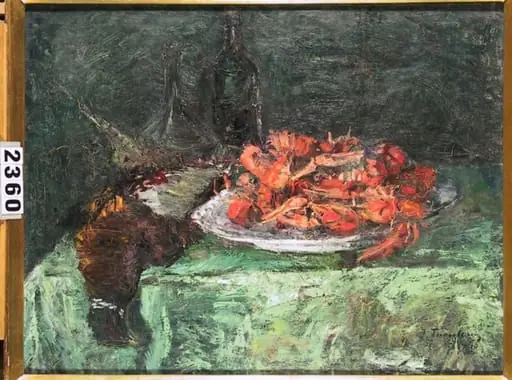 Natură moartă cu fazani și raci
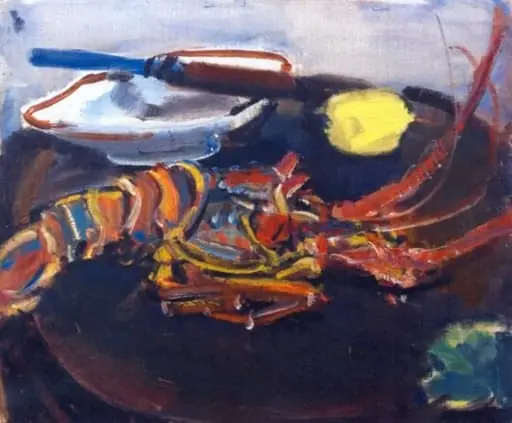 Natură moartă cu langustă
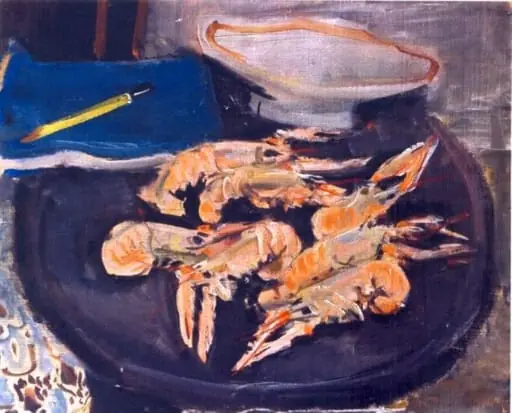 Natură moartă cu langustine
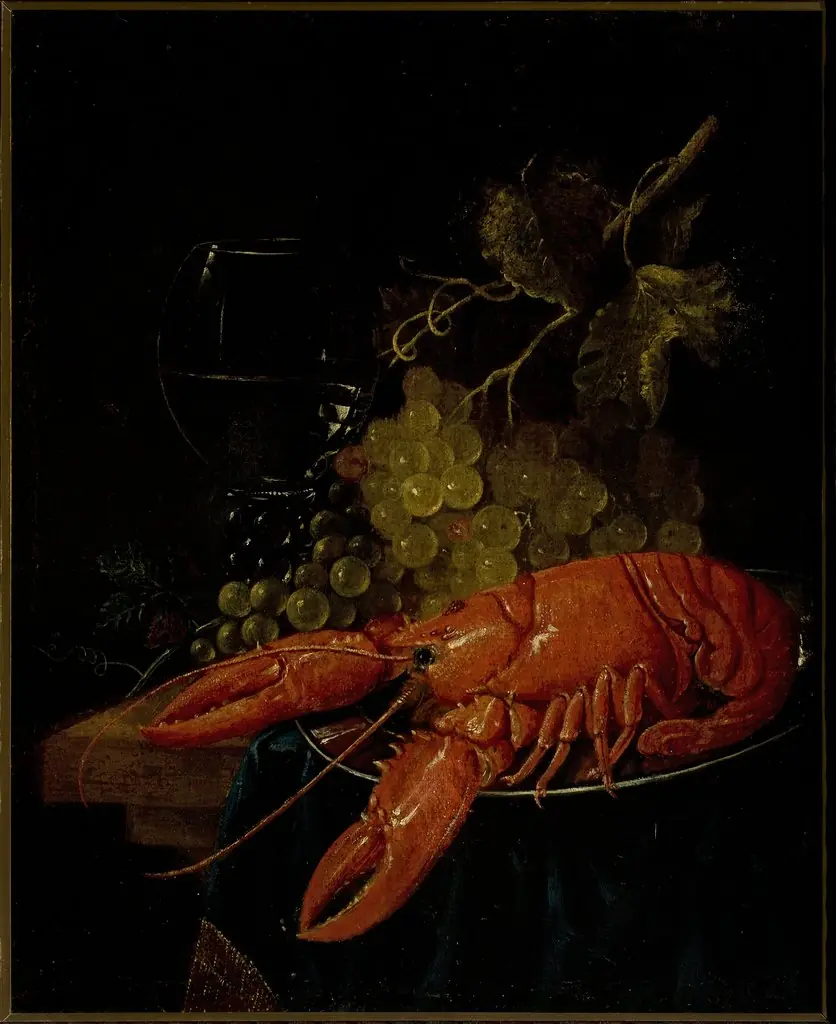 Still life with a lobster
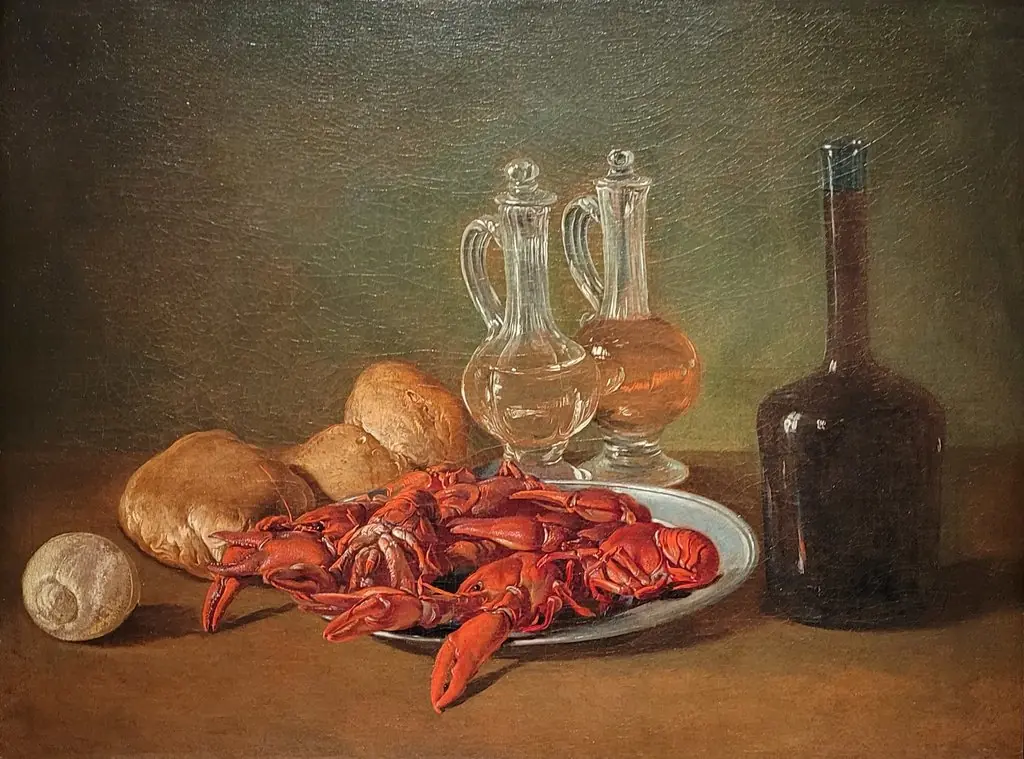 Still Life with Pewter Plate, Shrimps, a Lemon, Glass Cruets, Bread and a Bottle of Wine
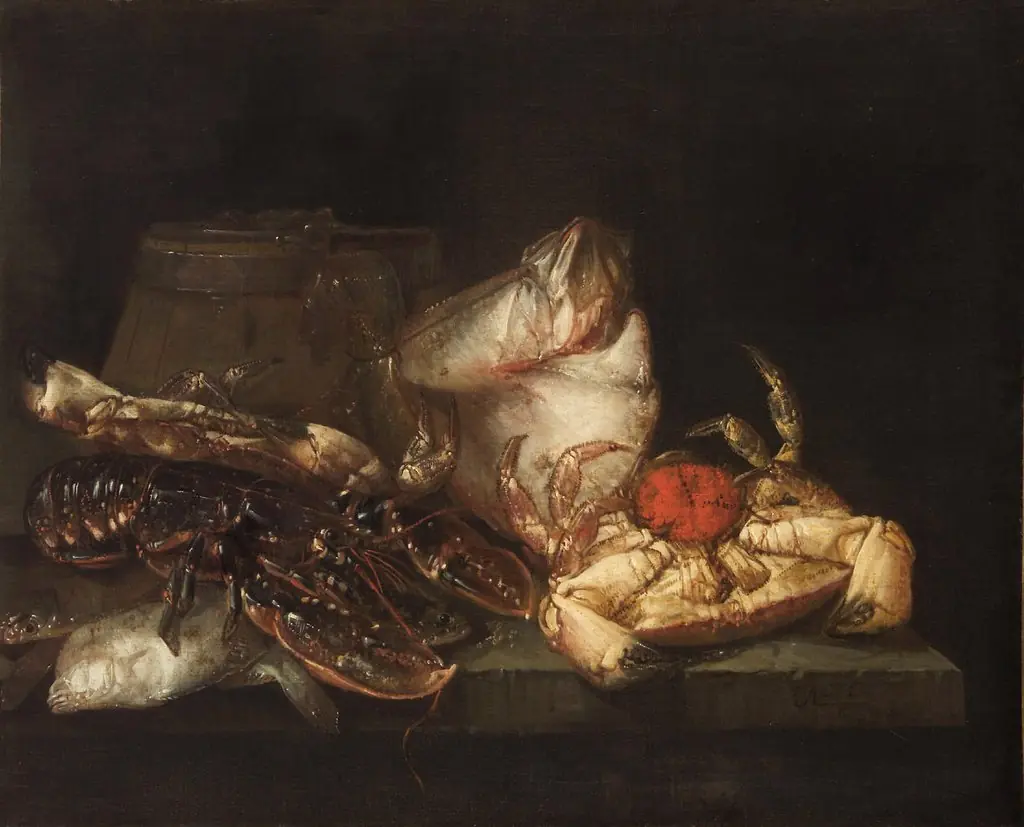 Stilleben mit Fischen und Krebsen
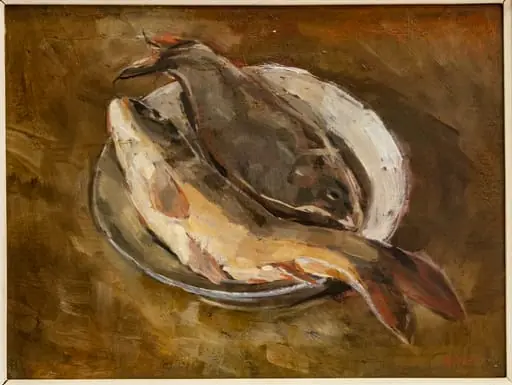 Natură statică cu pești
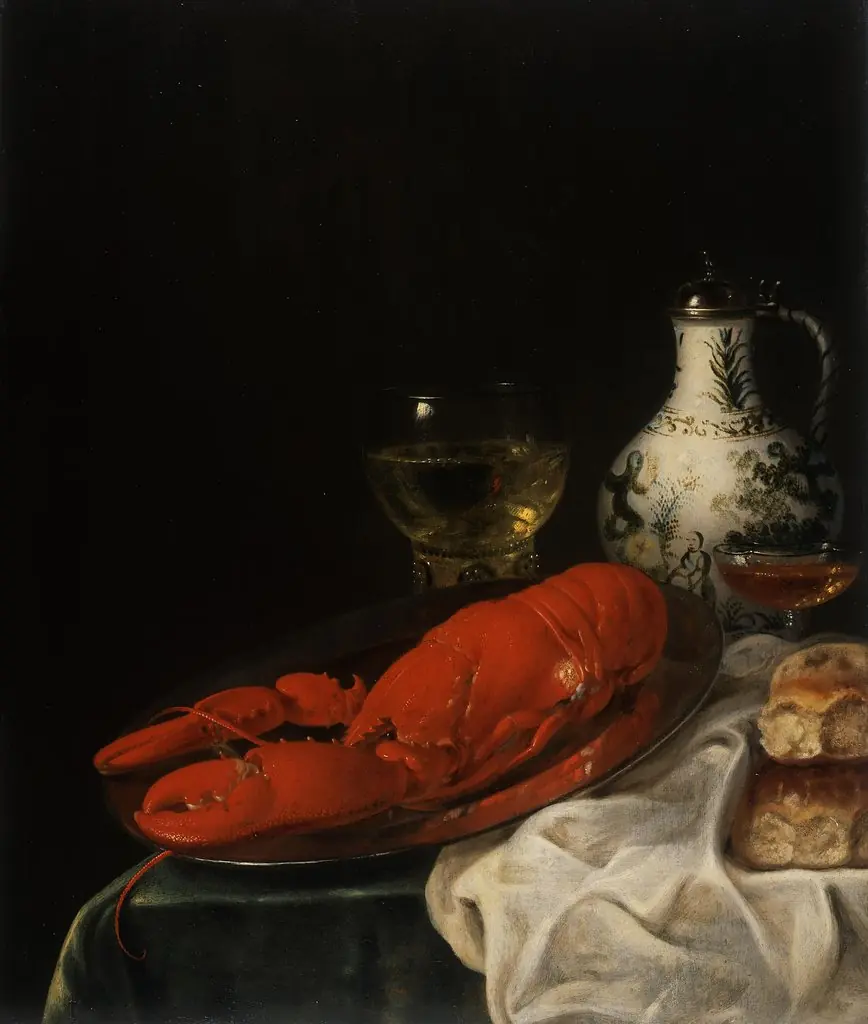 Still-ife with lobster
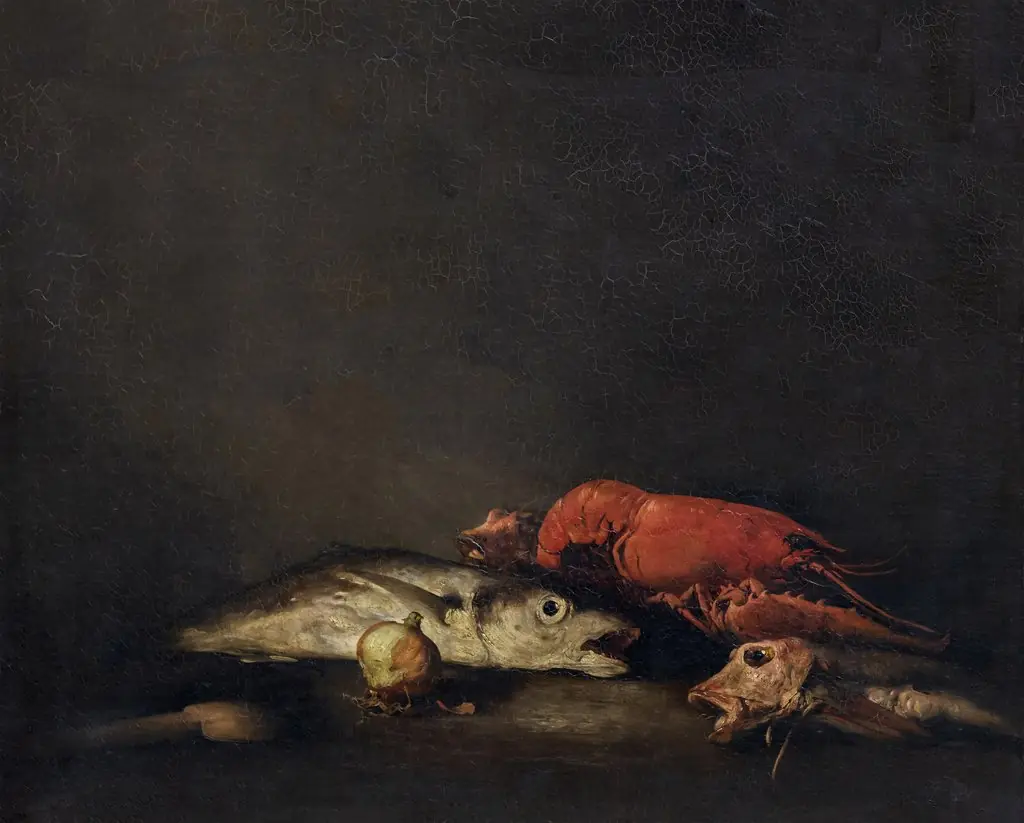 Stilleven met vissen en een kreeft
 Untitled