Artwork
Râșnov (în cetate)
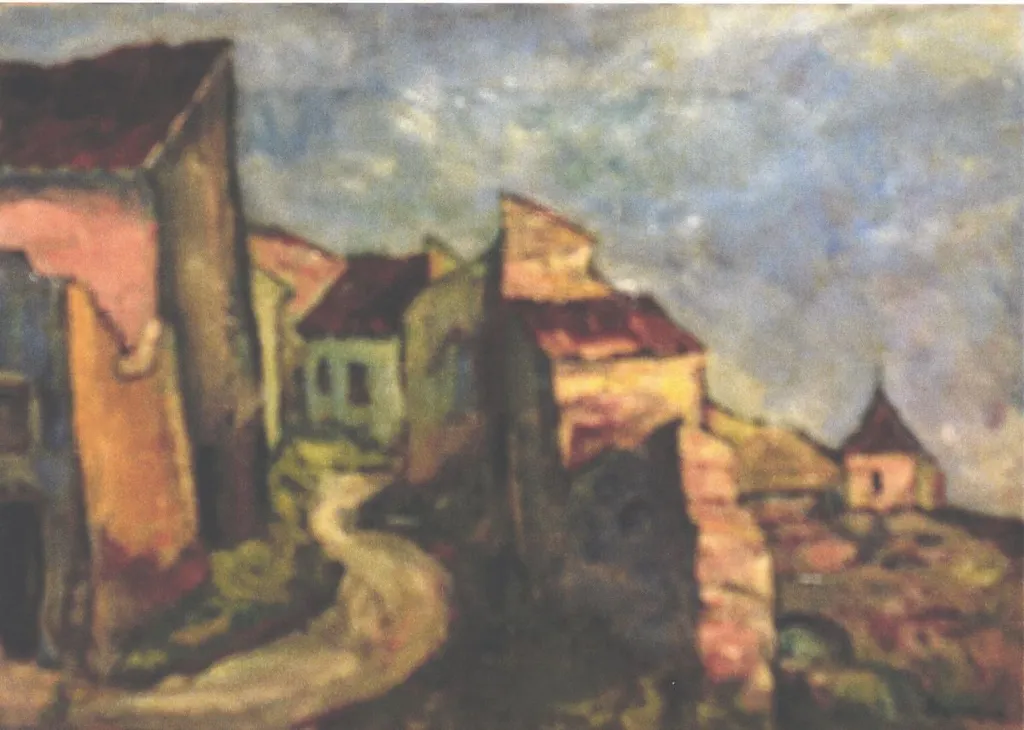
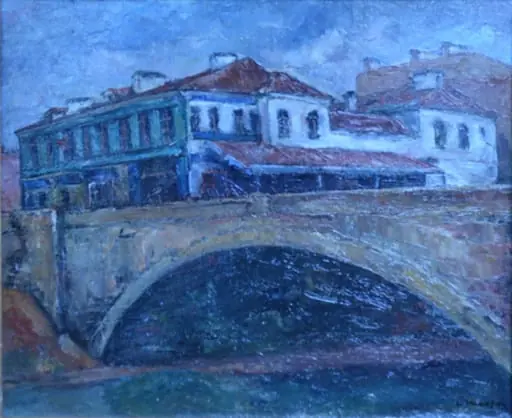
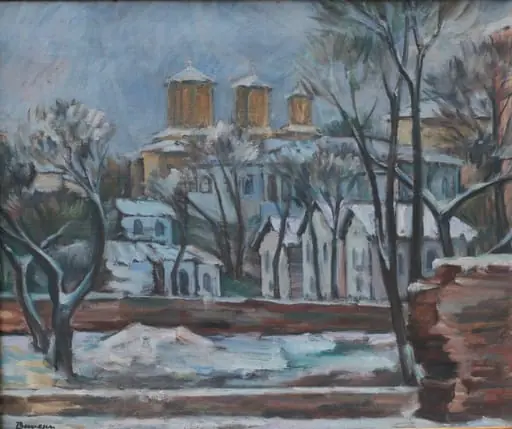
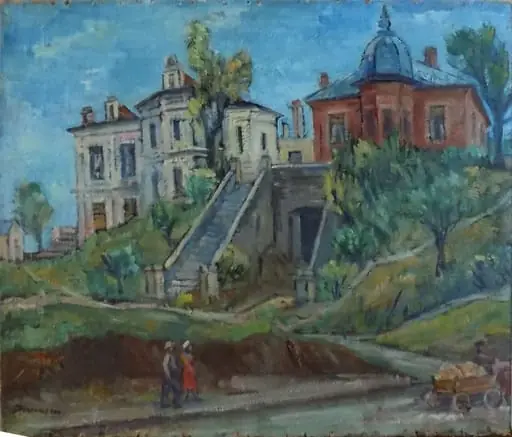
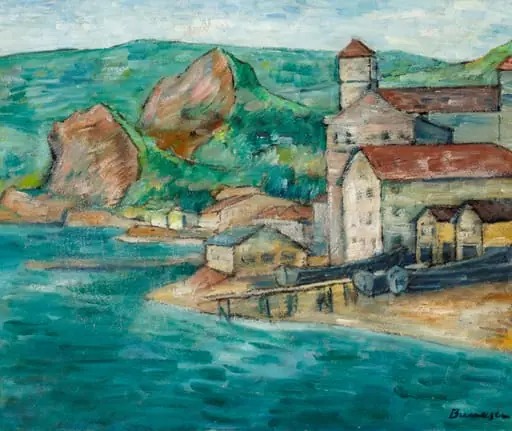
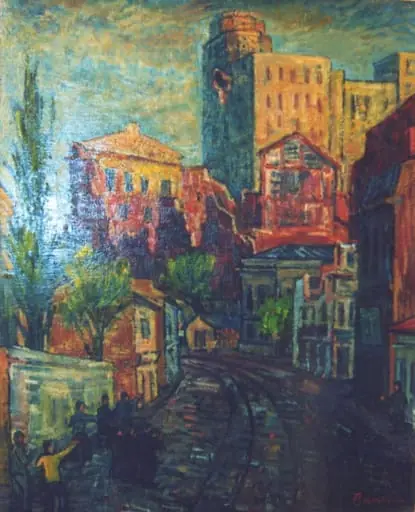
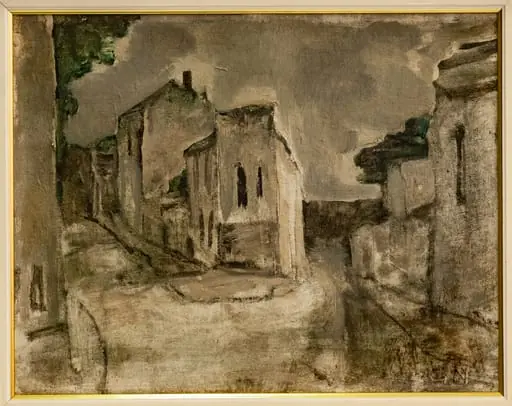
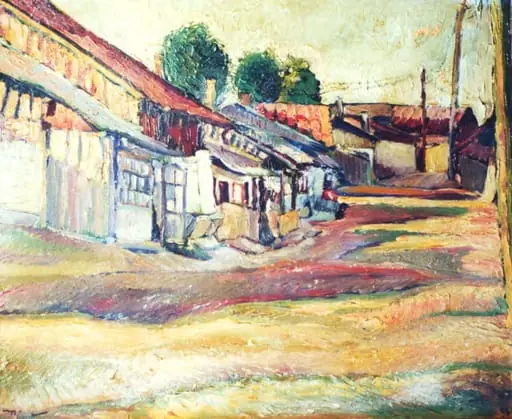
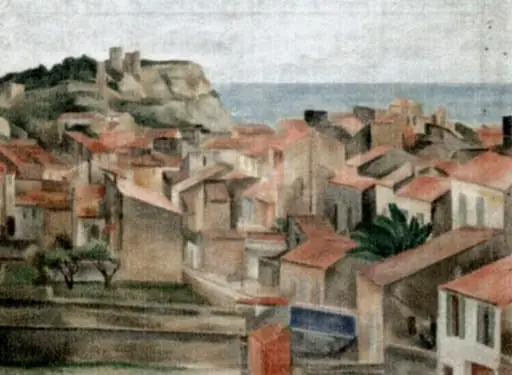
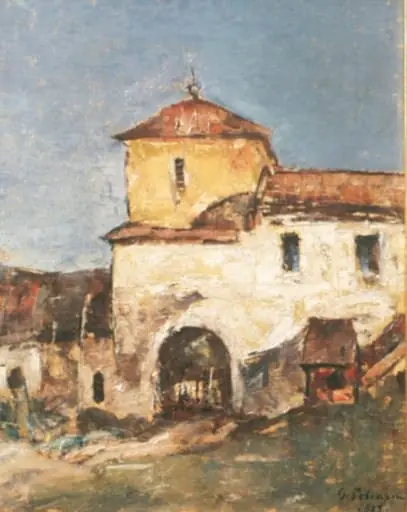
Râșnov (în cetate) is an unspecified painting by Marius Bunescu. It is held in the collection of the Bucharest Municipality Museum. This work depicts the fortified town of Râșnov as seen from a narrow, ascending path.
About this work
Overview
The composition emphasizes verticality and enclosure, with closely packed structures leaning over the viewer.
This work depicts the fortified town of Râșnov as seen from a narrow, ascending path. The composition emphasizes verticality and enclosure, with closely packed structures leaning over the viewer. The palette is restrained, dominated by earth tones, punctuated sparingly by patches of red. Brushwork is deliberate and tactile, rejecting smooth finish in favor of a raw, immediate quality that suggests direct observation rather than idealized representation.
Subject & Meaning
The scene captures the physical and psychological density of a medieval Transylvanian stronghold. The towering, uneven buildings create a sense of confinement, as if the town itself presses inward. The winding path suggests movement through a space shaped by time and necessity, not design. The absence of human figures amplifies the atmosphere of quiet endurance, evoking the lived reality of a community bound by stone and history.
Technique & Style
The artist employs thick, visible brushstrokes to model the architecture, creating a sculptural surface that mimics the texture of weathered stone and timber. Paint is applied with minimal blending, preserving the energy of each stroke. This impasto technique rejects academic polish, favoring a direct, almost provisional handling that aligns with early modernist tendencies toward expressive form over illusionistic detail.
History & Provenance
The painting is one of several works by the artist documenting Transylvanian fortifications during the late 19th or early 20th century. It likely originated from a period of travel or study in the region, possibly linked to ethnographic or architectural documentation efforts. Its survival suggests it was retained within private or regional collections, rather than entering major institutional holdings.
Context
Created during a time of rising national interest in Romania’s historic villages and fortresses, the work reflects a broader cultural movement to record vernacular architecture before modernization altered its character. Unlike romanticized depictions of the period, this image avoids idealization, presenting the town as a lived-in, imperfect space shaped by function and age.
Legacy
The painting contributes to a modest but significant body of work that prioritizes authenticity over spectacle in depicting Romanian rural and fortified settlements. Its unpolished aesthetic anticipates later 20th-century shifts toward expressive realism, influencing regional artists who valued emotional truth over technical refinement.
Artist & collection
Artist
A Romanian painter who captured the city’s quiet corners, Marius Bunescu’s brush brought old streets and half-collapsed theaters to life.