Artwork
Ruine la Târgoviște
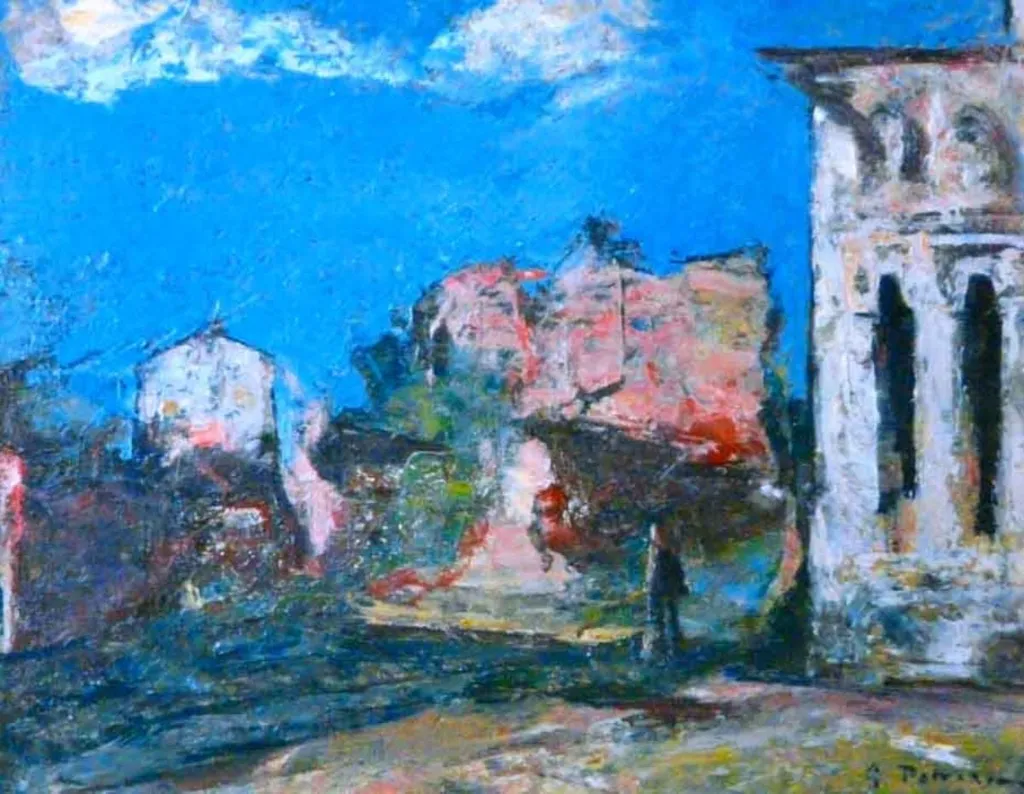
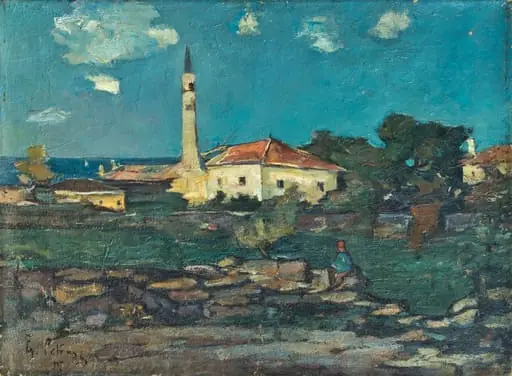
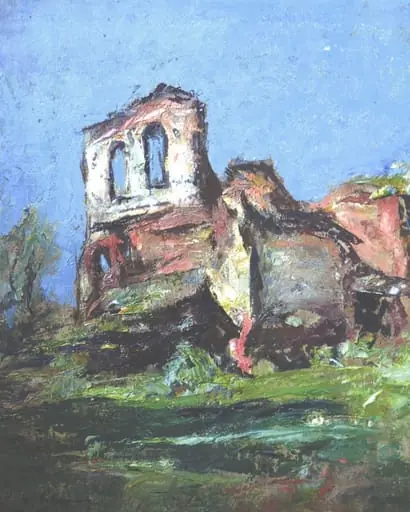
Ruine la Târgoviște is an unspecified painting by Gheorghe Petrașcu. It dates from 1931 and is held in the collection of the Art museum of Craiova.
About this work
Overview
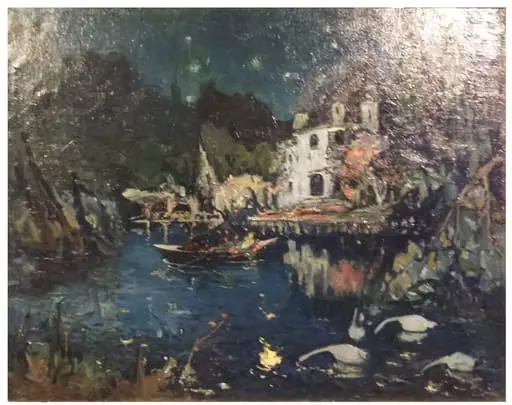
Gheorghe Petrașcu’s 1931 canvas titled *Ruine la Târgoviște* depicts the remnants of a dilapidated structure set against a clear, vivid sky. The composition centers on a weathered wall whose cracked surface reveals patches of pink and white, while the surrounding space is dominated by a striking blue expanse.
Subject & Meaning
The painting captures the passage of time through the visual decay of an abandoned building, suggesting themes of impermanence and the quiet endurance of history. By isolating the ruin against an open sky, Petrașcu emphasizes both the fragility of human constructs and their lingering presence within the landscape.
Technique & Style
Petrașcu employs a pronounced impasto, laying thick layers of pigment that give the surface a tactile, almost sculptural quality. Broad, vigorous brushstrokes render the cracked masonry with a rough, uneven texture, while bold, saturated hues—particularly the bright cerulean and vivid pink—heighten the visual contrast between decay and sky.
History & Provenance
Created in 1931, the work entered the collection of the Museum of Ethnography, where it remains on display. Its acquisition reflects the institution’s interest in Romanian visual culture and the artist’s role in documenting the nation’s architectural heritage during the interwar period.
Context
The early 1930s in Romania were marked by a renewed focus on national identity and the preservation of historic sites. Petrașcu’s choice of a ruined Târgoviște building aligns with contemporary artistic trends that explored the interplay between modernity and the remnants of the past, offering a visual record of a changing cultural landscape.
Artist & collection
Artist
Gheorghe Petrașcu painted quiet scenes of buildings, streets, and still lifes in the 1920s and ’30s Romania.