Artwork
Peisaj
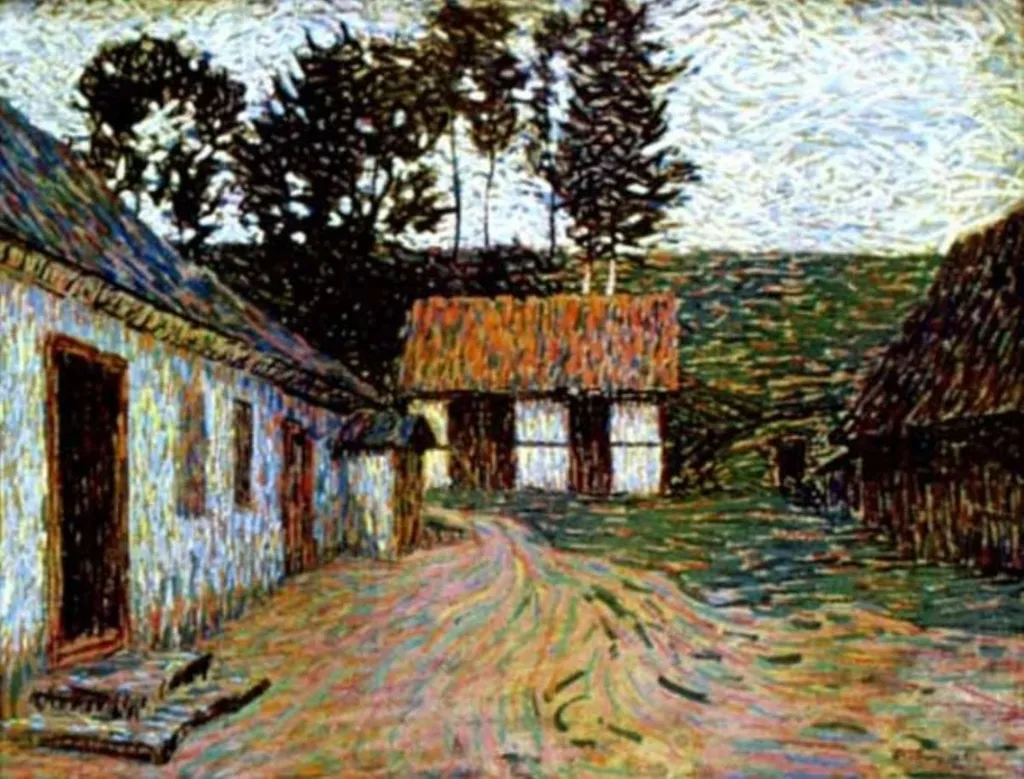
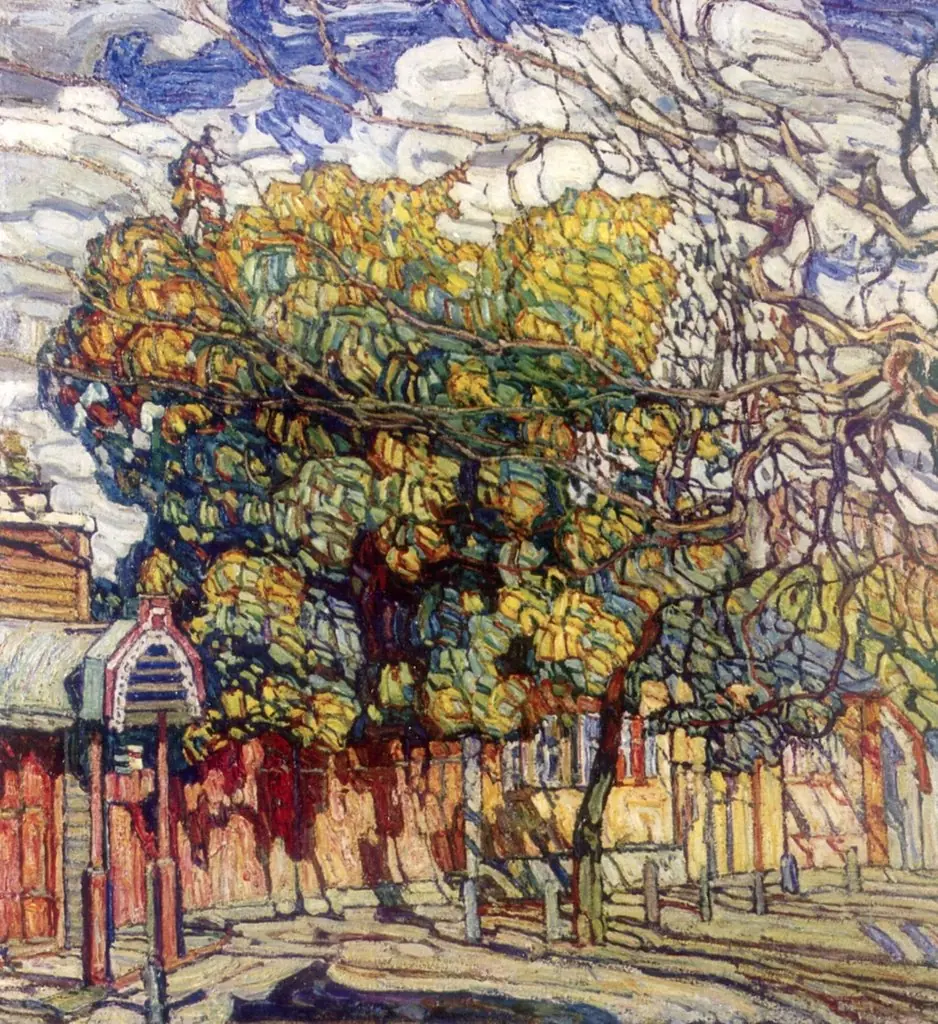
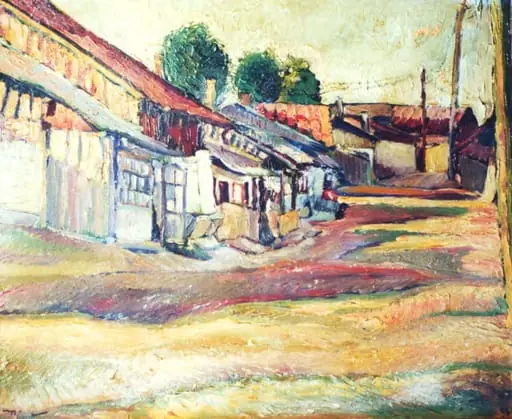
Peisaj is an unspecified painting by Arthur Segal. It dates from 1910 and is held in the collection of the National Museum of Art of Romania.
About this work
Overview
The surface is built with dense, tactile brushwork, suggesting a physical engagement with the landscape rather than a polished representation.
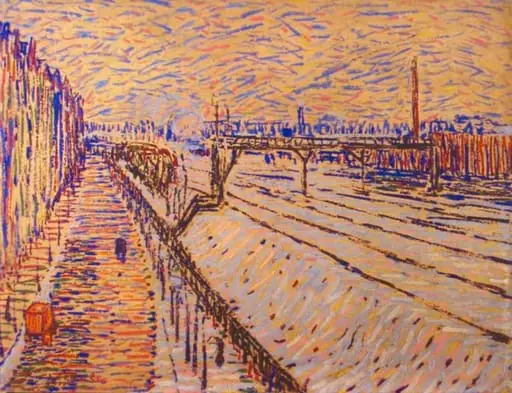
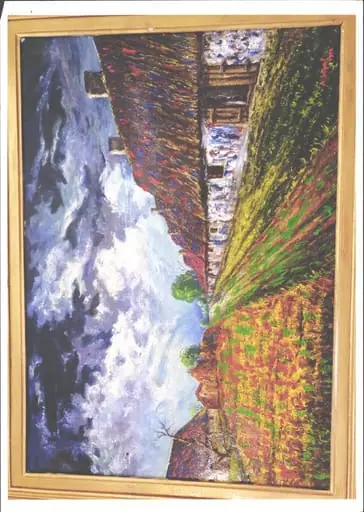
Arthur Segal painted Peisaj in 1910, capturing a rural pathway flanked by modest structures. The composition draws the eye along a narrow, straw-strewn road toward a luminous open space beyond. Tall trees rise on either side, their limbs intersecting a sky dominated by turbulent, fragmented clouds. The surface is built with dense, tactile brushwork, suggesting a physical engagement with the landscape rather than a polished representation.
Subject & Meaning
The scene presents an unidealized rural corridor, devoid of human figures or clear narrative. The path, lined with weathered walls and sparse openings, evokes quiet transit rather than habitation. The contrast between the shadowed, textured foreground and the radiant distance suggests a passage from obscurity to light, though no symbolic intent is overt. The focus remains on the material presence of the environment itself.
Technique & Style
Segal employed thick, layered brushstrokes, applying paint with a scraping, almost sculptural motion. The impasto technique gives texture to walls, foliage, and clouds, emphasizing tactile surface over smooth illusion. Color is muted but modulated through layered hues, with light emerging not from gradient but from accumulated pigment. The effect is one of restless energy, as if the landscape were in flux beneath the brush.
History & Provenance
Created during Segal’s early period in Europe, Peisaj reflects his engagement with post-impressionist and expressionist tendencies before his later move toward abstraction. The work remained in private collections until entering a public institution in the mid-20th century. Its attribution and date are consistently documented in exhibition records from the 1920s onward.
Context
Painted in 1910, Peisaj emerged amid broader European shifts in landscape representation. Artists were moving away from academic precision toward expressive, material-driven approaches. Segal’s work aligns with contemporaries exploring emotional resonance through texture and light, though he retained a grounded observation of rural environments, distinct from pure abstraction.
Legacy
Peisaj exemplifies Segal’s transitional phase between observation and abstraction. While not widely exhibited, it influenced later artists interested in the physicality of paint and the emotional weight of ordinary scenes. Its restrained palette and tactile surface continue to be studied as an early example of how landscape could convey mood through material process rather than narrative.
Artist & collection
Artist
Arthur Segal painted bright, everyday scenes in the early 1900s, especially Romanian landscapes and village streets.