Artwork
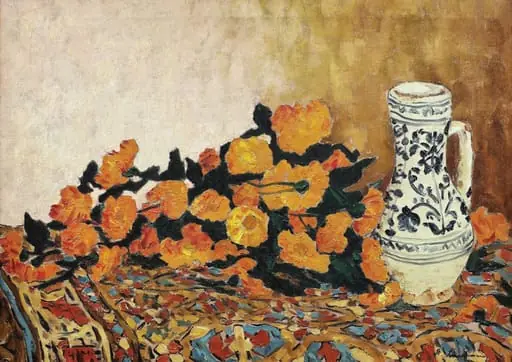
Lorica cu crizanteme
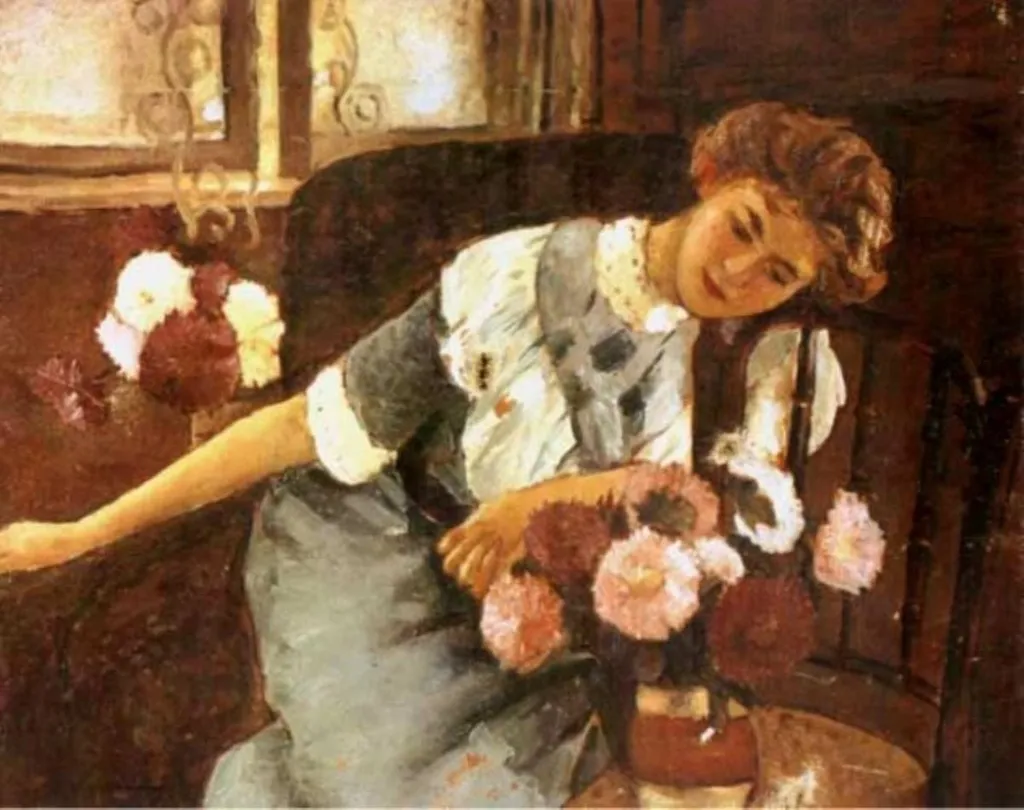
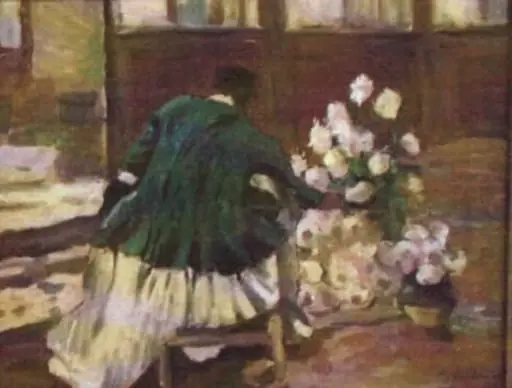
Lorica cu crizanteme is an unspecified painting by Ștefan Luchian. It dates from 1913 and is held in the collection of the National Museum of Art of Romania.
About this work
Overview
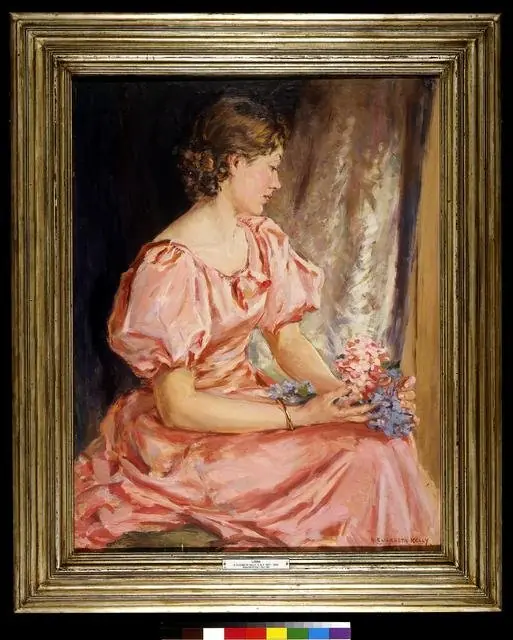
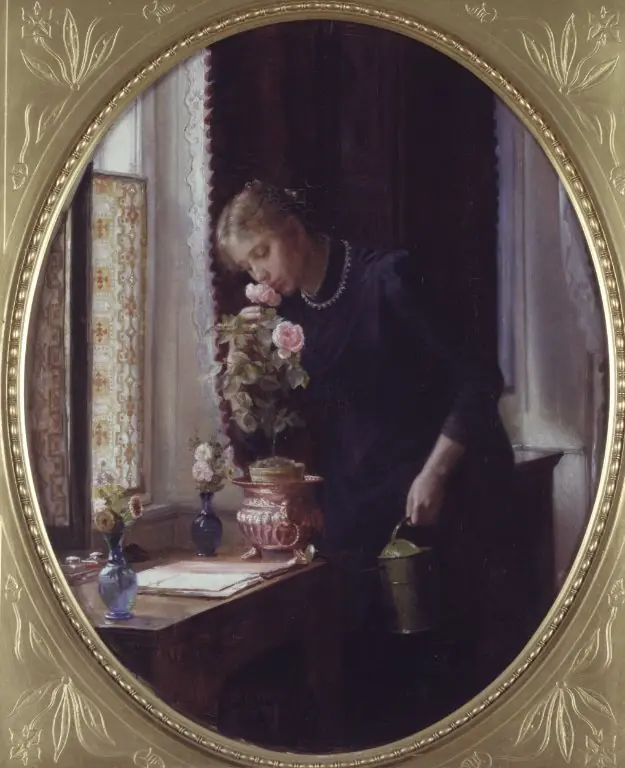
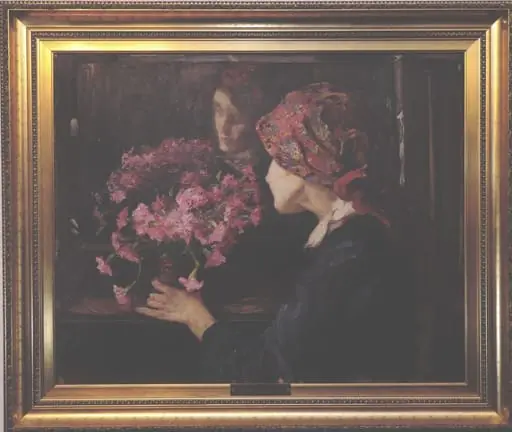
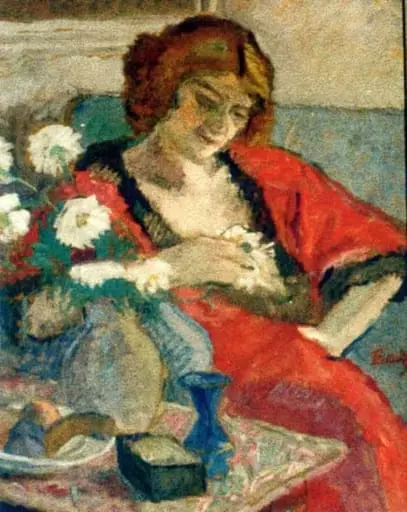
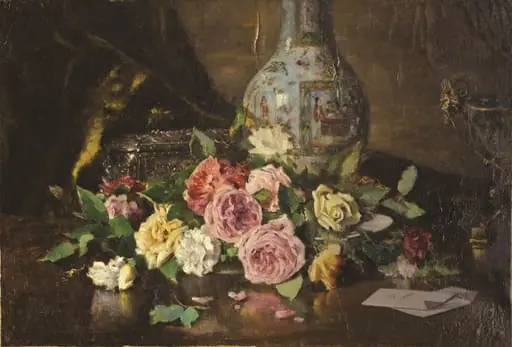
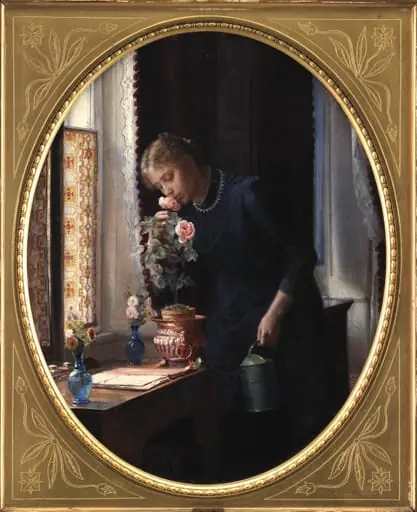
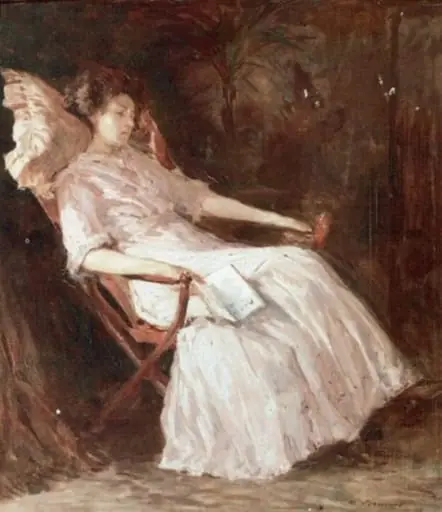
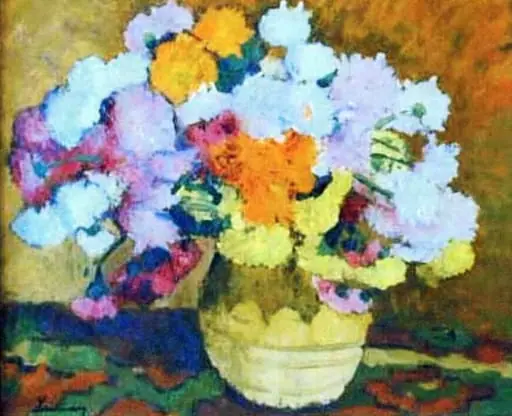
Created in 1913 by Romanian artist Ștefan Luchian, this painting depicts a quiet interior scene centered on a woman seated on a dark couch. The composition balances stillness and subtle movement, with wilting flowers in her lap and a glowing lamp casting soft light across the room. Luchian’s use of thick, textured brushwork gives the surface a tactile quality, emphasizing mood over detail.
Subject & Meaning
The woman, gently smiling, holds a small pot of fading flowers, their decline echoed by scattered petals on the couch. A second vase of flowers on the table behind her suggests a contrast between life and decay. The scene evokes introspection, perhaps reflecting on transience or private moments of contemplation, without overt narrative or symbolism.
Technique & Style
Luchian employed impasto to build texture, applying paint thickly to create luminous highlights and deep shadows. The dark background recedes, allowing the pale dress, warm skin tones, and muted florals to emerge with intensity. Brushstrokes are deliberate and visible, lending energy to the stillness and drawing attention to the play of light on fabric and petals.
History & Provenance
The painting was completed during Luchian’s later years, a period marked by declining health and increasing focus on intimate domestic subjects. It remained in Romanian collections after his death, eventually entering a public museum. Its preservation reflects its significance within early 20th-century Romanian art, though it received limited international attention.
Context
Painted during a time when Romanian artists were exploring personal expression beyond academic traditions, this work aligns with broader European trends toward psychological realism and tonal harmony. Luchian’s focus on quiet interiors and emotional subtlety distinguished him from contemporaries who favored grand historical or national themes.
Legacy
Lorica cu crizanteme endures as a quiet testament to Luchian’s sensitivity to light, texture, and mood. It is frequently cited in Romanian art history for its emotional restraint and technical innovation, influencing later generations who valued intimate, non-heroic subjects in modernist painting.
Artist & collection
Artist
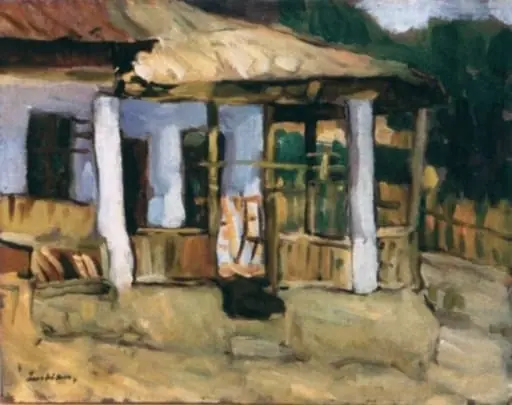
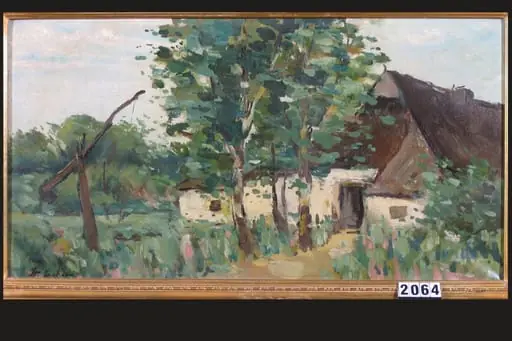
Ștefan Luchian painted quiet scenes of daily life in late-1800s Romania: sunlit houses, country roads, and a single studio work called Atelierul from 1894.