Artwork
Peisaj cu pomi
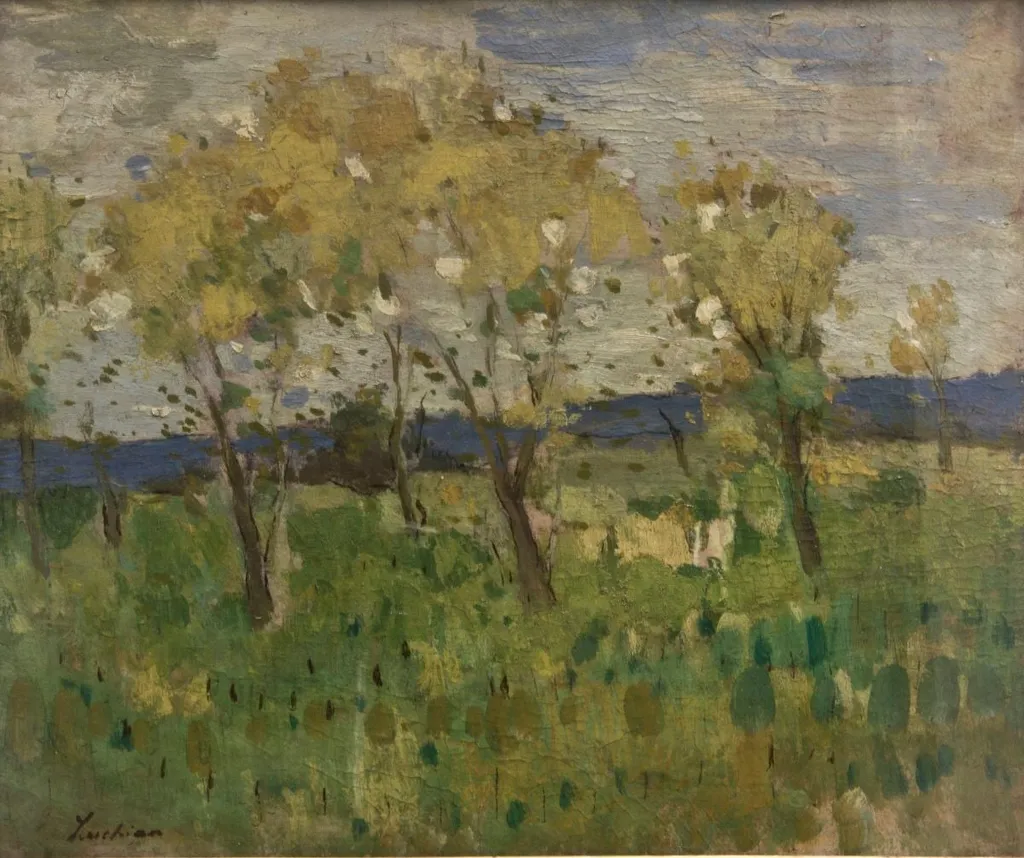
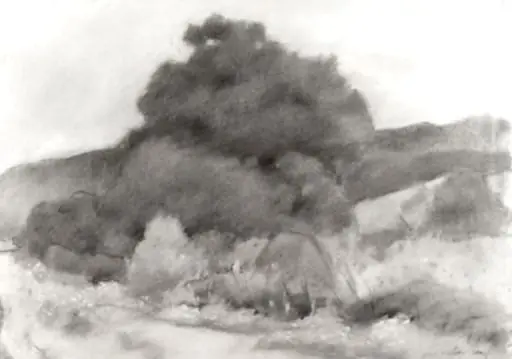
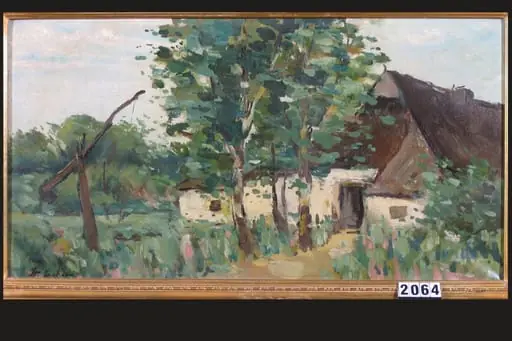
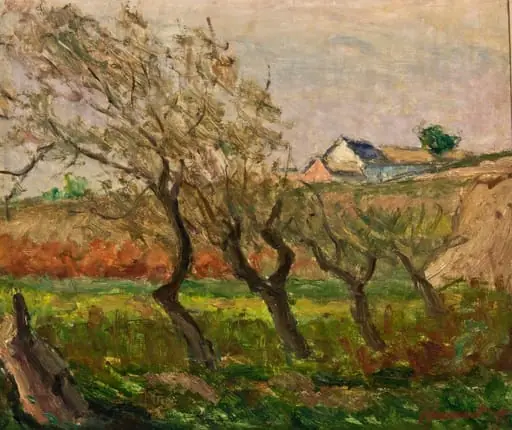
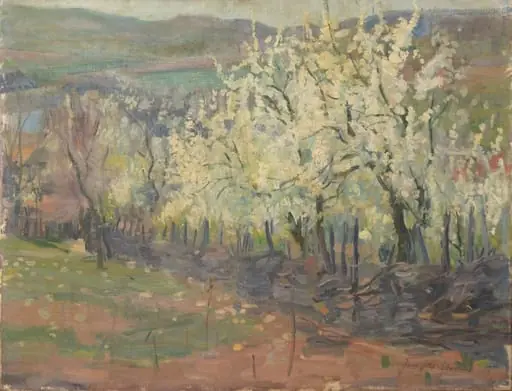
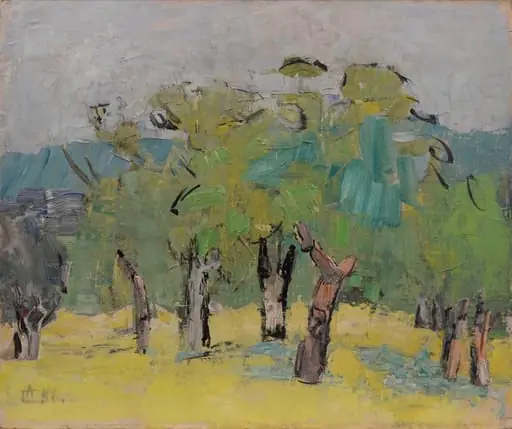
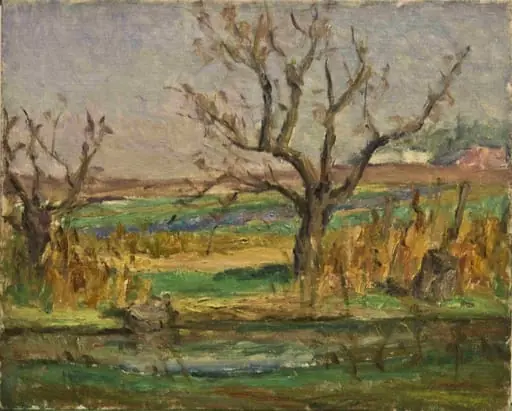
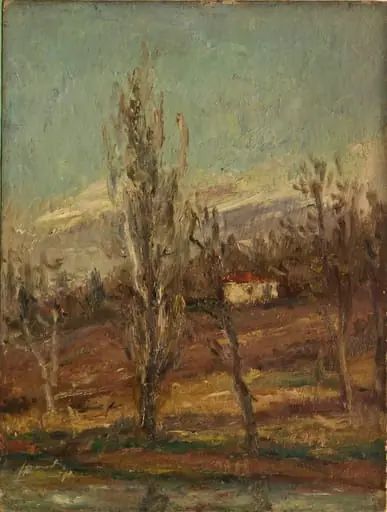
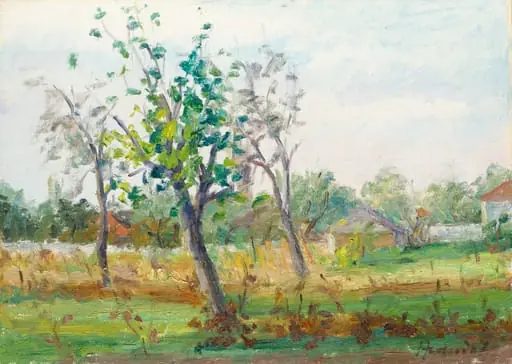
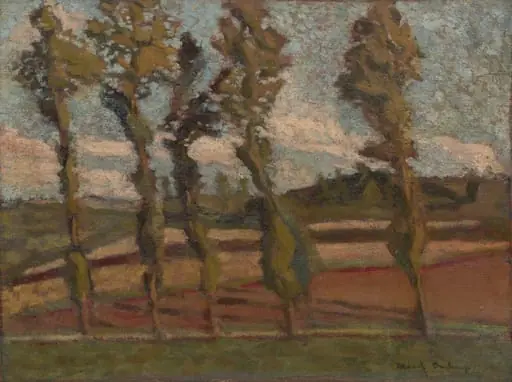
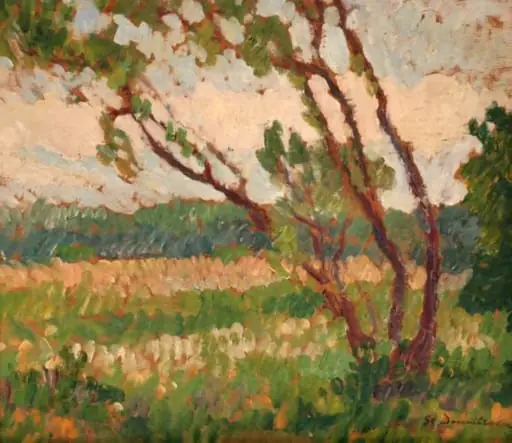
Peisaj cu pomi is an unspecified painting by Ștefan Luchian. It is held in the collection of the National Museum of Art of Romania. This oil painting depicts a rural landscape with trees, grass, and water, rendered in a loose, energetic manner.
About this work
Overview
The work conveys a sense of immediacy, as if observed and recorded in a single sitting, with little concern for refinement.
This oil painting depicts a rural landscape with trees, grass, and water, rendered in a loose, energetic manner. The composition lacks formal structure, emphasizing texture and movement over detail. The artist’s signature, 'Luchian,' appears in the lower corner, confirming authorship. The work conveys a sense of immediacy, as if observed and recorded in a single sitting, with little concern for refinement.
Subject & Meaning
The scene portrays a modest natural setting—trees lining a water’s edge, under a muted sky. There is no human presence or narrative, focusing instead on the quiet rhythms of the environment. The subdued palette and unpolished execution suggest an interest in atmosphere over idealization, reflecting a personal, observational approach to nature rather than a romanticized vision.
Technique & Style
Thick, irregular brushstrokes dominate the surface, creating a tactile, almost sculptural quality. Paint is applied with visible urgency, building texture through layered impasto. Colors are restrained—dull greens, browns, and grays—with occasional pale yellow accents suggesting sunlight filtering through foliage. The handling rejects smooth blending, favoring raw, gestural marks that prioritize expression over precision.
History & Provenance
The painting is attributed to the Romanian artist Ștefan Luchian, known for his landscape works in the late 19th and early 20th centuries. It likely dates from his mature period, when he increasingly favored spontaneous, expressive techniques. While its exact origin is undocumented, its style aligns with other works from his later years, when health issues may have influenced his more direct approach to painting.
Context
Luchian worked during a time when Romanian art was shifting from academic traditions toward modernist experimentation. This piece reflects broader European trends toward plein air painting and impressionistic methods, though with a distinctly personal, unpolished character. Unlike his contemporaries who sought harmony, Luchian embraced disorder, aligning his technique with a more introspective, emotional response to nature.
Legacy
This work exemplifies Luchian’s departure from conventional landscape painting, influencing later Romanian artists who valued emotional authenticity over technical polish. Its roughness and immediacy helped redefine local standards for artistic expression, positioning him as a bridge between 19th-century realism and 20th-century modernism in Romanian art. The painting remains a quiet testament to his evolving, personal vision.
Artist & collection
Artist
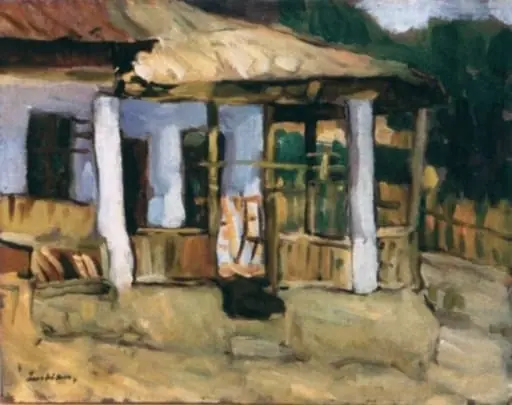
Ștefan Luchian painted quiet scenes of daily life in late-1800s Romania: sunlit houses, country roads, and a single studio work called Atelierul from 1894.