Artwork
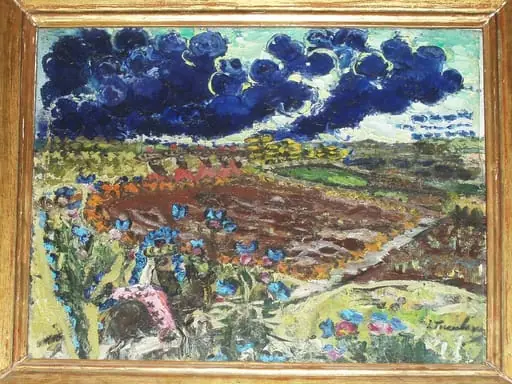
Peisaj de munte cu flori de câmp și maci
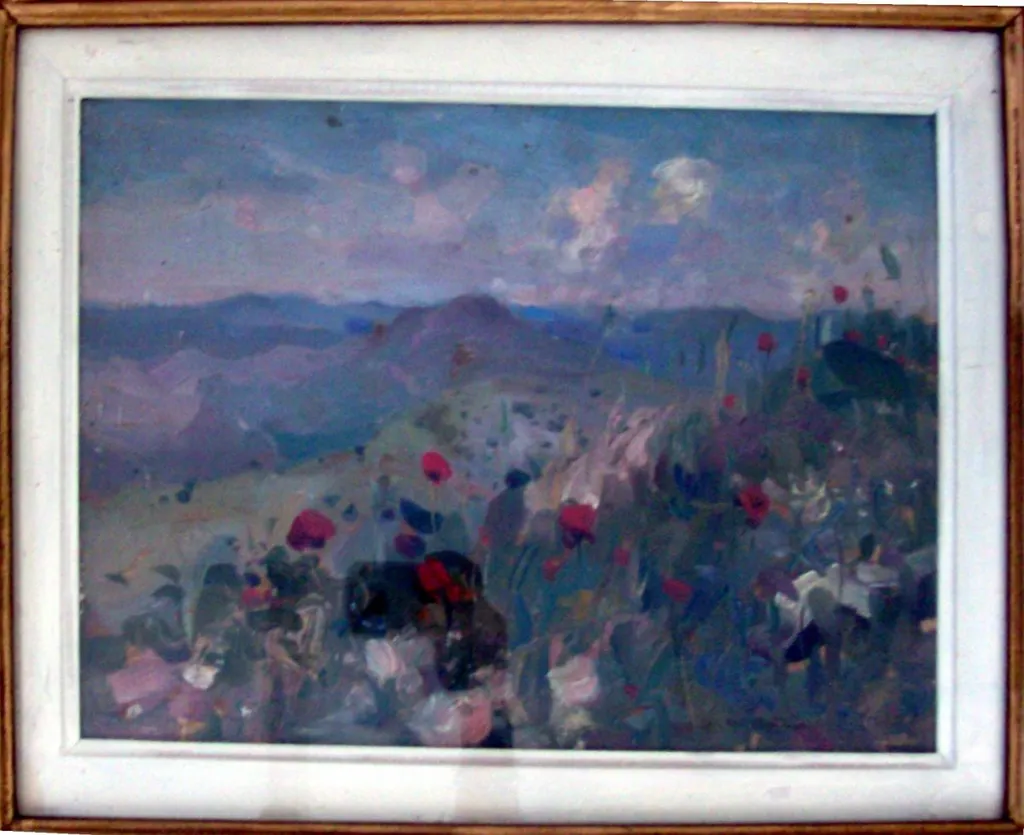
Peisaj de munte cu flori de câmp și maci is an unspecified painting by Aurel Băeșu. It dates from 1926 and is held in the collection of the Neamț National Museum Complex.
About this work
Overview
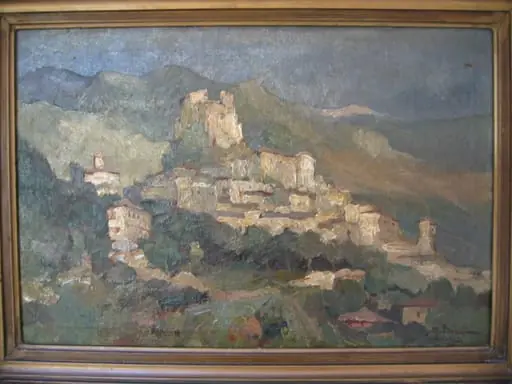
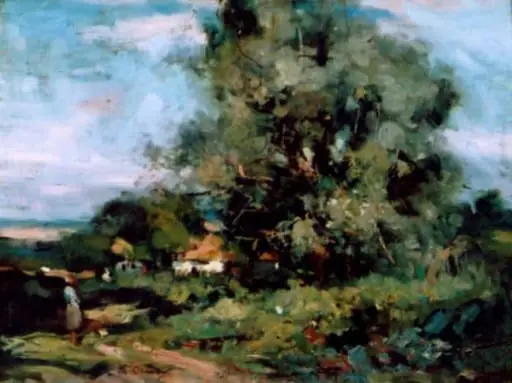
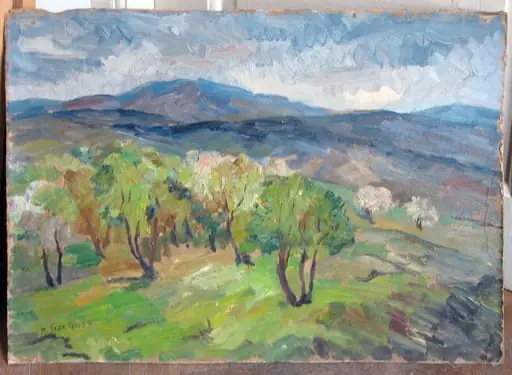
Painted in 1926 by Aurel Băeșu, this landscape depicts a mountainous terrain framed by a foreground of wildflowers and poppies.
Painted in 1926 by Aurel Băeșu, this landscape depicts a mountainous terrain framed by a foreground of wildflowers and poppies. Executed in oil, the work belongs to the collection of the Museum of Ethnography. Its quiet composition balances natural elements with a restrained color scheme, avoiding dramatic contrasts in favor of subtle tonal harmonies that reflect the quiet rhythm of rural scenery.
Subject & Meaning
The painting presents a modest, unidealized view of the Romanian countryside, where mountains rise behind a field of native blooms. Poppies and other wildflowers, shown in varying stages of growth, suggest the passage of time and the cyclical nature of the seasons. There is no human presence, emphasizing the autonomy of the natural world and a contemplative engagement with the land.
Technique & Style
Băeșu employs loose, visible brushwork to render both the rugged terrain and the delicate flowers. The application of paint varies in thickness, with areas of the foreground showing slight impasto to suggest texture and light. Colors are subdued—greens, blues, and purples dominate—creating a cohesive atmosphere that avoids artificial vibrancy, aligning with a quiet, observational approach to landscape.
History & Provenance
Created in 1926, the painting entered the collection of the Museum of Ethnography shortly after its completion. Its acquisition reflects the institution’s interest in documenting regional artistic expressions tied to rural life. No significant changes in ownership are recorded, and it has remained in public custody since its early years, preserved as part of Romania’s interwar visual heritage.
Context
In the 1920s, Romanian artists increasingly turned to native landscapes as subjects, moving away from urban or historical themes. Băeșu’s work aligns with this trend, reflecting a broader cultural interest in regional identity and the natural environment. His approach, neither romantic nor documentary, captures the quiet dignity of everyday rural scenes through personal, tactile brushwork.
Legacy
Though not widely exhibited outside Romania, the painting remains a representative example of interwar Romanian landscape painting. It contributes to an understudied body of work that values observation over spectacle. Its continued presence in the Museum of Ethnography underscores its role in preserving a visual record of the country’s natural and artistic heritage.
Artist & collection
Artist