Artwork
Peisaj
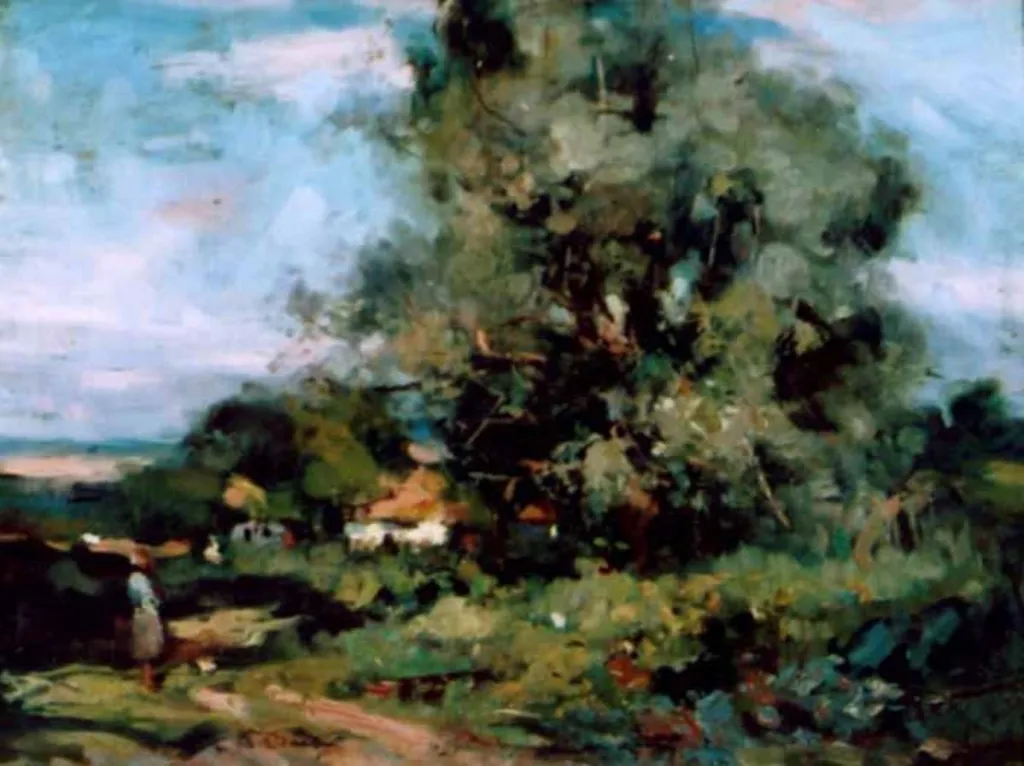
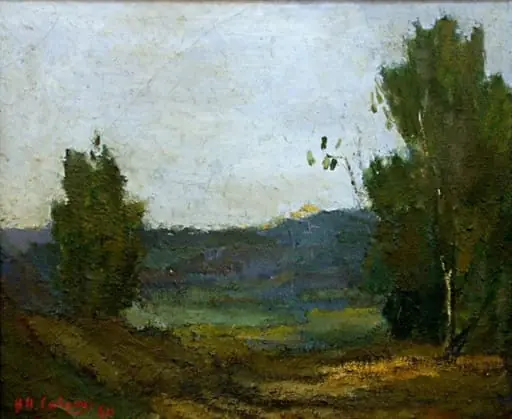
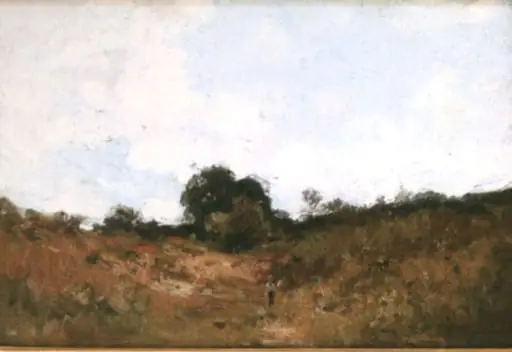
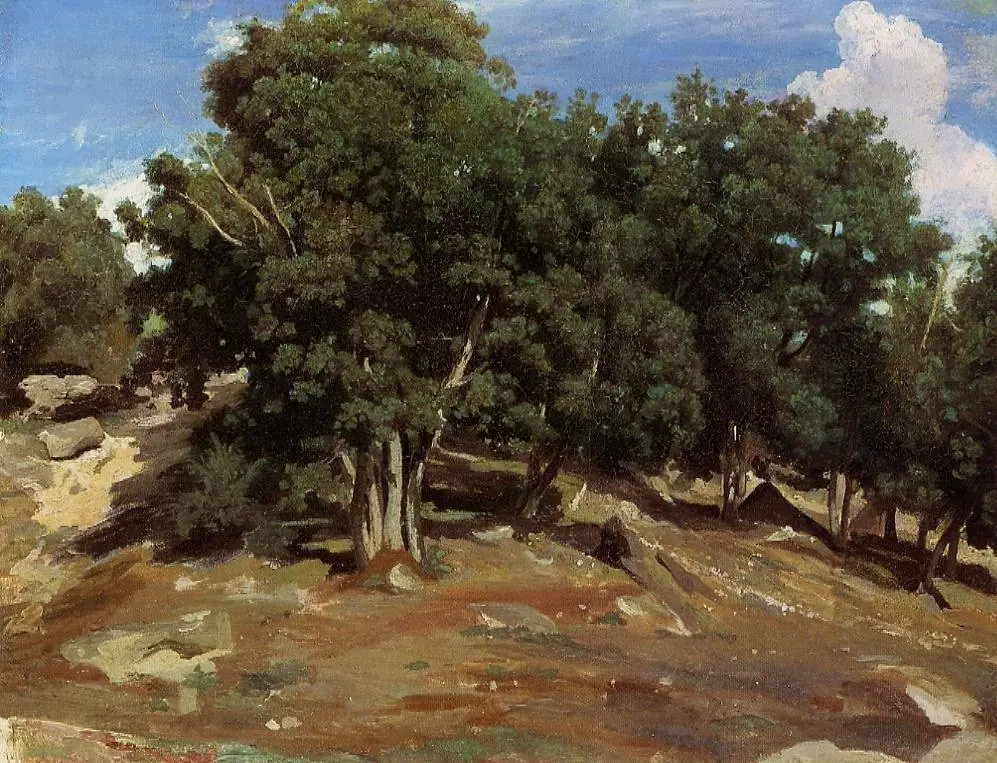
Peisaj is an unspecified painting by Aurel Băeșu. It is held in the collection of the Cotroceni National Museum. This work presents a rural landscape centered on a large, densely rendered tree.
About this work
Overview
Surrounding elements—smaller trees, a distant house, and a figure near the trunk—anchor the scene in quiet observation.
This work presents a rural landscape centered on a large, densely rendered tree. Surrounding elements—smaller trees, a distant house, and a figure near the trunk—anchor the scene in quiet observation. The sky, softly lit with diffuse clouds, and the uneven, green ground suggest an unidealized natural setting. Thick, tactile brushwork dominates the composition, emphasizing physical presence over precise detail.
Subject & Meaning
The central tree acts as both visual anchor and implied witness. A solitary figure, possibly holding a tool or branch, suggests quiet labor or pause, but no narrative is overt. The absence of dramatic action or symbolic cues points toward an emphasis on atmosphere rather than story. The scene feels intimate, rooted in daily observation rather than idealized nature.
Technique & Style
The painting employs impasto to build texture, particularly in the foliage, where layers of paint create a tactile, almost sculptural surface. Brushstrokes are deliberate yet unrefined, avoiding smooth blending. This method conveys movement and density in the leaves, enhancing the sense of organic growth. The rough handling contrasts with the softer, thinner application in the sky and distant forms.
History & Provenance
No documented exhibition history or ownership trail is available. The work appears to be a private or lesser-known study, lacking the archival footprint of major institutional acquisitions. Its unattributed status and modest scale suggest it may have been created as an exercise or personal record rather than for public display.
Context
The use of impasto and loose brushwork aligns with late 19th-century trends in landscape painting that prioritized sensory experience over academic precision. Similar approaches appear in the works of artists exploring plein air methods, though this piece lacks the overt stylistic markers of recognized movements. It reflects a broader shift toward direct observation and material expression in rural scenes.
Legacy
Though not widely reproduced or studied, the painting contributes to a quiet tradition of landscape studies that value texture and presence over grandeur. Its unassuming character offers insight into how artists engaged with nature outside formal academies or public exhibitions, preserving a personal, tactile record of the natural world.
Artist & collection
Artist