Artwork
Fată citind
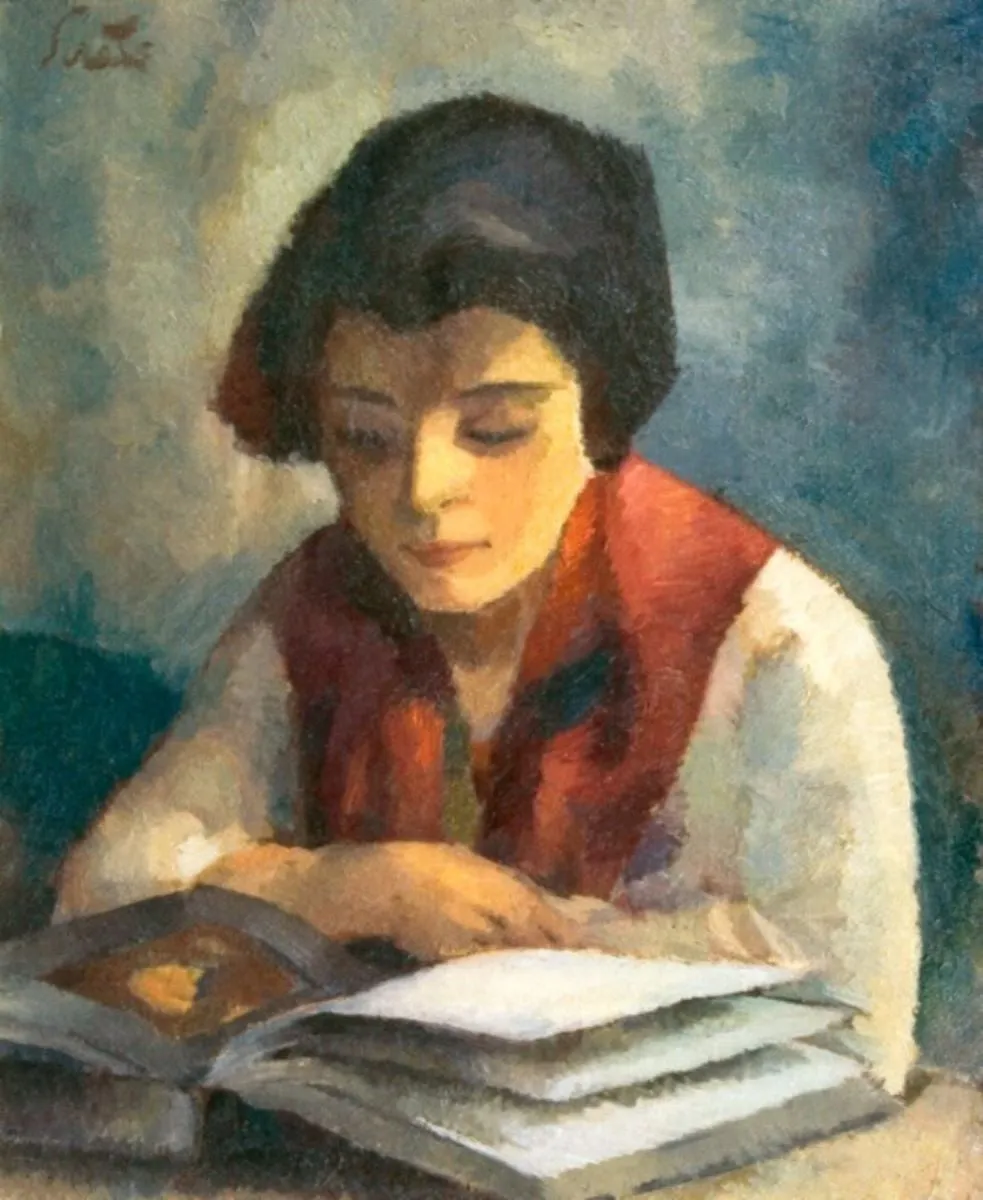
Fată citind is an unspecified painting by Francisc Șirato. It dates from 1927 and is held in the collection of the National Museum of Art of Romania.
About this work
Overview
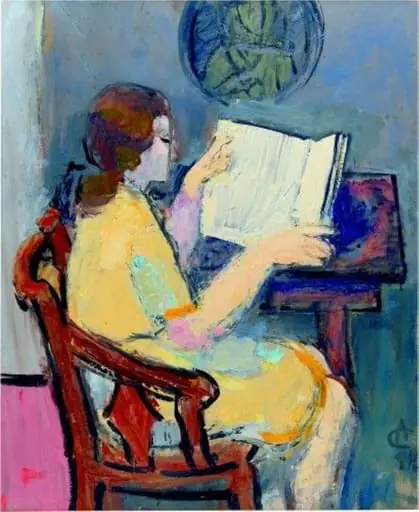
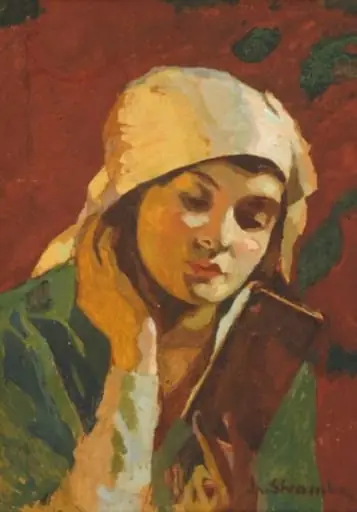
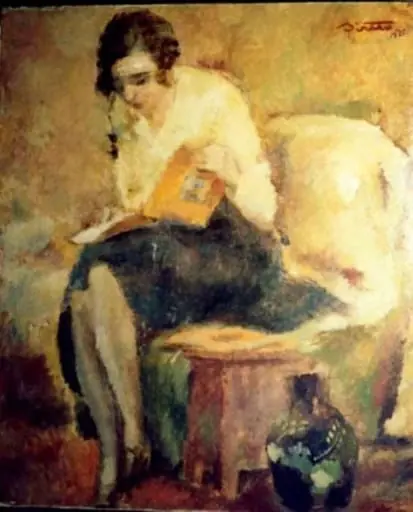
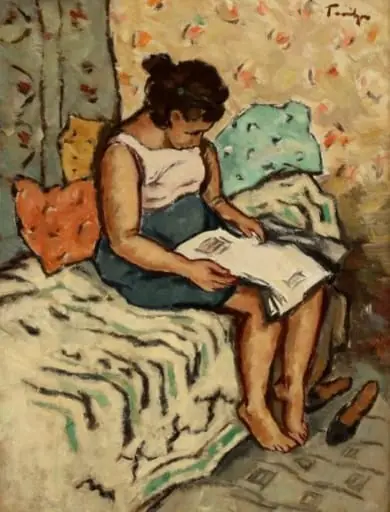
Painted in 1927 by Francisc Șirato, Fată citind depicts a young figure absorbed in reading. The composition centers on quiet concentration, with minimal detail in the surroundings to focus attention on the figure and the act of reading. The work is rendered in oil, with a soft, atmospheric quality that emphasizes mood over precise definition.
Subject & Meaning
The subject is a young person, likely female, engrossed in a thick book, head bowed and eyes fixed on the pages. The gesture suggests introspection and private engagement with text. No narrative context is provided, allowing the image to evoke universal themes of solitude, learning, and inner life without explicit symbolism.
Technique & Style
Șirato employs loose, expressive brushwork that allows colors to blend organically, creating a hazy, luminous effect. Light falls gently on the face and hands, contrasting with the dim, blurred background of blue-green tones. This selective illumination draws focus to the act of reading while dissolving the environment into soft shadow.
History & Provenance
Created in 1927 during a period of growing interest in Romanian modernism, the painting reflects Șirato’s engagement with post-impressionist approaches. It remained in private collections for much of the 20th century and was later acquired by a public institution in Romania, where it is now preserved as part of the national art heritage.
Context
In interwar Romania, artists like Șirato moved away from academic realism toward more personal, emotionally resonant imagery. Fată citind aligns with this shift, emphasizing interiority and quiet moments over grand historical or social themes. Its subdued palette and intimate scale reflect broader European trends in lyrical modernism.
Legacy
The painting is recognized for its sensitive portrayal of solitude and intellectual engagement. While not widely reproduced, it is cited in studies of Romanian modern painting for its restrained use of light and its emotional subtlety. It continues to be referenced as an example of how everyday acts can be rendered with poetic gravity.
Artist & collection
Artist
Francisc Șirato painted quiet scenes of people and places, often with soft light and gentle colors.