Artwork
Maci în vas albastru
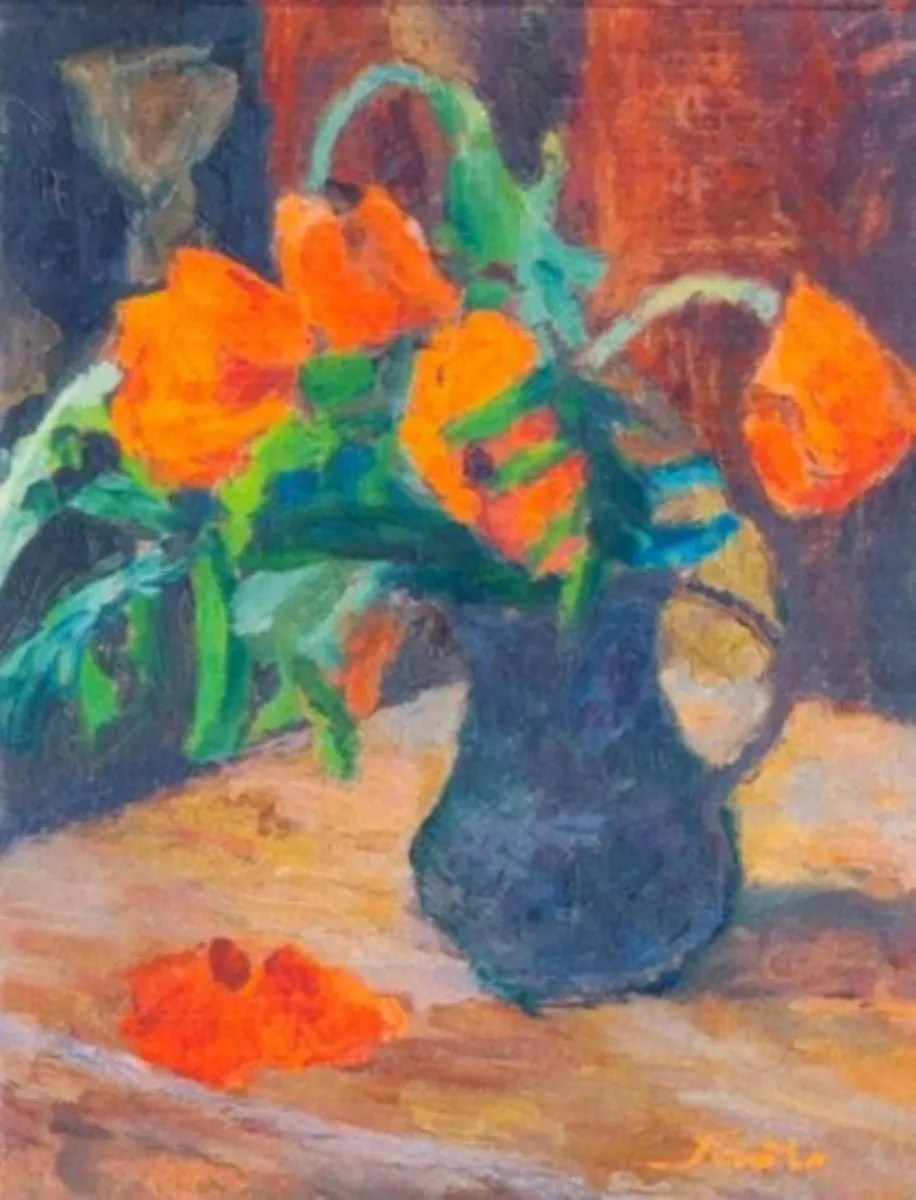
Maci în vas albastru is an unspecified painting by Francisc Șirato. It dates from 1949 and is held in the collection of the National Museum of Art of Romania.
About this work
Overview
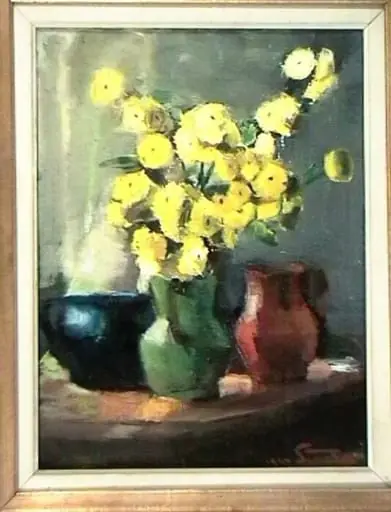
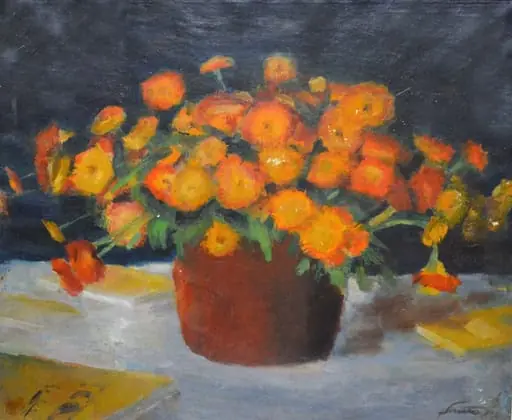
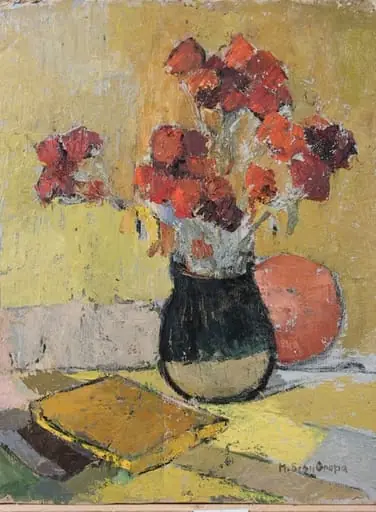
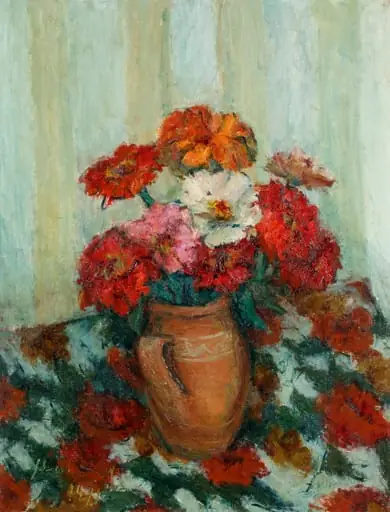
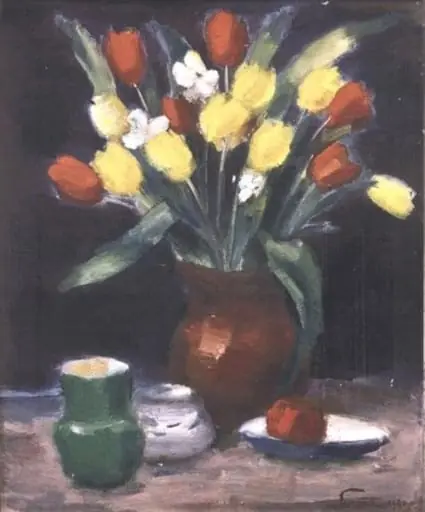
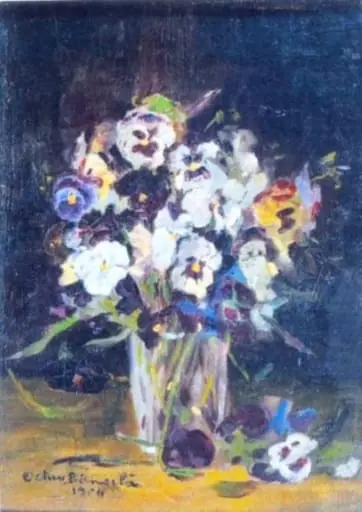
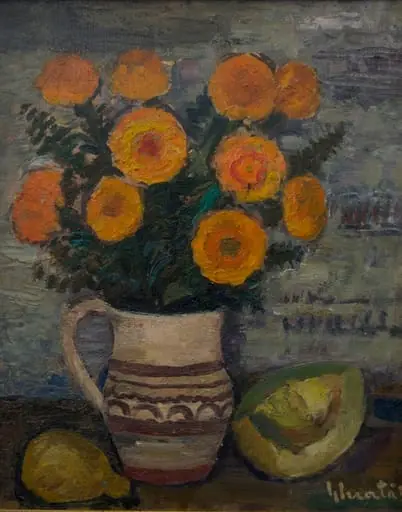
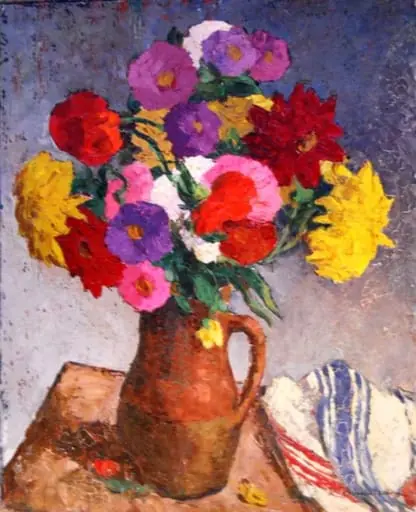
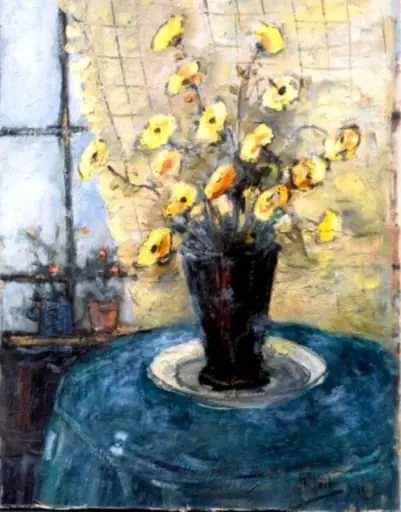
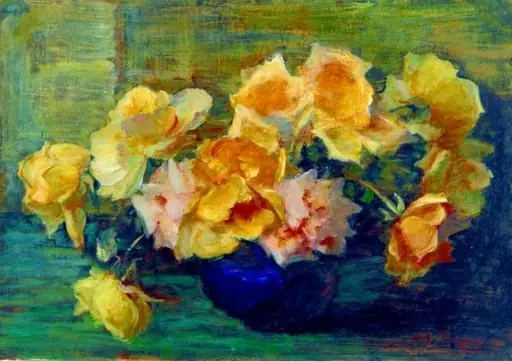
Painted around 1949 by Francisc Șirato, Maci în vas albastru is a still life depicting a cluster of flowers in a dark blue vessel. The composition centers on the contrast between the vibrant blooms and their somber surroundings. The painting’s emphasis on texture and color distinguishes it from more conventional floral studies, reflecting a personal, expressive approach to everyday subjects.
Subject & Meaning
The subject is a simple arrangement of wilting orange flowers in a blue vase, placed on a warm, uneven surface. The drooping petals suggest transience, while the vivid hues against the muted background evoke quiet resilience. There is no overt narrative, but the stillness and decay imply a meditation on time, fragility, and the persistence of color in the face of decline.
Technique & Style
Șirato applied paint thickly, using impasto to build the flowers’ surfaces, creating a tactile, almost sculptural quality.
Șirato applied paint thickly, using impasto to build the flowers’ surfaces, creating a tactile, almost sculptural quality. Brushstrokes are deliberate and uneven, emphasizing the materiality of the paint rather than smooth realism. The background is softly blurred, allowing the textured blooms to dominate visually. Color is used expressively, not descriptively, heightening emotional resonance over literal representation.
History & Provenance
The painting was created in the late 1940s, during a period of cultural constraint in Romania. While official art promoted socialist realism, Șirato pursued a more introspective style. Maci în vas albastru remained in private hands for decades, its significance emerging gradually among scholars interested in non-conformist Romanian modernism. It is now held in a public collection, recognized for its quiet defiance of aesthetic norms.
Context
In postwar Romania, artistic expression was tightly regulated. Șirato’s focus on intimate, non-political subjects like this still life was a subtle act of resistance. His use of bold color and expressive brushwork aligned more with European modernist traditions than with state-sanctioned realism. This work reflects a broader trend among Romanian artists who sought personal vision amid political pressure.
Legacy
Maci în vas albastru is now regarded as an important example of Romanian modernist still life. It exemplifies how artists navigated repression by turning inward, using formal innovation to convey emotional depth. The painting’s enduring interest lies in its restraint — it speaks volumes without grandeur, offering a quiet, enduring testament to individual expression under constraint.
Artist & collection
Artist
Francisc Șirato painted quiet scenes of people and places, often with soft light and gentle colors.