Artwork
Case la Silistra
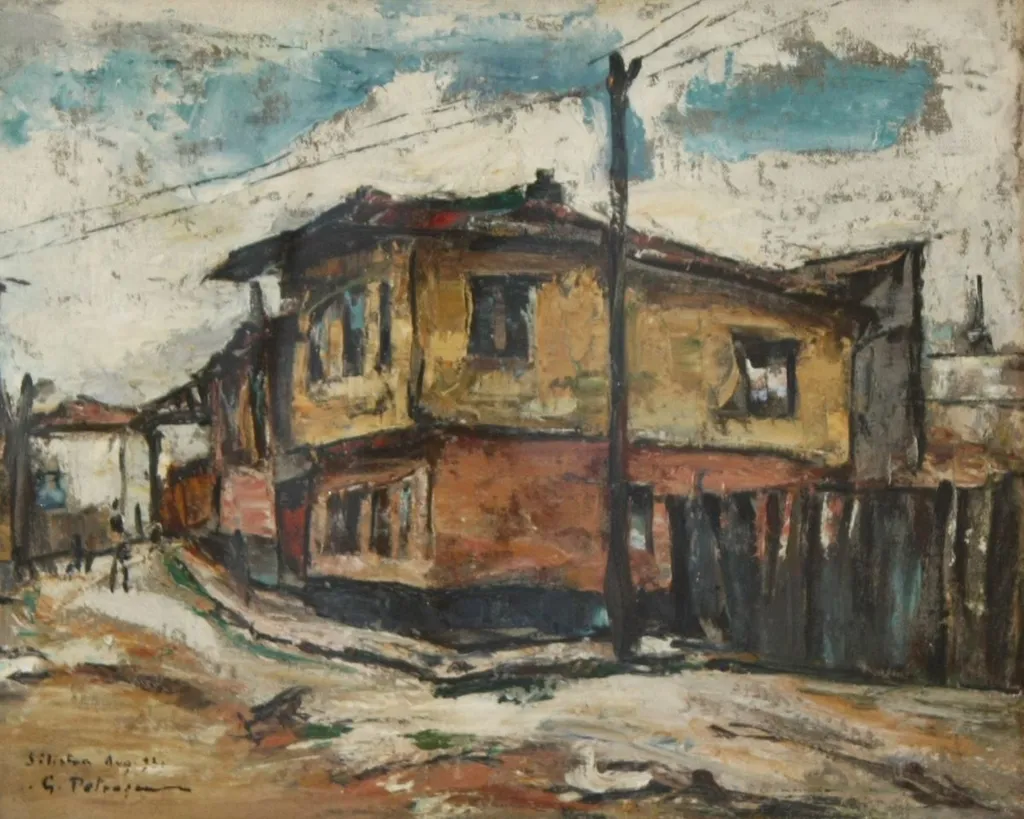
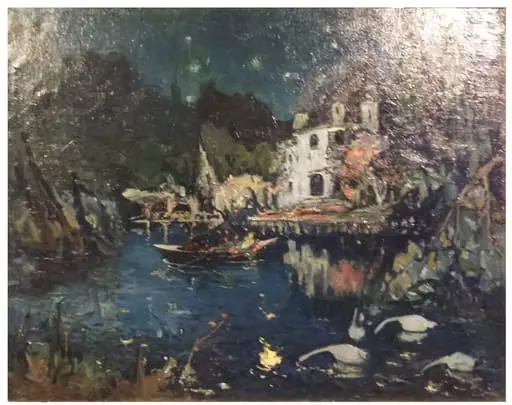
Case la Silistra is an unspecified painting by Gheorghe Petrașcu. It dates from 1931 and is held in the collection of the Brașov Art Museum.
About this work
Overview
A single telephone pole and a white swan in the lower right introduce subtle points of contrast, grounding the scene in ordinary life without dramatic emphasis.
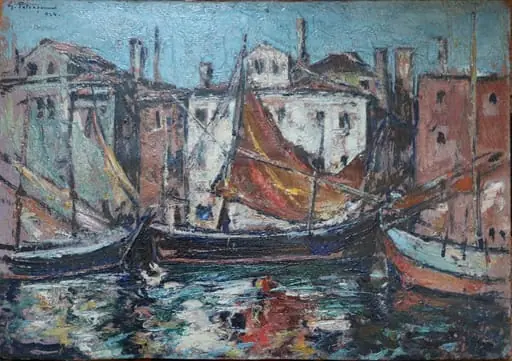
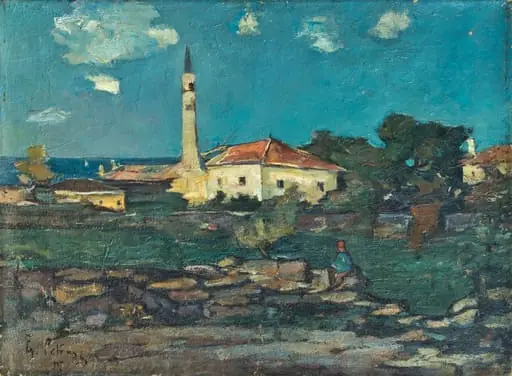
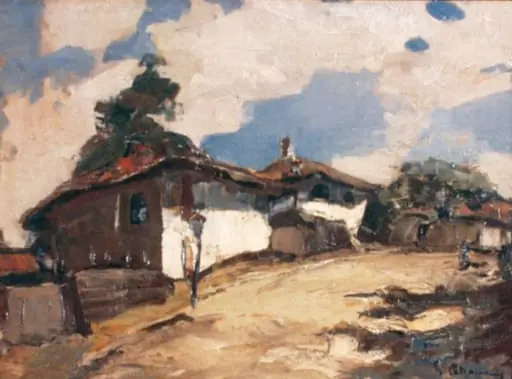
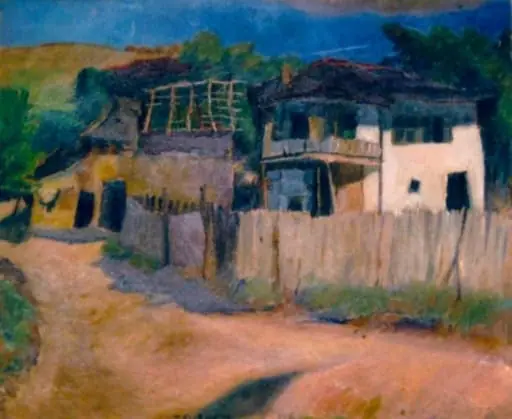
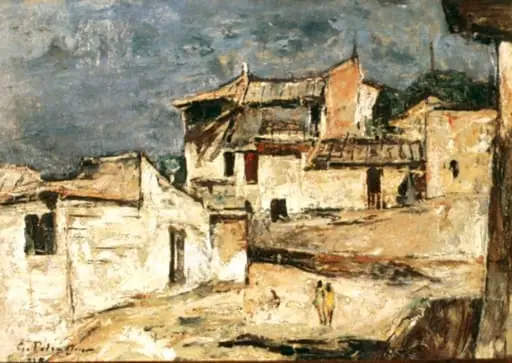
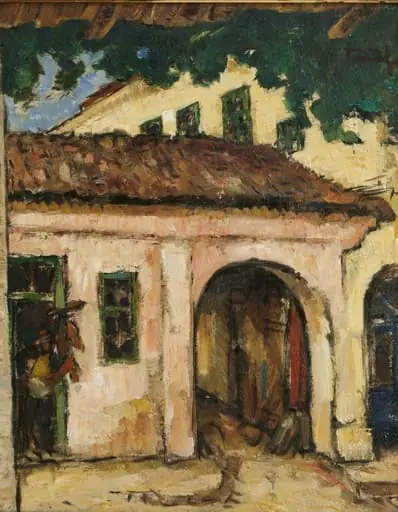
Painted in 1931 by Romanian artist Gheorghe Petrașcu, Case la Silistra captures a modest residential structure in a quiet urban setting. The composition centers on a two-story house with a muted brown-and-yellow facade, set at the intersection of a narrow street. A single telephone pole and a white swan in the lower right introduce subtle points of contrast, grounding the scene in ordinary life without dramatic emphasis.
Subject & Meaning
The painting presents an unadorned view of domestic architecture, suggesting a focus on the quiet rhythms of daily existence. The swan, an unexpected element in an urban context, introduces a note of stillness and natural presence amid human structures. There is no narrative action; instead, the work invites contemplation of place, solitude, and the quiet dignity of ordinary environments.
Technique & Style
Petrașcu employs a restrained palette of earth tones and soft blues, with deliberate brushwork that defines form without excessive detail. The sky is rendered with loose, airy strokes, contrasting with the more solidly built house. The dirt road leads the eye into the distance, while the swan’s placement balances the composition visually, reflecting an interest in spatial harmony over dramatic effect.
History & Provenance
Created during Petrașcu’s mature period, the work reflects his sustained engagement with Romanian provincial scenes. Though specific ownership history is not widely documented, the painting is recognized as part of his broader body of work from the early 20th century, often associated with regionalist themes and a personal, introspective approach to landscape and architecture.
Context
In the 1930s, Romanian art saw a shift toward depicting local life with sincerity rather than idealization. Petrașcu’s work aligned with this trend, avoiding romanticism in favor of observed reality. Case la Silistra reflects a broader cultural interest in the vernacular architecture and unassuming environments of smaller towns, capturing a moment before rapid modernization altered the landscape.
Legacy
The painting contributes to Petrașcu’s reputation as a painter of subtle, contemplative scenes. While not widely exhibited internationally, it remains a representative example of his approach to everyday subjects. His focus on quiet interiors and provincial settings influenced later generations of Romanian artists seeking authenticity over spectacle in their depictions of the built environment.
Artist & collection
Artist
Gheorghe Petrașcu painted quiet scenes of buildings, streets, and still lifes in the 1920s and ’30s Romania.