Artwork
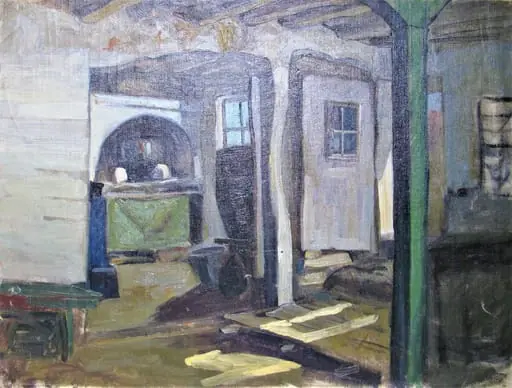
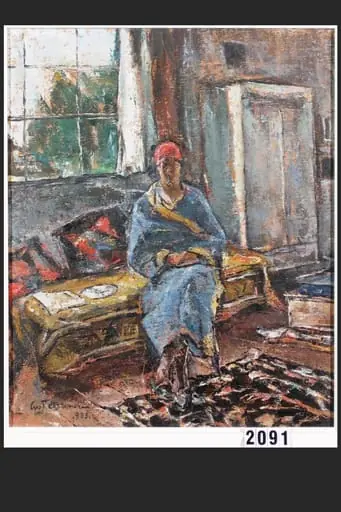
Interior la Târgoviște
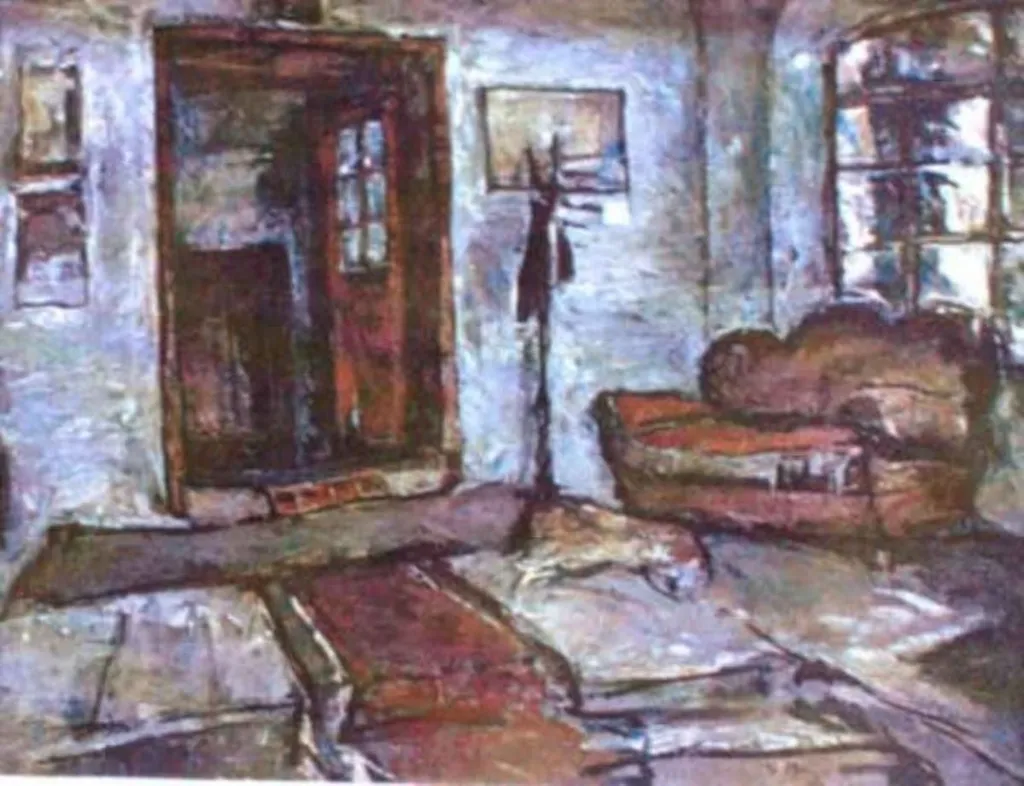
Interior la Târgoviște is an unspecified painting by Gheorghe Petrașcu. It dates from 1927 and is held in the collection of the National Museum of Art of Romania.
About this work
Overview
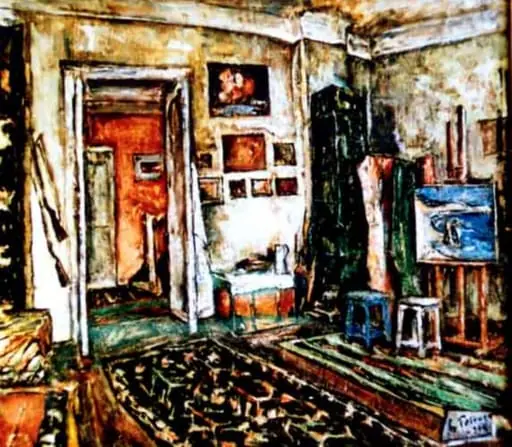
Painted in 1927 by Gheorghe Petrașcu, Interior la Târgoviște captures an unadorned interior space in a modest Romanian home.
Painted in 1927 by Gheorghe Petrașcu, Interior la Târgoviște captures an unadorned interior space in a modest Romanian home. The scene conveys quiet decay through its muted tones and cluttered stillness. No figures are present, yet the arrangement of objects suggests recent abandonment or prolonged neglect. The painting’s emotional weight arises not from drama, but from the accumulation of everyday wear.
Subject & Meaning
The room’s furnishings—a sagging couch, an overturned chair, a crumpled rug—hint at domestic life worn thin by time. The crooked picture frame and dark hallway imply disrepair and disorientation. These elements together evoke a sense of solitude and quiet resignation. The absence of human presence amplifies the atmosphere of stillness, turning the space into a silent witness to passage and decline.
Technique & Style
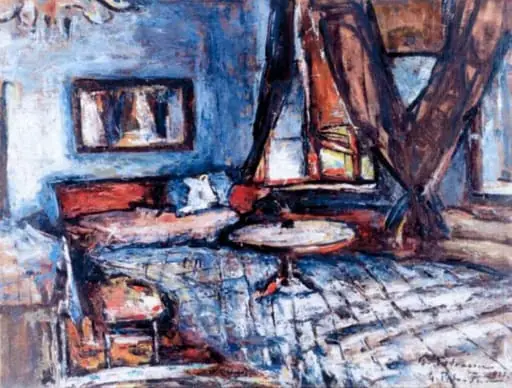
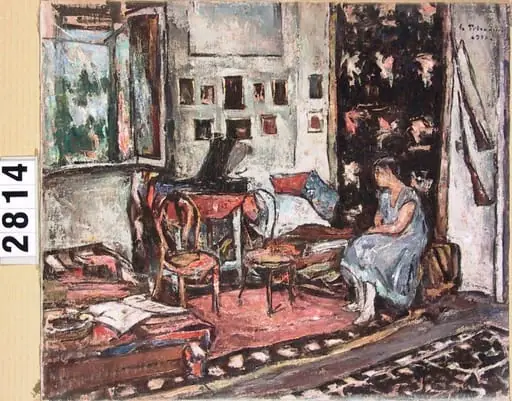
Petrașcu employed thick, tactile brushwork to render the peeling walls and worn textiles, using impasto to mimic the physical texture of aged surfaces. The paint is applied with deliberate heaviness, creating ridges and shadows that enhance the sense of material decay. Lighting is uneven, casting deep pools in corners and emphasizing the irregularities of the architecture, reinforcing the painting’s somber mood.
History & Provenance
Created in 1927, the painting emerged during a period when Petrașcu was deeply engaged with Romanian domestic interiors, often depicting spaces tied to provincial life. It remained in private Romanian collections for much of the 20th century, with limited public exposure until later scholarly interest in interwar Romanian painting revived attention to his quieter, introspective works.
Context
In interwar Romania, artists like Petrașcu turned away from grand historical themes toward intimate, everyday scenes. Interior la Târgoviște reflects this shift, aligning with a broader interest in the psychological resonance of ordinary spaces. The painting resonates with European realist traditions but retains a distinctly local character, rooted in the material conditions of provincial homes.
Legacy
Though not widely exhibited during Petrașcu’s lifetime, Interior la Târgoviște has come to represent a quiet strand of Romanian modernism focused on emotional realism. Its unembellished depiction of decay influenced later generations of artists interested in the poetry of neglect. Today, it stands as a testament to the dignity found in overlooked domestic environments.
Artist & collection
Artist
Gheorghe Petrașcu painted quiet scenes of buildings, streets, and still lifes in the 1920s and ’30s Romania.