Artwork
Natură statică cu mere
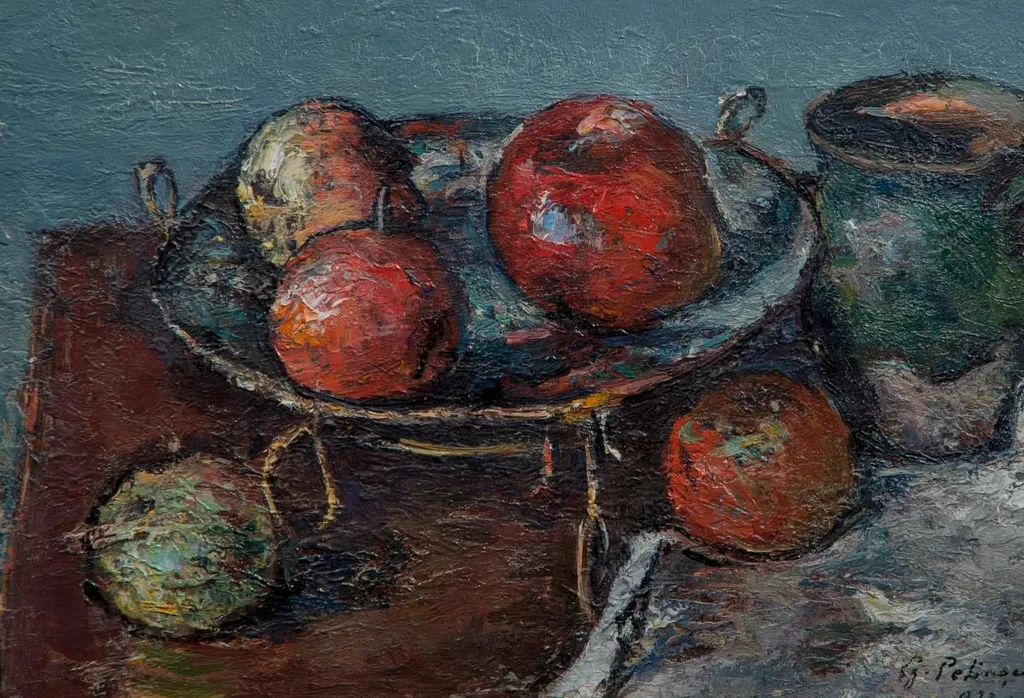
Natură statică cu mere is an unspecified painting by Gheorghe Petrașcu. It dates from 1923 and is held in the collection of the National Museum of Art of Romania.
About this work
Overview
Its immediacy suggests a direct observation, capturing the quiet presence of everyday items without narrative embellishment.
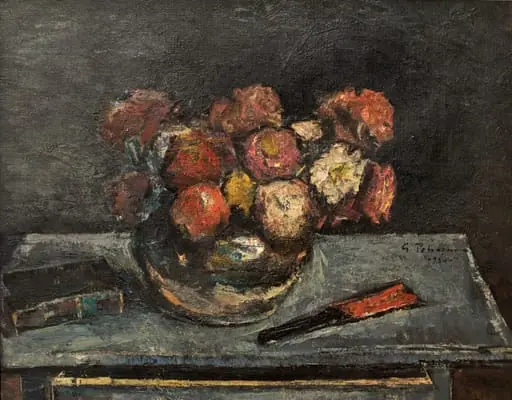
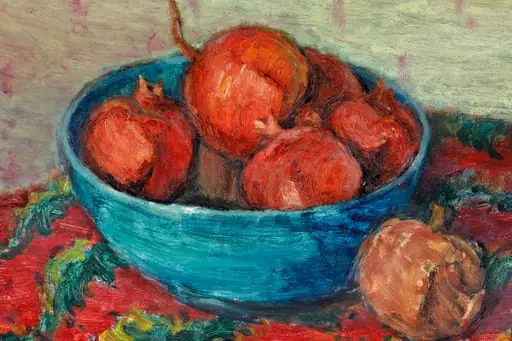
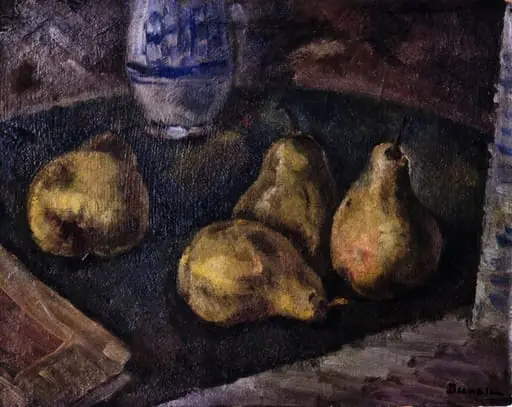
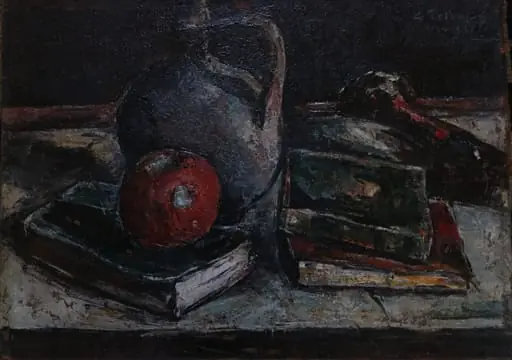
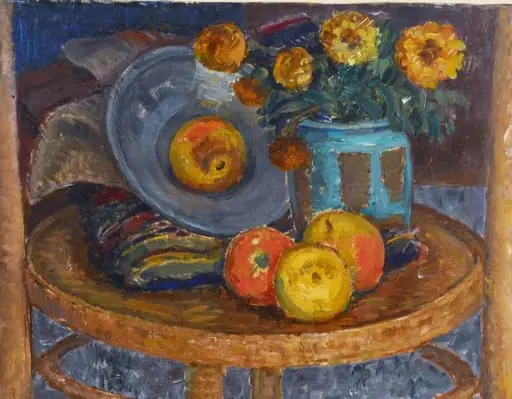
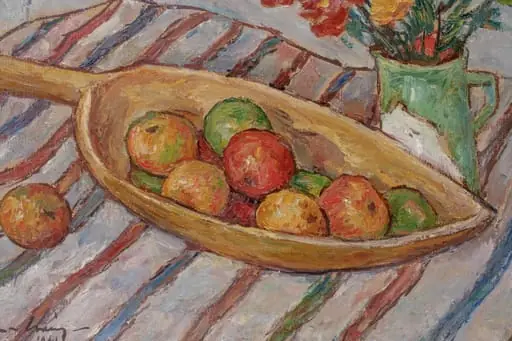
Painted in 1923 by Gheorghe Petrașcu, this still life presents a simple arrangement of apples in a woven basket. The composition is unadorned, focusing entirely on the fruit and its immediate surroundings. The work avoids idealized forms, instead embracing the irregularities of natural objects. Its immediacy suggests a direct observation, capturing the quiet presence of everyday items without narrative embellishment.
Subject & Meaning
The subject is a modest pile of apples, rendered without symbolic pretense. Their varied hues—deep reds and muted greens—reflect natural ripening and surface variation. The absence of human presence or contextual clues invites contemplation of the object itself. The painting’s value lies not in metaphor, but in the quiet dignity afforded to ordinary, transient things through careful attention.
Technique & Style
Petrașcu applied paint with thick, deliberate strokes, building texture through impasto. The surface is visibly tactile, with ridges and peaks of pigment that catch light unevenly. Colors are layered rather than blended, preserving the raw quality of each brushmark. The background’s rough blue-gray wash contrasts with the fruit’s solidity, enhancing the sense of physical presence without softening edges or smoothing transitions.
History & Provenance
Created in 1923, the work emerged during a period when Romanian artists were engaging with post-impressionist and expressionist tendencies. While details of its early ownership are not widely documented, it remains within the corpus of Petrașcu’s mature still lifes, reflecting his sustained interest in materiality and light. The painting has been held in Romanian collections since its creation.
Context
In early 20th-century Romania, still life was a genre used to explore formal concerns beyond national or historical themes. Petrașcu’s approach aligned with broader European trends that valued sensory experience over idealization. His focus on texture and unpolished form distinguished him from academic traditions, situating his work within a modernist shift toward authenticity in representation.
Legacy
This painting exemplifies Petrașcu’s contribution to Romanian modernism through its emphasis on material truth and painterly gesture. It influenced later generations of artists who sought to ground their work in the physicality of everyday objects. While not widely exhibited internationally, it remains a touchstone in Romanian art history for its unembellished honesty and technical conviction.
Artist & collection
Artist
Gheorghe Petrașcu painted quiet scenes of buildings, streets, and still lifes in the 1920s and ’30s Romania.