Artwork
Pe malul mării
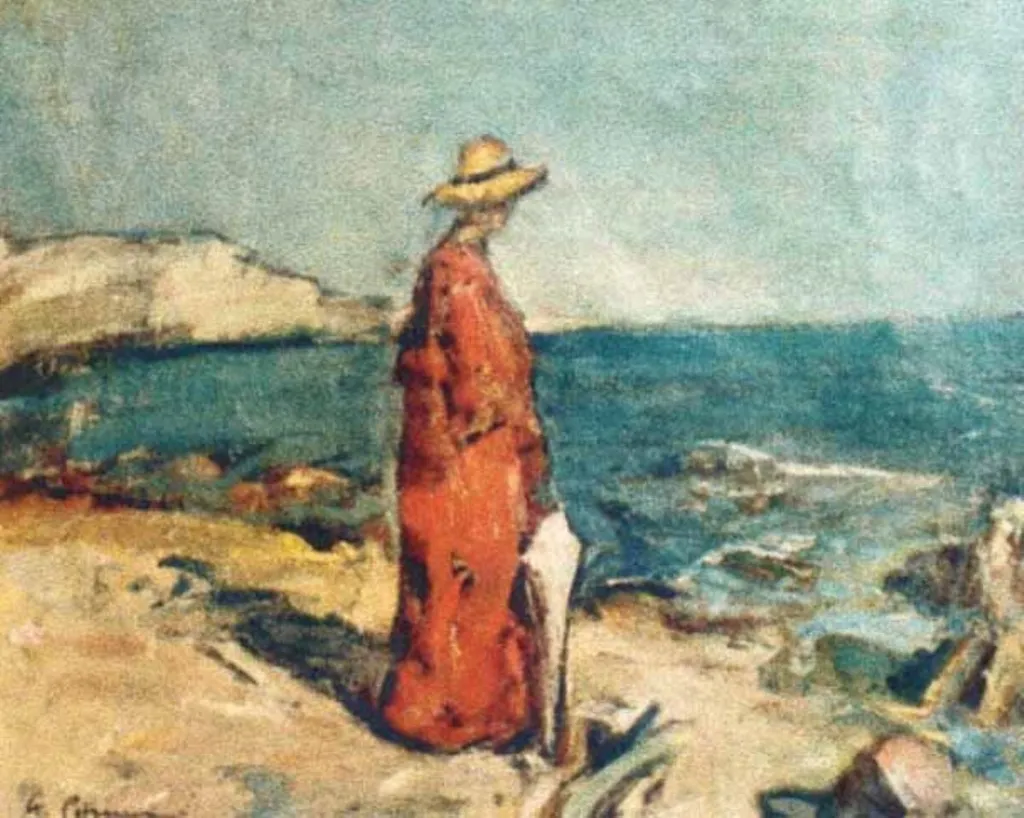
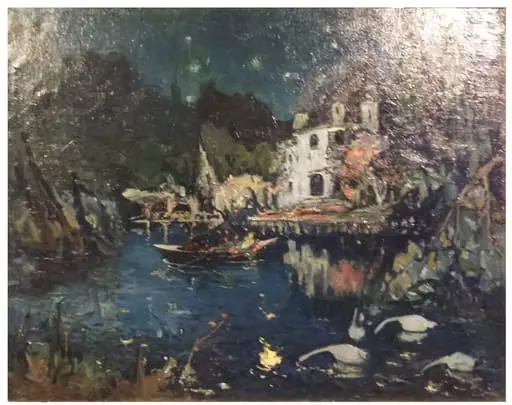
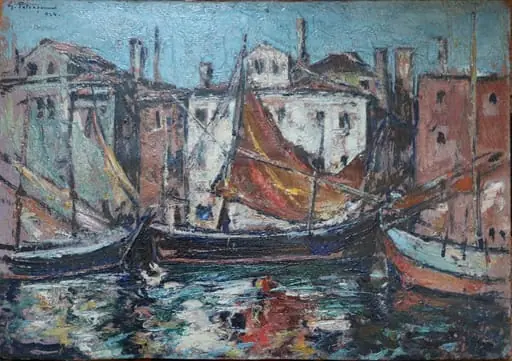
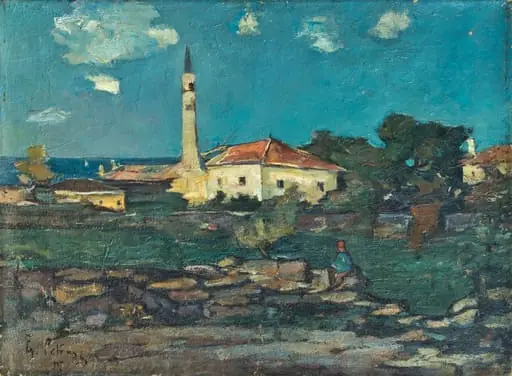
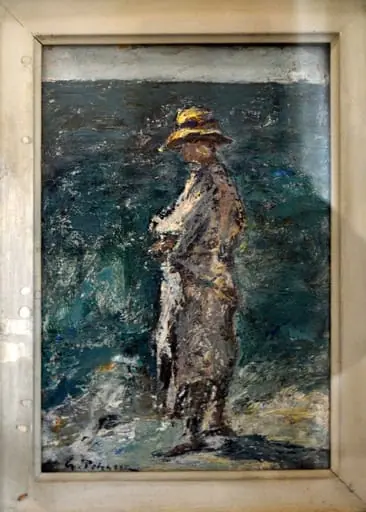
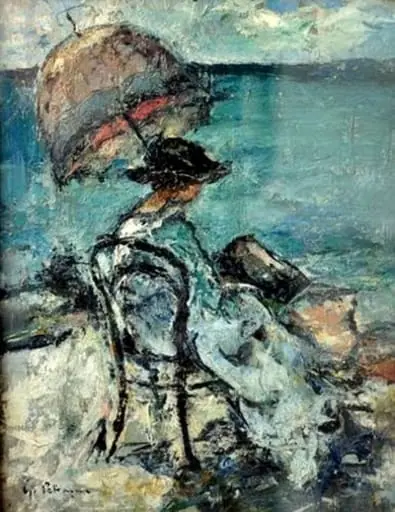
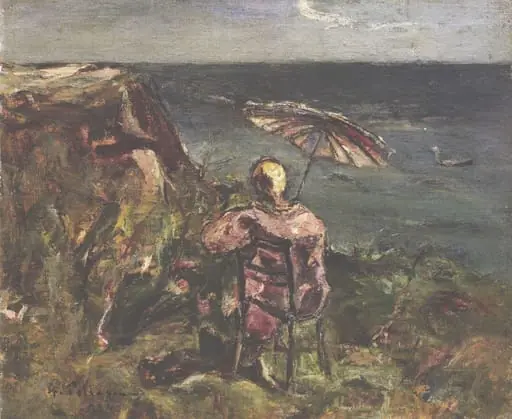
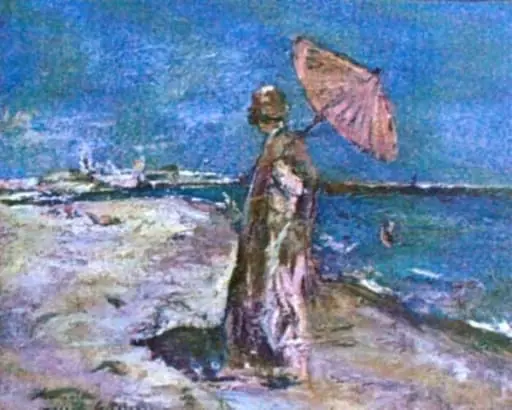
Pe malul mării is an unspecified painting by Gheorghe Petrașcu. It dates from 1921 and is held in the collection of the Art Museum of Constanta.
About this work
Overview
The composition avoids dramatic elements, favoring a subdued palette and balanced spatial arrangement to evoke a meditative mood.
Painted in 1921 by Gheorghe Petrașcu, Pe malul mării is a quiet coastal scene rendered in oil on canvas. The work is part of the collection at the Museum of Ethnography in Romania. It captures a solitary figure on a shoreline, emphasizing stillness and introspection rather than narrative action. The composition avoids dramatic elements, favoring a subdued palette and balanced spatial arrangement to evoke a meditative mood.
Subject & Meaning
A lone individual, dressed in a long red coat and yellow hat, stands with back turned toward the viewer, gazing toward the sea. The figure’s anonymity invites contemplation rather than identification, suggesting themes of solitude, reflection, or human smallness against nature. The absence of interaction or movement reinforces a sense of quietude, aligning the subject with broader early 20th-century interests in inner experience over external drama.
Technique & Style
Petrașcu employs muted earth and ocean tones—soft blues, grays, and ochres—to unify the landscape. Brushwork is restrained, with smooth transitions between sea, sky, and shore, avoiding sharp definition. The figure is rendered with minimal detail, blending into the environment rather than dominating it. This deliberate simplification enhances the painting’s atmospheric calm, reflecting a preference for emotional resonance over realism.
History & Provenance
Created in 1921, the painting entered the collection of the Museum of Ethnography in Bucharest, where it remains today. Unlike many of Petrașcu’s urban or historical scenes, this work focuses on a natural setting, possibly reflecting a personal retreat or regional inspiration. Its placement in an ethnographic institution suggests an interest in cultural expressions of landscape and human presence within Romanian artistic identity.
Context
In early 20th-century Romania, artists increasingly turned to landscapes as vessels for emotional and philosophical expression, moving away from academic traditions. Petrașcu, though known for portraiture and historical themes, engaged with this trend through works like Pe malul mării. The painting aligns with broader European tendencies toward introspective realism, influenced by Impressionism and Symbolism, yet retains a distinctly Romanian sensibility in its restraint.
Legacy
Pe malul mării contributes to the understanding of Petrașcu’s range beyond formal portraiture. While not widely exhibited, it is recognized in scholarly circles as an example of his quieter, more contemplative mode. The work reflects a moment in Romanian art when nature became a space for personal and cultural introspection, influencing later generations who sought to express national identity through subtle, atmospheric landscapes.
Artist & collection
Artist
Gheorghe Petrașcu painted quiet scenes of buildings, streets, and still lifes in the 1920s and ’30s Romania.