Artwork
Veneția
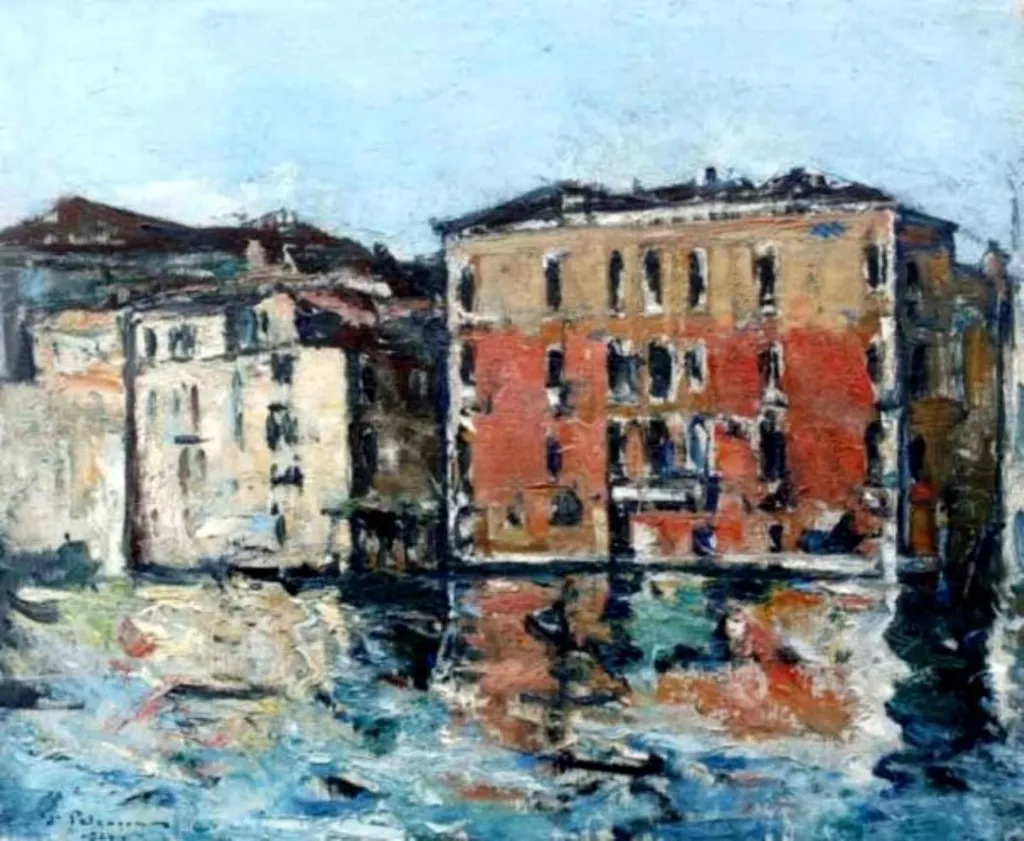
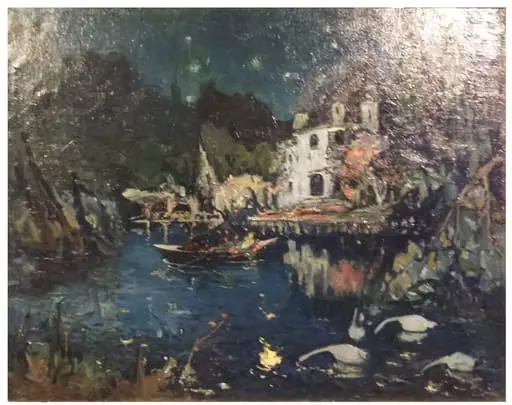
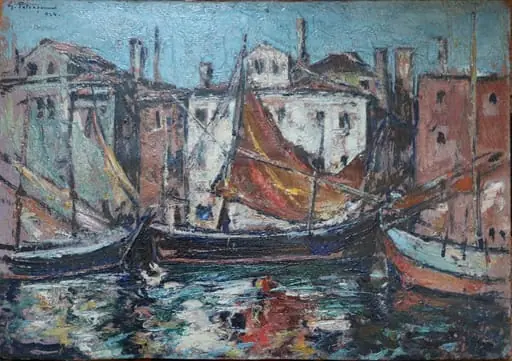
Veneția is an unspecified painting by Gheorghe Petrașcu. It dates from 1924 and is held in the collection of the Bucharest Municipality Museum.
About this work
Overview
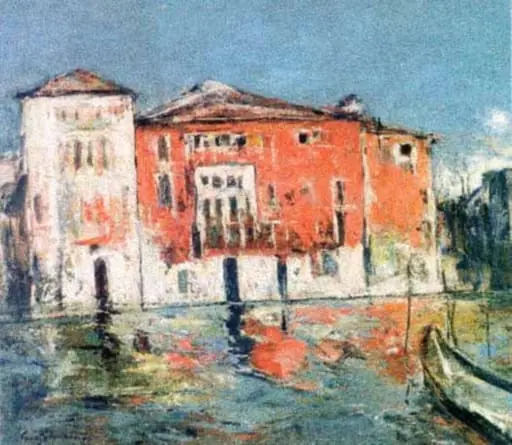
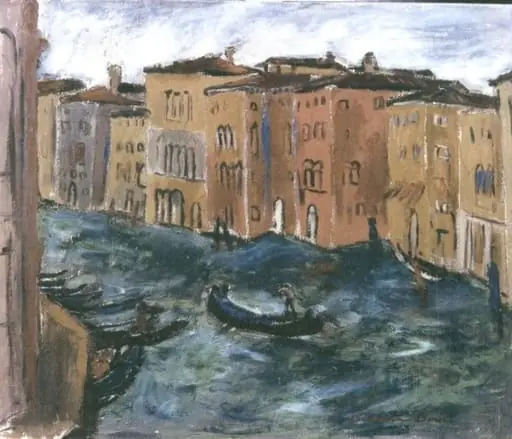
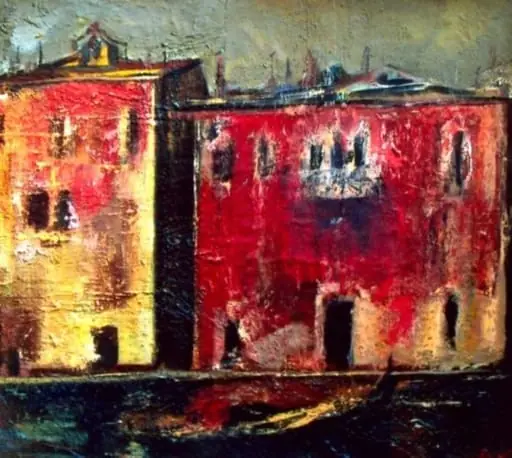
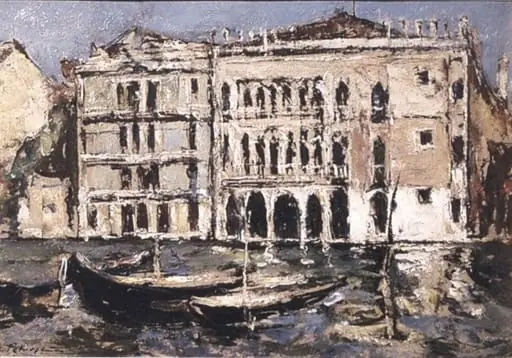
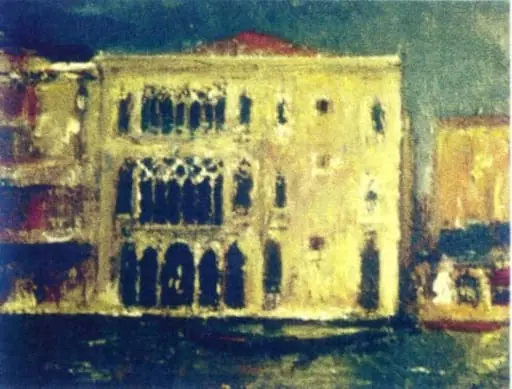
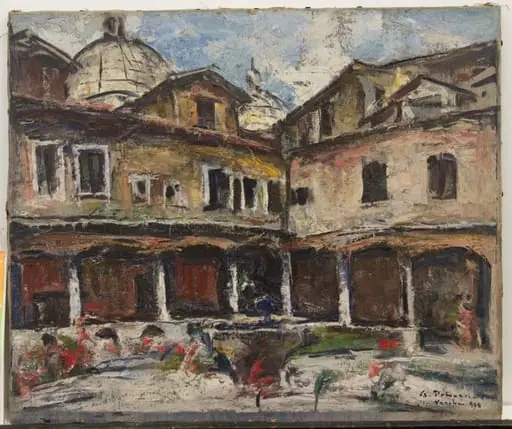
Painted in 1924 by Gheorghe Petrașcu, Veneția is a landscape depiction of Venetian architecture viewed from the water. Executed in oil, the work captures the city’s façades with a focus on material presence rather than topographical accuracy. It resides in the collection of the Museum of Ethnography, where it is valued for its expressive treatment of urban form rather than documentary detail.
Subject & Meaning
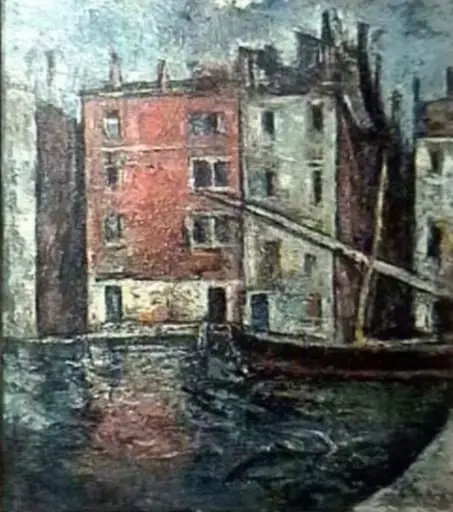
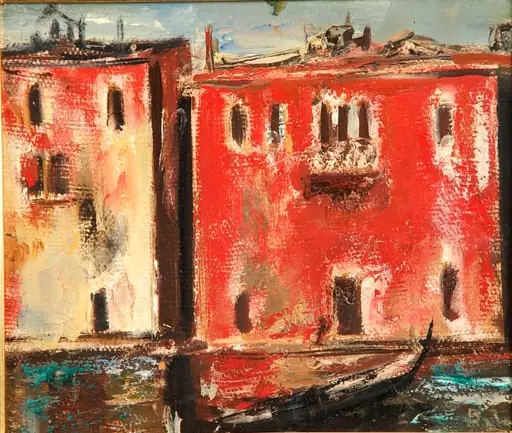
The painting portrays three weathered buildings lining a canal, their surfaces marked by time and exposure. Open windows suggest habitation, yet the absence of figures emphasizes solitude and quiet decay. The reflection in the water is not a mirror image but a fractured, turbulent echo, reinforcing a mood of impermanence and the shifting nature of memory tied to place.
Technique & Style
Petrașcu employs thick, textured brushwork using impasto to build the surfaces of the buildings and the churning water. Browns, reds, and muted blues dominate, with pigment applied unevenly to suggest erosion and moisture. The rough handling of paint avoids smooth realism, instead conveying the physicality of the scene through tactile surfaces and deliberate irregularity.
History & Provenance
Created during Petrașcu’s period of heightened interest in Italian urban scenes, Veneția was acquired by the Museum of Ethnography shortly after its completion. Its inclusion in the collection reflects early 20th-century Romanian interest in European cultural landscapes, though the work was never widely exhibited beyond institutional circles.
Context
In the 1920s, Romanian artists increasingly turned to foreign cities as subjects, often filtered through personal emotion rather than travelogue precision. Petrașcu’s approach aligned with broader post-impressionist tendencies in Eastern Europe, where structure and color were used to express psychological states rather than depict reality faithfully.
Legacy
Veneția remains a quiet example of Petrașcu’s mature style, noted for its emotional resonance over formal precision. While not part of mainstream art historical narratives, it contributes to understanding how Romanian modernists engaged with European urbanism through a lens of material texture and atmospheric mood.
Artist & collection
Artist
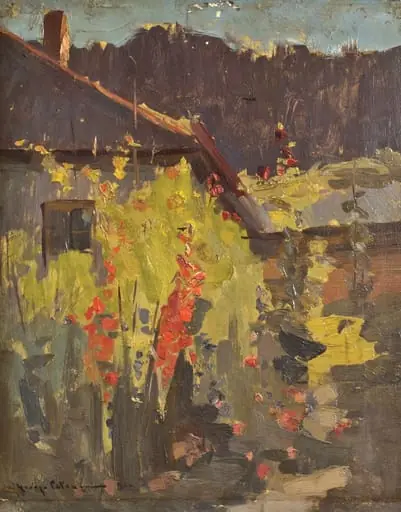
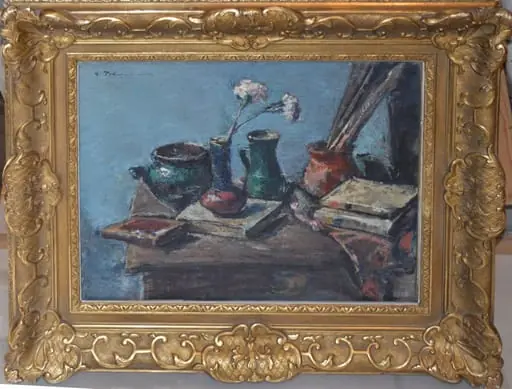
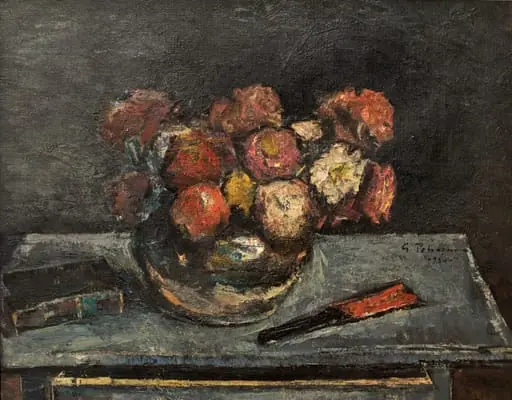
Gheorghe Petrașcu painted quiet scenes of buildings, streets, and still lifes in the 1920s and ’30s Romania.