Artwork
Ca d'Oro-Veneția
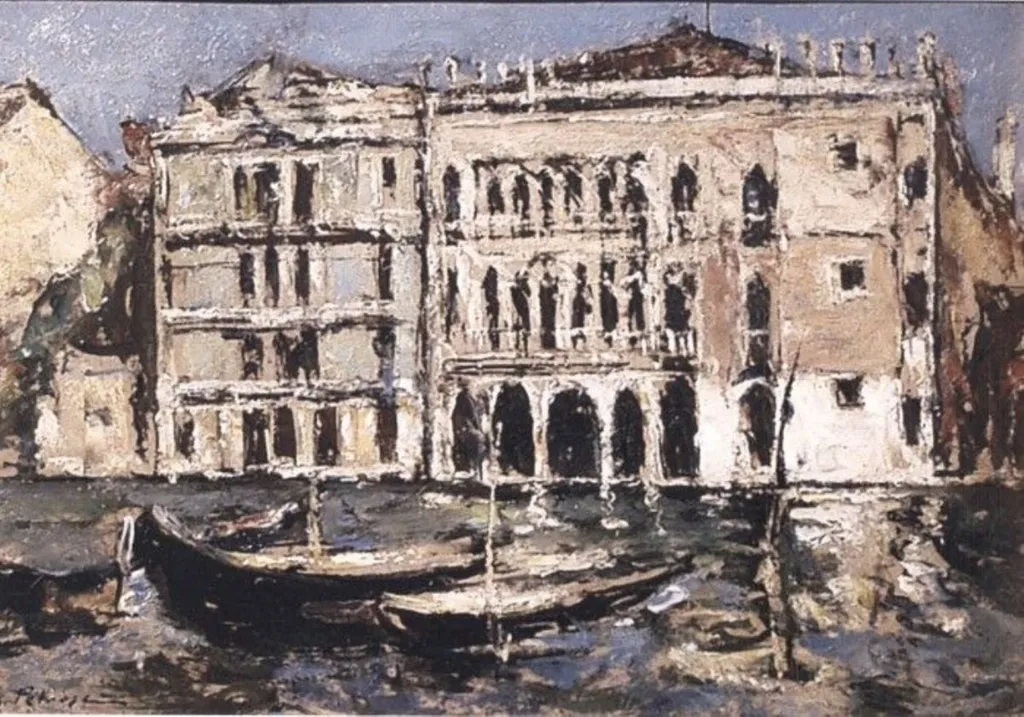
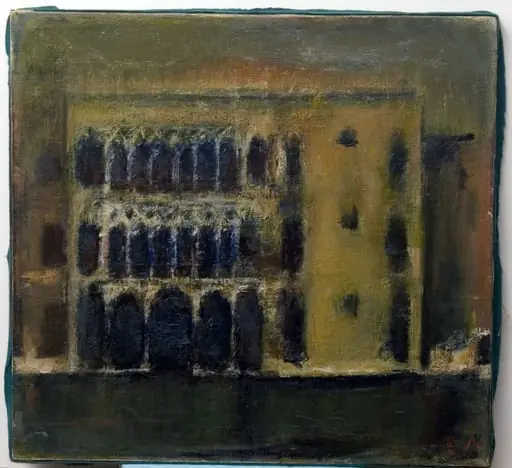
Ca d'Oro-Veneția is an unspecified painting by the Art Nouveau artist Gheorghe Petrașcu. It dates from 1924 and is held in the collection of the National Museum of Art of Romania.
About this work
Overview
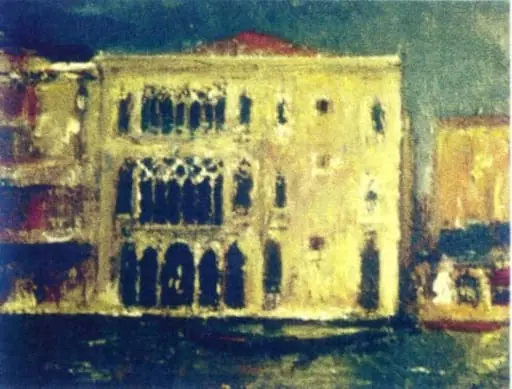
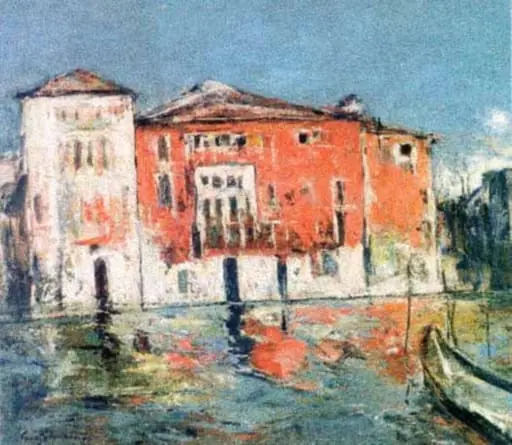
Gheorghe Petrașcu painted *Ca d'Oro-Veneția* in 1924, capturing a Venetian façade with a focus on architectural texture and atmospheric light.
Gheorghe Petrașcu painted *Ca d'Oro-Veneția* in 1924, capturing a Venetian façade with a focus on architectural texture and atmospheric light. Though associated with Art Nouveau’s decorative tendencies, his approach leaned toward expressive realism, emphasizing form over ornament. The work reflects his sustained interest in Italian urban landscapes, developed during extended stays in Venice and other Adriatic cities.
Subject & Meaning
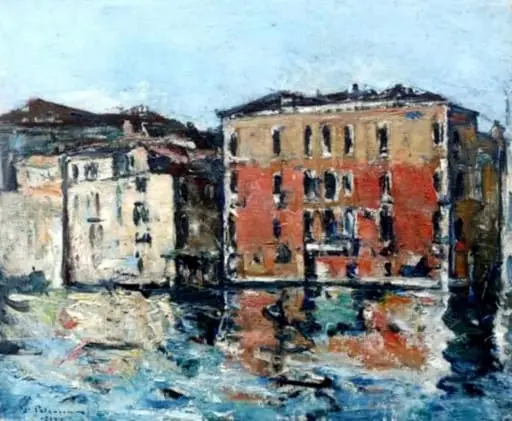
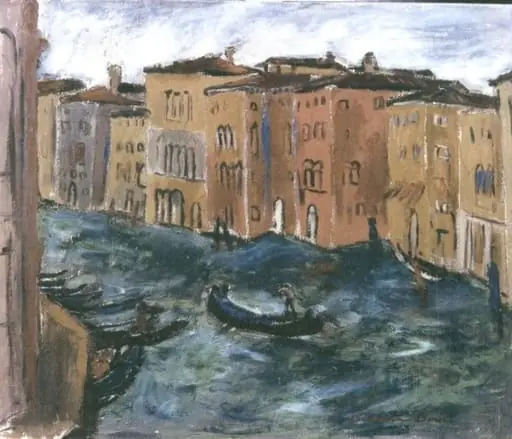
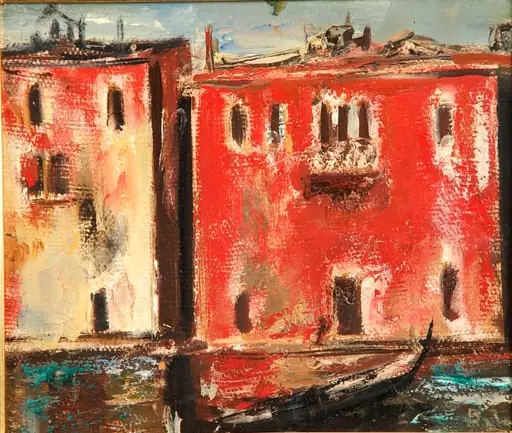
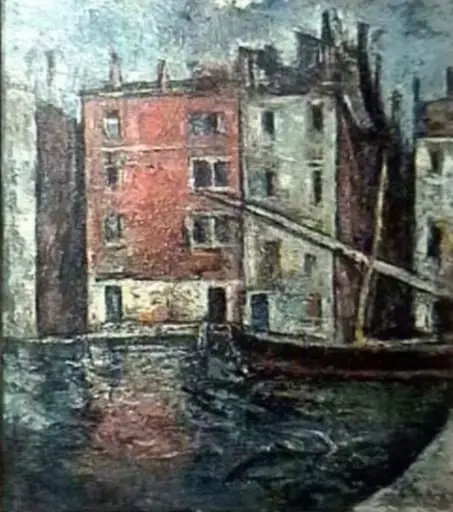
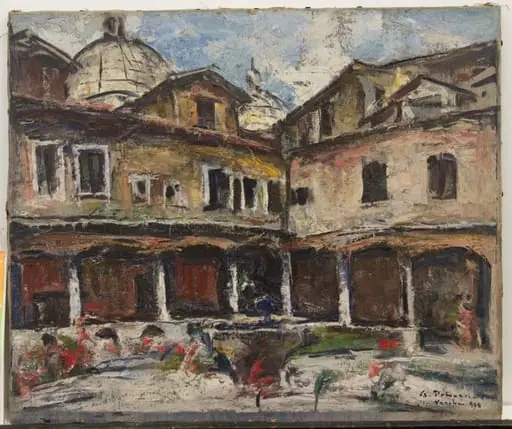
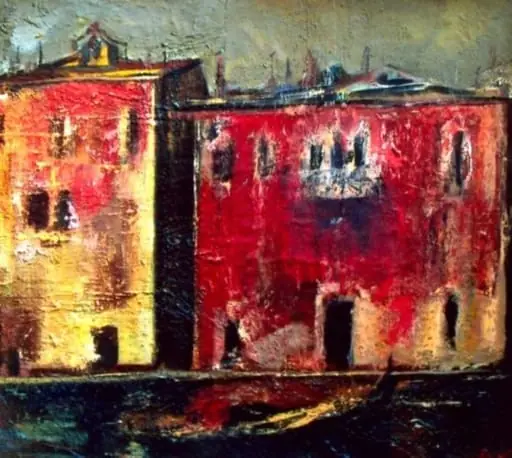
The painting portrays the Ca’ d’Oro, a 15th-century palace along Venice’s Grand Canal, rendered not as a monument but as a lived-in structure. Its weathered stonework and arched windows suggest the passage of time, while the small boats below anchor the scene in daily life. Petrașcu avoids idealization, presenting the building as part of an enduring, quiet urban rhythm rather than a tourist spectacle.
Technique & Style
Petrașcu employed loose, visible brushwork and a restrained palette of ochres, umbers, and soft beiges to convey the building’s aged surfaces and the reflective quality of water. His handling of light is subtle, with no sharp contrasts—instead, tone gradations suggest the hazy, humid atmosphere of Venice. The composition is asymmetrical, drawing the eye along the canal’s curve rather than centering the architecture.
History & Provenance
Created during a period of renewed interest in Venetian architecture among Eastern European artists, the painting was likely produced after Petrașcu’s visits to Venice in the early 1920s. It entered Romanian public collections shortly after completion and was later included in posthumous retrospectives, including those at the Venice Biennale and Paris International Exhibition, affirming its place in his oeuvre.
Context
Petrașcu’s work emerged alongside a broader Romanian artistic movement seeking to reconcile national identity with European traditions. While Art Nouveau influenced his decorative sensibilities, his focus on architectural decay and quiet urban life aligned more closely with late 19th-century Realism. His Venetian subjects were part of a wider trend among Balkan painters drawn to Italy’s historical cities as sites of cultural resonance.
Legacy
Though not widely known outside Romania, Petrașcu’s Venetian series, including *Ca d'Oro-Veneția*, remains significant for its restrained emotional tone and technical discipline. His election to the Romanian Academy in 1936 recognized his role in shaping modern Romanian painting. The work continues to be studied for its nuanced depiction of architecture as a witness to time, rather than a symbol of grandeur.
Artist & collection
Artist
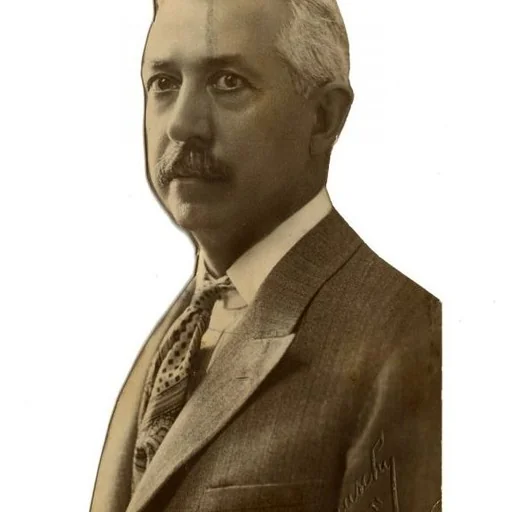
Gheorghe Petrașcu (Romanian pronunciation: ; 20 November 1872, Tecuci – 1 May 1949, Bucharest) was a Romanian painter.