Artwork
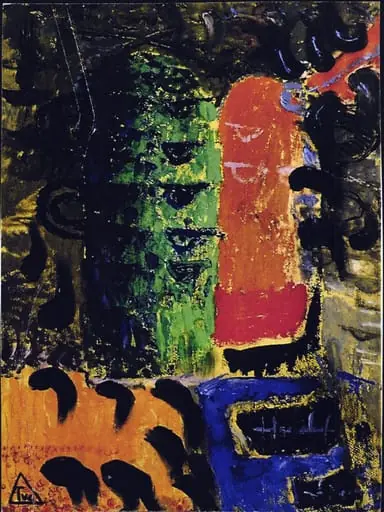
Compoziție pe fond verde
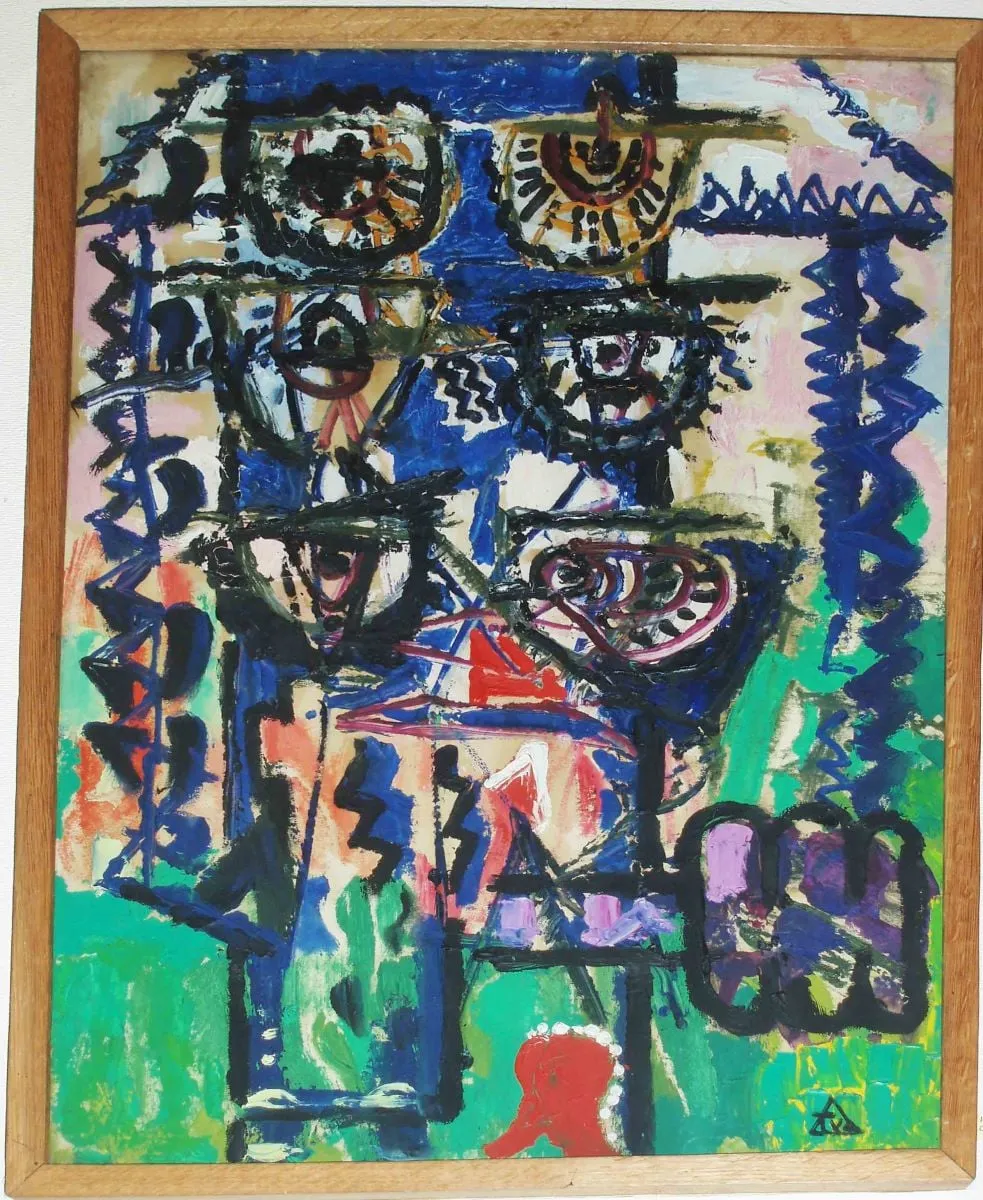
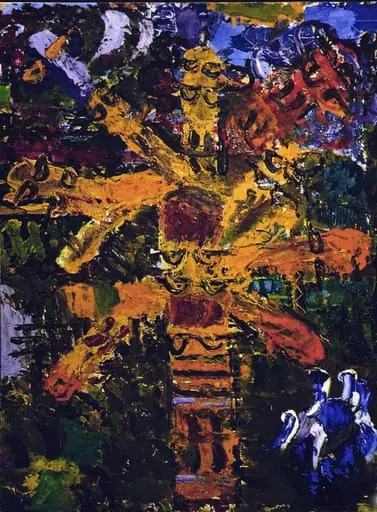
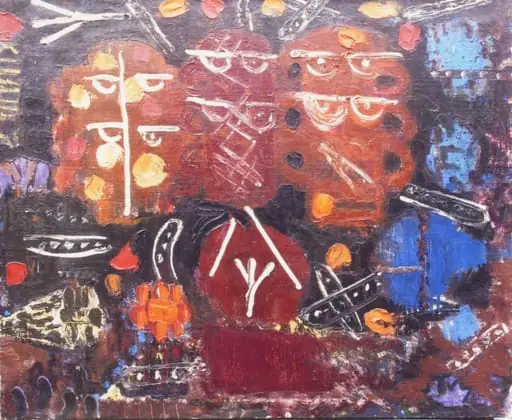
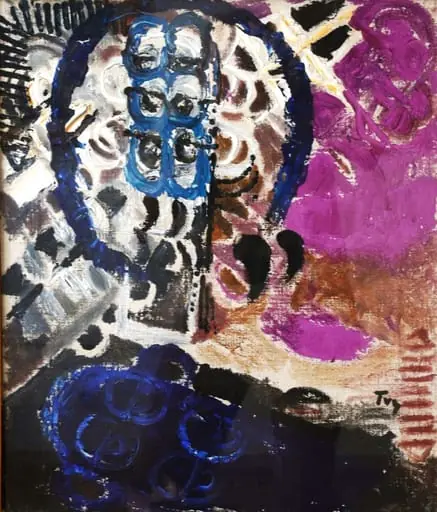
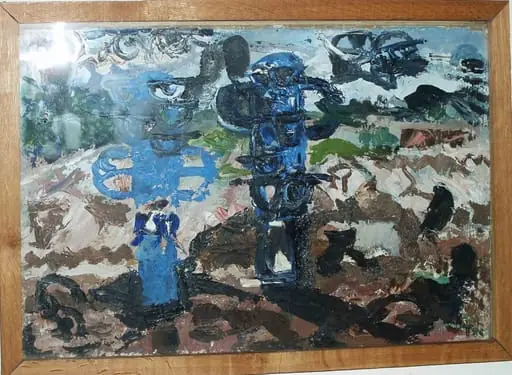
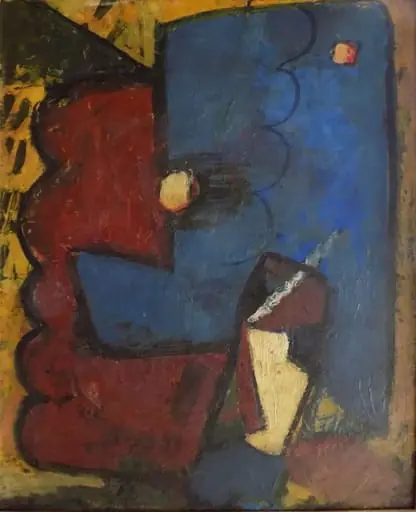
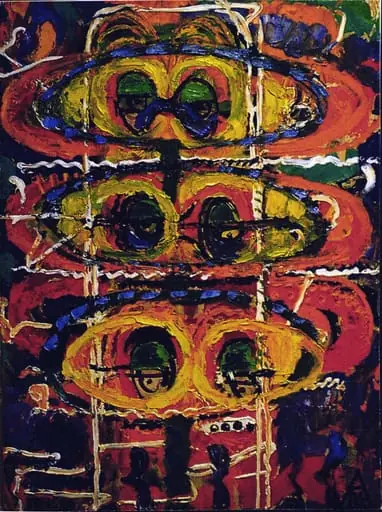
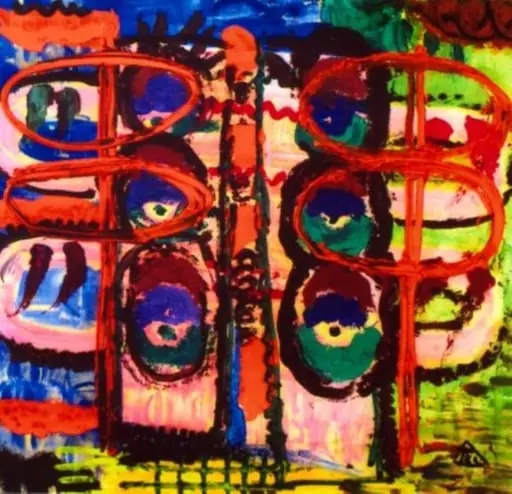
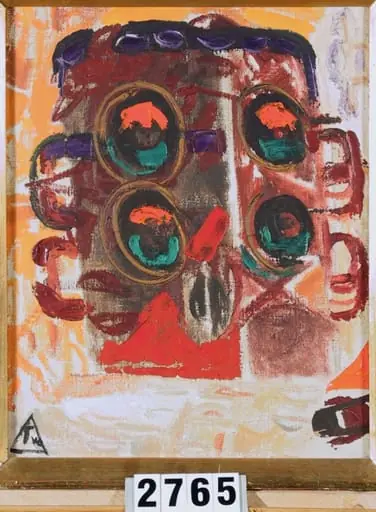
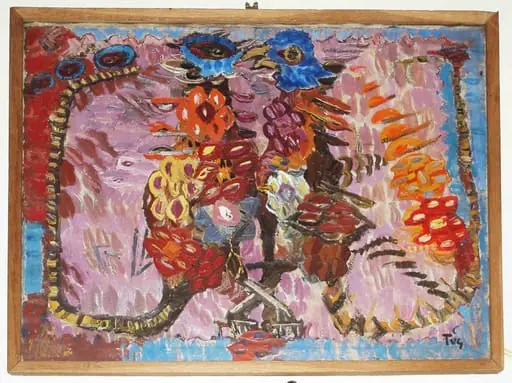
Compoziție pe fond verde is an unspecified painting by Ion Țuculescu. It is held in the collection of the Bucharest Municipality Museum. This abstract composition features a green ground layered with dynamic forms in blue, red, and black.
About this work
Overview
The painting resists literal interpretation, instead inviting attention to its material presence and gestural energy.
This abstract composition features a green ground layered with dynamic forms in blue, red, and black. The brushwork is assertive and uneven, creating a sense of rhythmic motion across the surface. While the palette leans toward muted tones, the interplay of shapes suggests tension and flow. The painting resists literal interpretation, instead inviting attention to its material presence and gestural energy.
Subject & Meaning
No identifiable figures or scenes are present. The forms appear as autonomous elements—curved, angular, and overlapping—suggesting internal logic rather than external reference. The work communicates through color relationships and spatial tension, evoking emotional resonance without narrative. Its meaning lies in the act of painting itself: a record of decision, gesture, and material response.
Technique & Style
The artist applied paint with direct, unrefined strokes, allowing texture to emerge from the brush’s pressure and direction. Layers build subtly, with some areas scraped or thinned to reveal underlying hues. The absence of smooth blending emphasizes the physicality of the medium. This approach aligns with mid-20th century abstract practices that valued process over illusion.
History & Provenance
The work is attributed to Ion Țuculescu, a Romanian painter active from the 1930s through the 1980s. It likely dates from his mature period, when he moved away from figurative traditions toward abstraction. Though specific exhibition or ownership history is not documented here, the piece reflects the broader shift in Romanian art during the postwar decades toward non-representational expression.
Context
Created amid political constraints in communist Romania, the painting represents a quiet departure from state-sanctioned socialist realism. While not overtly political, its abstraction allowed for personal expression within a restrictive cultural climate. Țuculescu’s work, alongside peers like Victor Brauner, contributed to a subtle but significant current of modernist experimentation in Romanian art.
Legacy
Though less widely known internationally, Țuculescu’s abstract works remain important within Romanian art history. This painting exemplifies his commitment to formal inquiry over ideological conformity. Contemporary Romanian artists cite his use of color and texture as influential, particularly in how he balanced restraint with expressive force during a period of artistic suppression.
Artist & collection
Artist