Artwork
Baia de soare
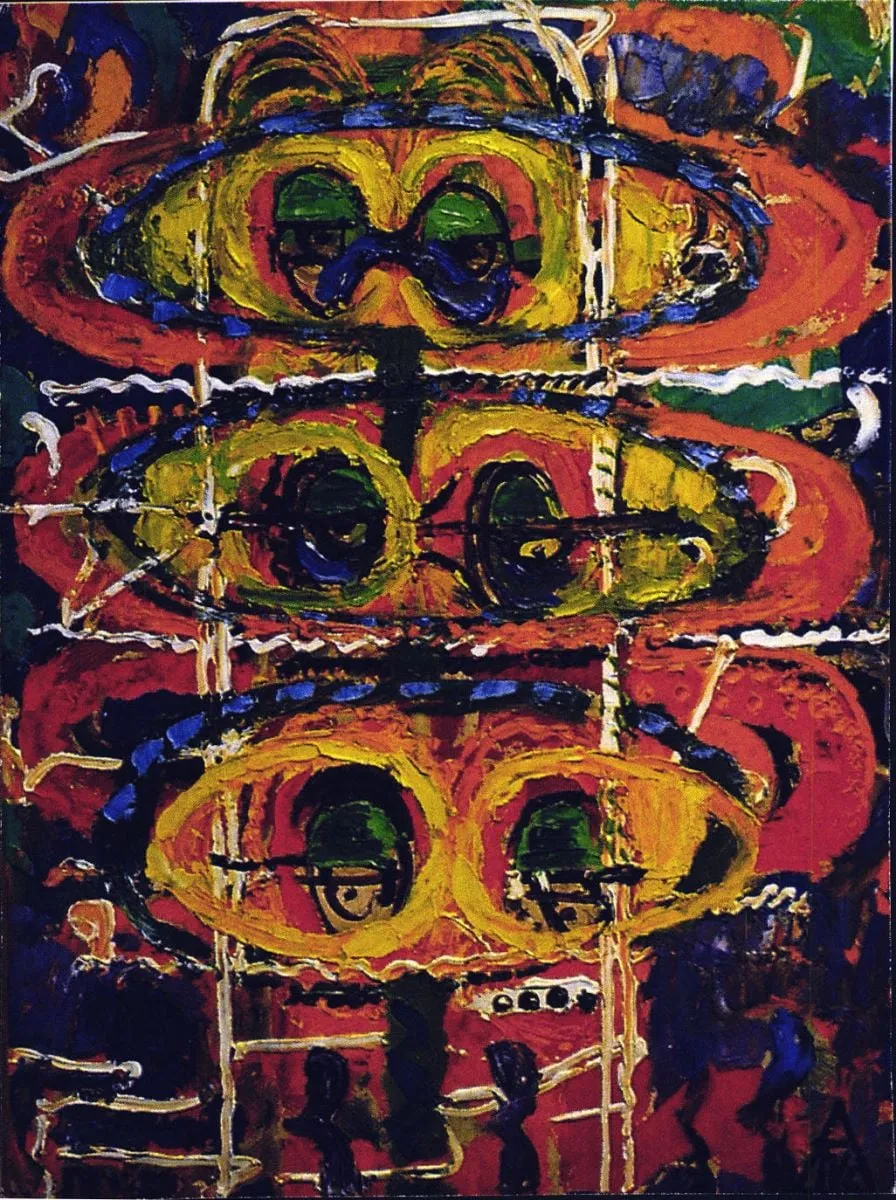
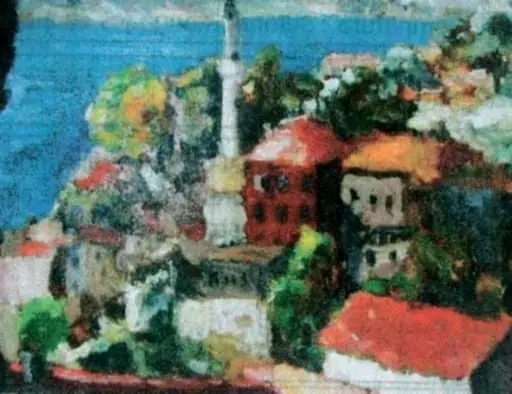
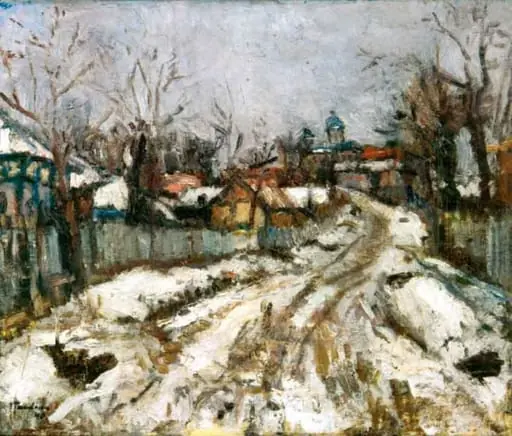
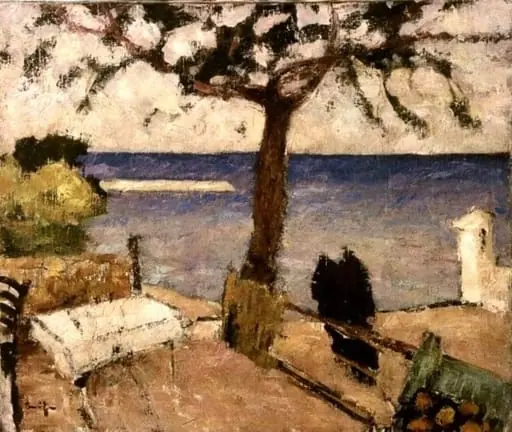
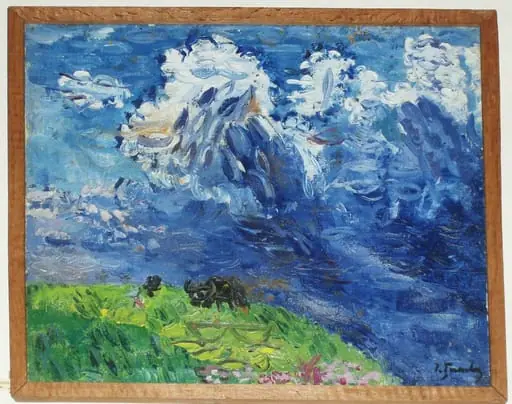
Baia de soare is a print by Ion Țuculescu. It dates from 1946 and is held in the collection of the Art museum of Craiova.
About this work
Overview
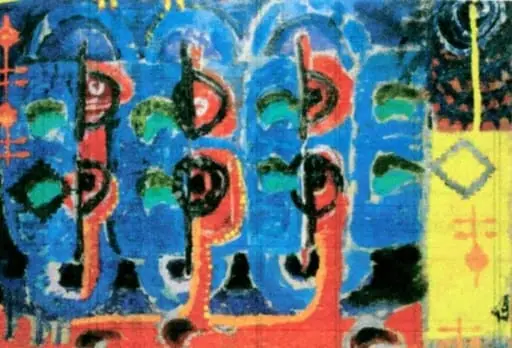
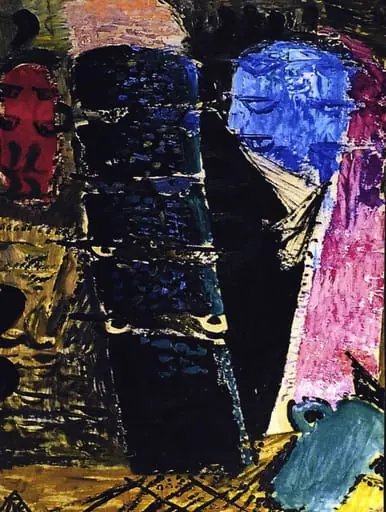
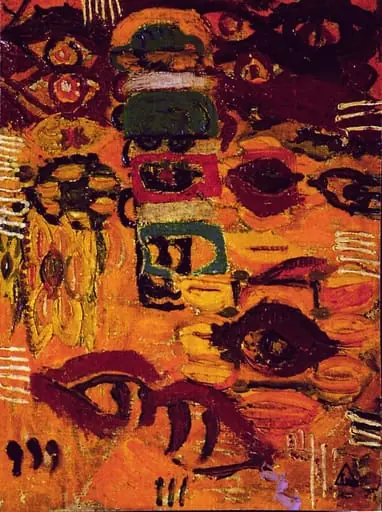
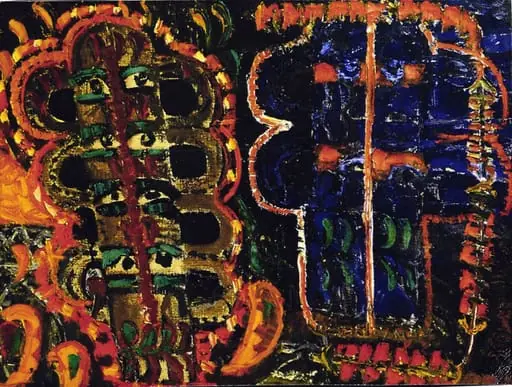
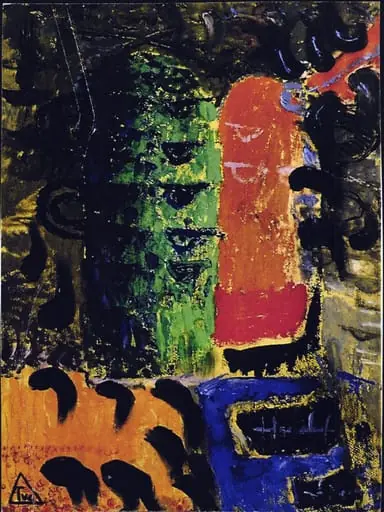
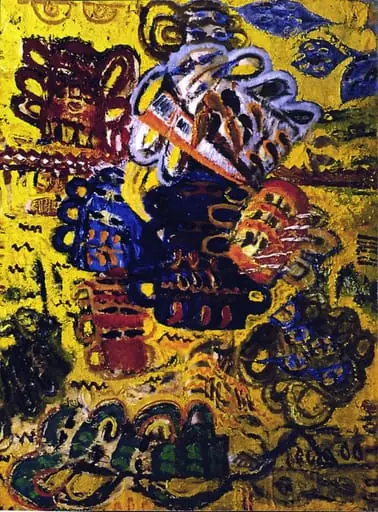
“Baia de soare,” painted around 1946 by Romanian artist Ion Țuculescu, is part of the collection of the Museum of Ethnography. The work presents a vivid, almost turbulent composition of color and form, inviting viewers into a visual space where abstraction and figurative hints intersect.
Subject & Meaning
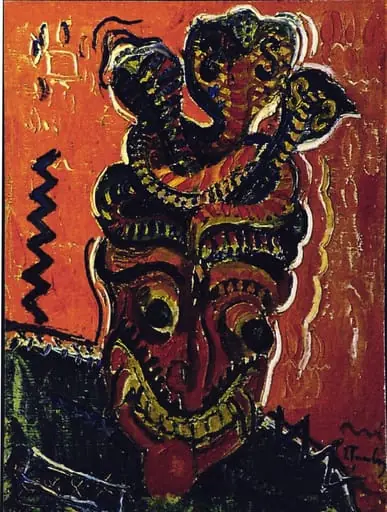
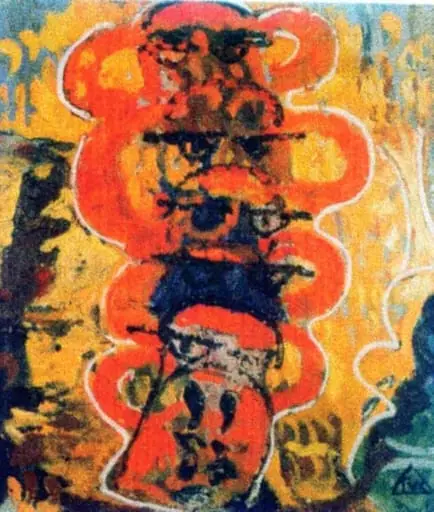
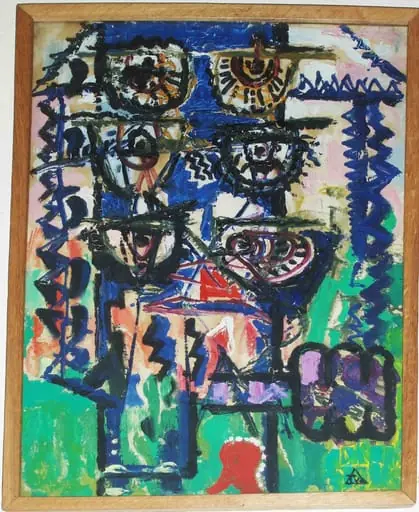
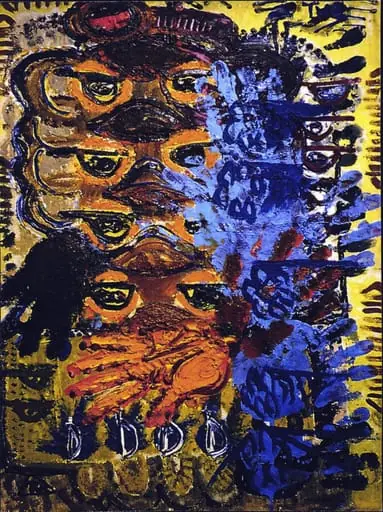
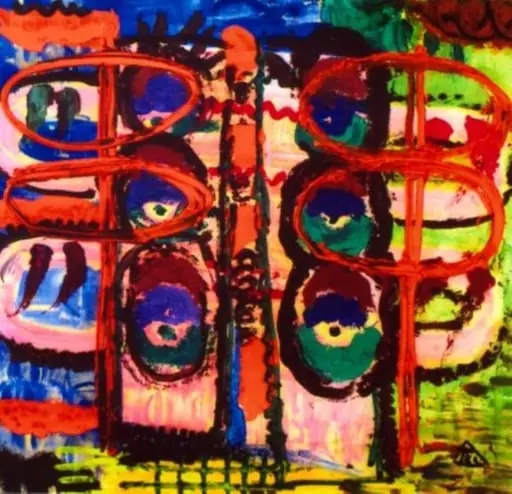
The canvas suggests distorted faces or masks rendered in exaggerated proportions, their features stretched and intersected by sharp lines. While no explicit narrative is provided, the juxtaposition of bright yellows, deep reds, and dark blues evokes a sense of inner turmoil or ecstatic ritual, hinting at themes of identity and transformation.
Technique & Style
Țuculescu employs a heavy impasto, applying paint in thick, aggressive strokes that appear almost slapped onto the surface. The brushwork is deliberately rough, allowing colors to bleed into one another without smoothing, creating a raw, chaotic energy. The composition relies on bold, clashing hues and jagged outlines to emphasize tension.
History & Provenance
Created shortly after World War II, the piece entered the Museum of Ethnography’s holdings, where it remains on display. Its acquisition date is not recorded publicly, but the work has been part of the museum’s efforts to represent mid‑20th‑century Romanian avant‑garde painting.
Context
During the mid‑1940s, Țuculescu was exploring expressive abstraction, influenced by both folk traditions and European modernism. “Baia de soare” reflects this transitional period, merging local cultural motifs with a gestural, color‑driven language that aligns with broader post‑war artistic experiments in Eastern Europe.
Artist & collection

Artist
Ion Țuculescu was a Romanian expressionist and abstract oil painter, although professionally he worked as a biologist and physician.