Artwork
Peisaj animat
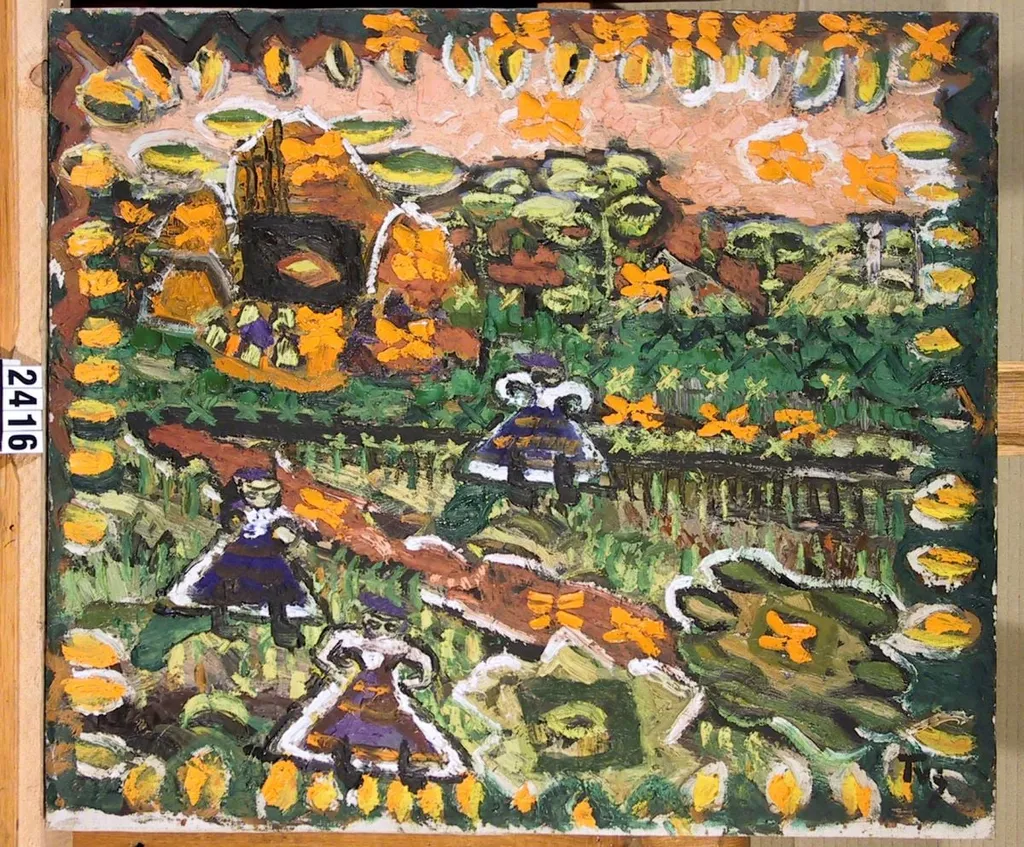
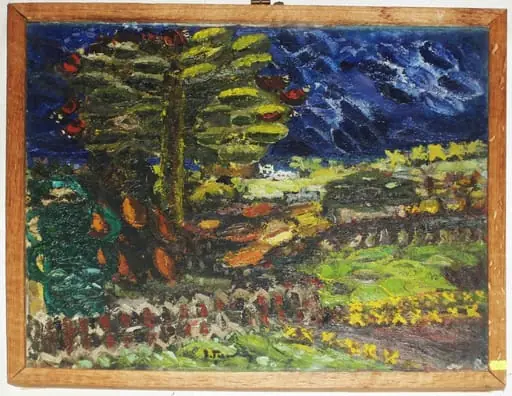
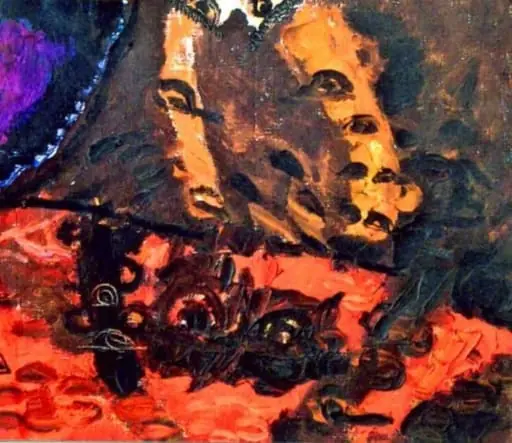
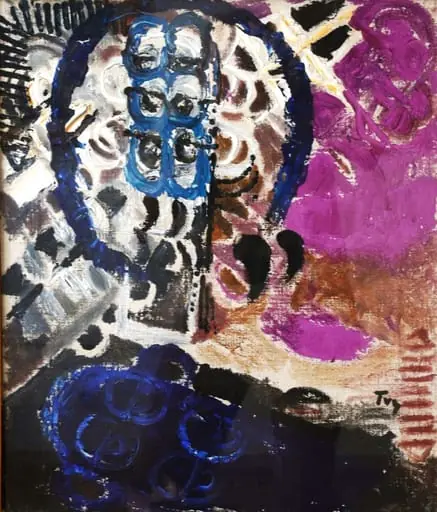
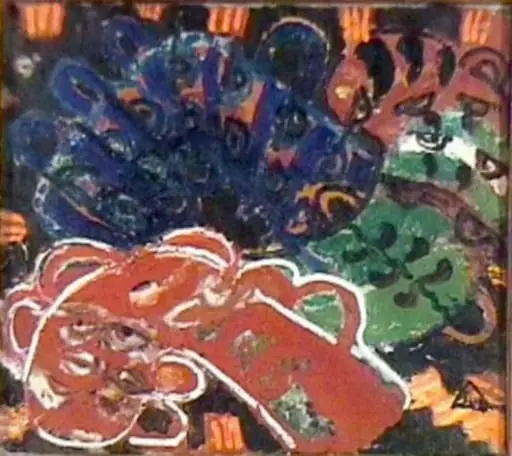
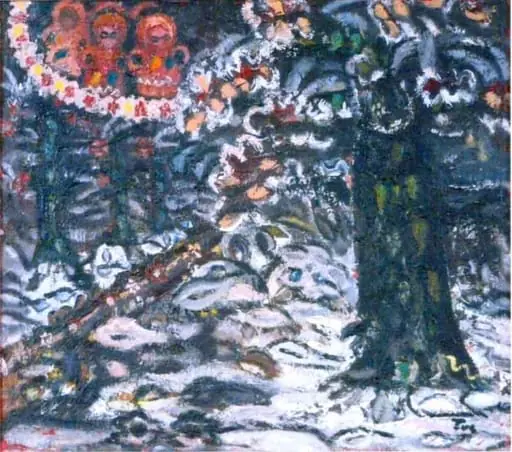
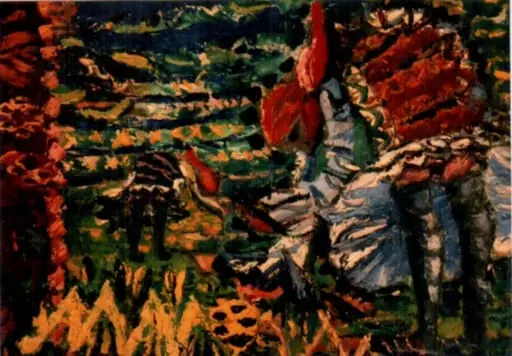
Peisaj animat is an unspecified painting by Ion Țuculescu. It is held in the collection of the Brukenthal National Museum. This artwork depicts a vibrant, densely populated landscape filled with bold, textured brushwork.
About this work
Overview
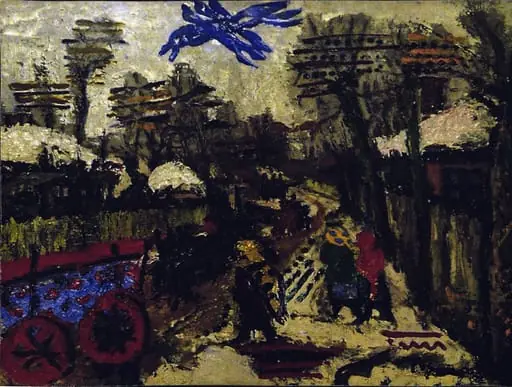
Two figures in dark attire move through the terrain, their presence subtle against the overwhelming richness of the environment.
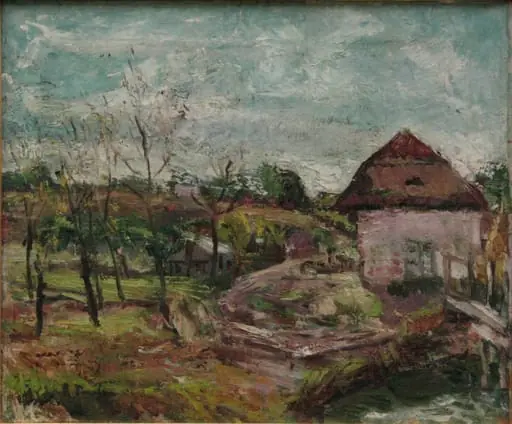
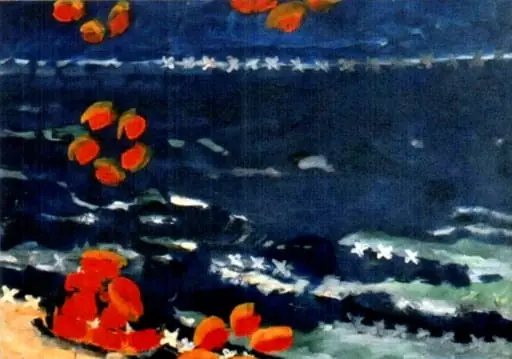
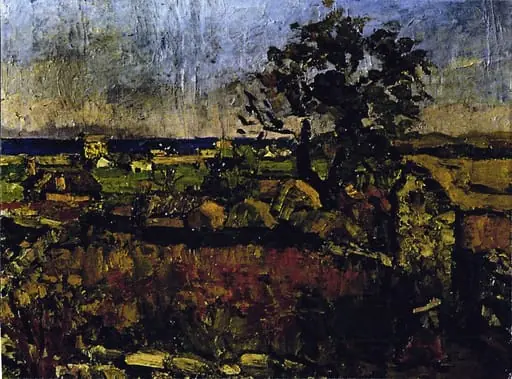
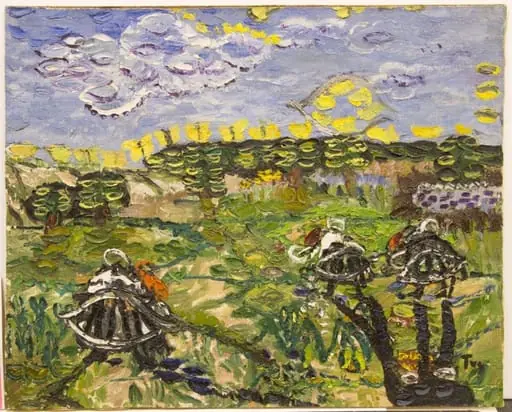
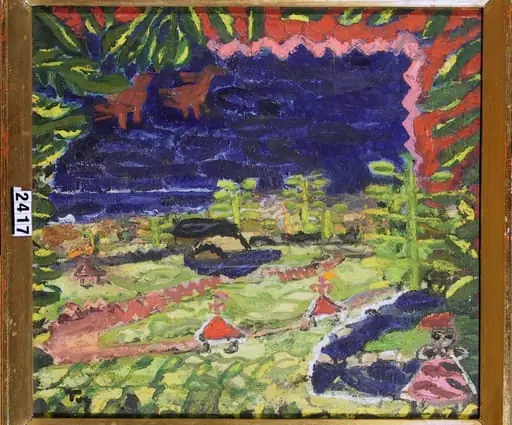
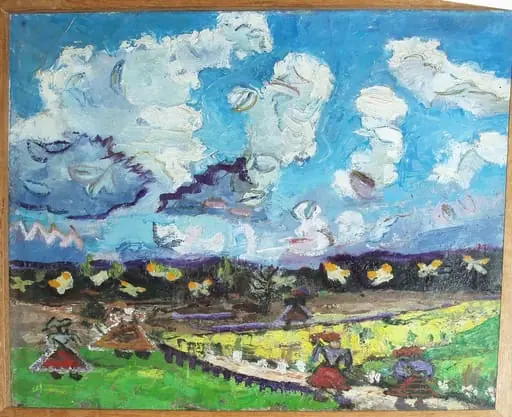
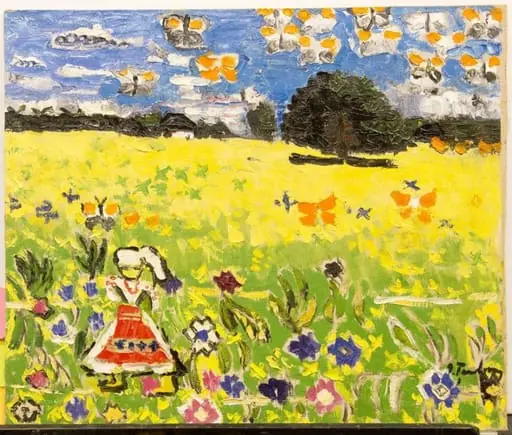
This artwork depicts a vibrant, densely populated landscape filled with bold, textured brushwork. Bright orange blossoms scatter across the scene, contrasting with deep greens and earthy browns. Two figures in dark attire move through the terrain, their presence subtle against the overwhelming richness of the environment. The heavy application of paint creates a tactile, almost sculptural surface, emphasizing the physicality of the medium.
Subject & Meaning
The two figures, minimally detailed and dressed in dark clothing, appear as quiet observers within a riotous natural setting. Their stillness contrasts with the animated energy of the flowers and foliage, suggesting a tension between human presence and the overwhelming vitality of nature. The scene offers no clear narrative, inviting contemplation rather than interpretation.
Technique & Style
The artist employs impasto to build thick, layered strokes of paint, giving the landscape a tangible, three-dimensional quality. Colors are applied with intensity—yellow, green, and brown dominate—while the orange flowers are rendered with sharp contrast and heightened saturation. Brushwork is visible and deliberate, prioritizing texture and emotional resonance over fine detail.
History & Provenance
No documented history or ownership record is available for this work. It is cataloged as an image without attribution to a known artist or date. Its origins remain unverified, and it has not appeared in published exhibitions or scholarly references to date.
Context
The work aligns with late 19th- to early 20th-century tendencies toward expressive landscape painting, where emotion and materiality took precedence over realism. Its emphasis on pigment texture and color contrast echoes movements like Post-Impressionism, though it lacks the formal signatures of any established school or region.
Legacy
As an unattributed image, this piece has not influenced art historical discourse or public collections. Its significance lies primarily in its visual language—its use of impasto and chromatic intensity—which resonates with broader trends in modern painting, even without a documented lineage.
Artist & collection
Artist